News & Community eLanka

eLanka

Thursday, 15 Oct 2026
  • Home
  • Read History
  • Articles
    • eLanka Journalists
  • Events
  • Useful links
    • Obituaries
    • Seeking to Contact
    • eLanka Newsletters
    • Weekly Events and Advertisements
    • eLanka Testimonials
    • Sri Lanka Newspapers
    • Sri Lanka TV LIVE
    • Sri Lanka Radio
    • eLanka Recepies
  • Gallery
  • Contact
Newsletter
Sri lankan news
  • eLanka Weddings
  • Property
  • eLanka Shop
  • Business Directory
eLankaeLanka
Font ResizerAa
Search
  • Home
  • Read History
  • Articles
    • eLanka Journalists
  • Events
  • Useful links
    • Obituaries
    • Seeking to Contact
    • eLanka Newsletters
    • Weekly Events and Advertisements
    • eLanka Testimonials
    • Sri Lanka Newspapers
    • Sri Lanka TV LIVE
    • Sri Lanka Radio
    • eLanka Recepies
  • Gallery
  • Contact
Follow US
© 2005 – 2026 eLanka Pty Ltd. All Rights Reserved.
Home » Goodnews Stories Srilankan Expats » Articles » Shades of Beddegama in teeming Hong Kong-By GEORGE BRAINE
ArticlesGeorge Braine

Shades of Beddegama in teeming Hong Kong-By GEORGE BRAINE

eLanka admin
Last updated: April 26, 2022 6:13 am
By
eLanka admin
ByeLanka admin
Follow:
Share
12 Min Read
SHARE
Views: 87

Shades of Beddegama in teeming Hong Kong-By GEORGE BRAINE

Shades

Source:Island

George Braine
Exif_JPEG_PICTURE

Even after being closely connected to Hong Kong for 26 years, I am still amazed by the contrasts there. Professionals earn the highest salaries in the world while destitute old women scavenge for cardboard boxes. Tycoons live in the world’s most expensive mansions while the poorest live in tiny subdivided flats. Perhaps the most striking contrast is the crowded urban areas of Central, Kowloon, and Mong Kok, and the deserted villages in the rural parts of the New Territories, where I lived.

Hong Kong is barely 500 square miles, and only half of that is inhabited; the rest is given over to hillsides and country parks. They are seven million tightly packed people. Then, how does one explain deserted villages?

Wong Chuk Yeung

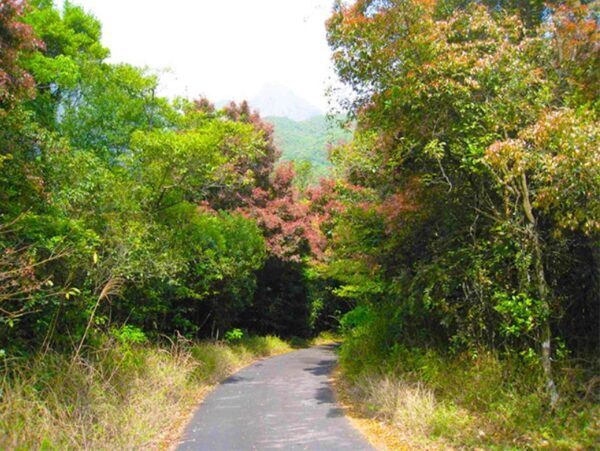
Leonard Woolf’s classic Village in the Jungle, set in colonial Ceylon, narrates the slow decline of a small, isolated village, Beddegama. As the people leave or die out, the jungle gradually covers the crumbling, miserable huts. The last survivor is Punchi Menika. In the final scene, as Punchi Menika lies in her dilapidated hut, a giant wild boar glides in like a mythical devil to gore her. This scene came to mind when, during a hike, I stumbled upon the village of Wong Chuk Yeung. Located about 3 km uphill from the lovely seaside town of Sai Kung, the village lies within a country park, at the end of a narrow, twisting road. On the way up, the road winds through a steep slope on the left and a forest to the right. Uphill, trees press on the road from either side, forming a canopy.

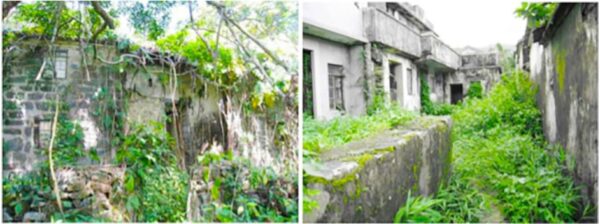
At its first appearance, the village gave the idea of being inhabited, with strands of electricity, street lights, and a functioning water service. The one mailbox overflowed with recently delivered mail, mainly electric and water bills. However, the lichen-covered houses and the trash-strewn, weed-choked alleyways indicated a lack of life. Rice fields and fruit trees long abandoned and overgrown with weeds surrounded the village. Butterflies and dragonflies fluttered. Signs of rooting by wild boars was everywhere, and the fragile barking deer scampered off at my approach. Five-meter long Burmese pythons had been seen nearby. Old graves stood sentinel.

Long ago, the village was occupied by rice and vegetable farmers of the Li clan. They lacked proper roads, schools, electricity, or water service, but this simple life style suited the villagers. Then, imported rice became much cheaper. Rice also became hard to grow because a nearby iron mine caused a drop in the water table. Lacking even public transport, the younger generation preferred the comforts of urban Hong Kong or emigrated to Britain.

The last survivor Since that first encounter, I visited the village, on and off, over a number of years. An elderly man dressed smartly in a jacket and trousers, carrying a rolled-up umbrella, would pass me by on his way to town. I would also see him in town, chatting with people his age or doing a little shopping.

Later, I also noticed a younger man from the village, laboriously pushing his bicycle uphill, laden with plastic shopping bags. He would pause often on the way, squatting on the ground to rest before attempting a further stretch of the steep road. He did not make eye contact or return my greetings.

Then, I stopped seeing the elderly gentleman. He had died. I also learned that his wife used to carry home-made cakes on a shoulder pole for sale in Sai Kung. She had passed away before my time. The younger man, the last survivor of the village, was their son. The family had emigrated to Britain but returned to Hong Kong and to Wong Chuk Yeung for some reason.
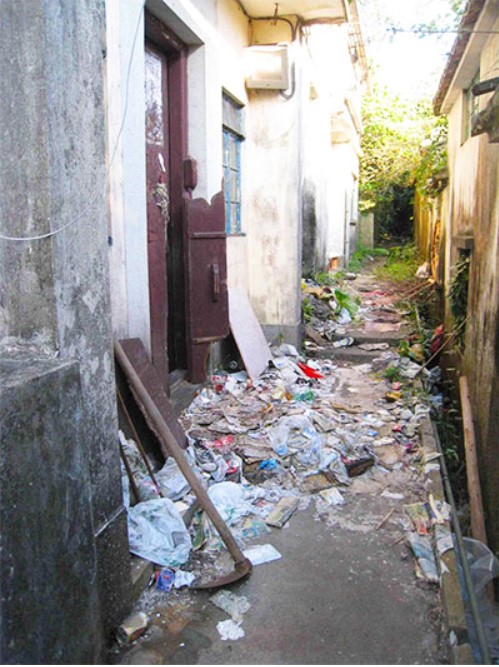
As the years went by, the last survivor no longer had his bicycle. Instead, three dogs with matted fur would accompany him all the way to town and back. I would sometimes see him in town, feeding the dogs with scraps of bread, and reading crumpled racing sheets that he may have found in trash cans. At the village, I had noticed a ramshackle house with garbage strewn outside, the dogs loitering at the door barking fiercely at my approach. That’s perhaps where he lived.

Eventually, only one dog was left. For the last survivor, life must have been horrendous. The eerily quiet nights would have been fearsomely lonely, perhaps the ghosts of departed ancestors his only company. Occasionally, a police vehicle would pass me on the way to the village, so they must have been keeping an eye on his safety.

On my way down to Sai Kung town, splendid views of the island-studded bay, a golf course, and of a distant reservoir opened up. Although other hikers appeared on weekends, the road was mainly deserted during weekdays. Domestic helpers walking their employers’ dogs could be seen, but they too become fewer when the heat of summer set in. On some mornings, paragliders would be floating down towards Sai Kung town, adding colour to the clear blue sky.

Driving home from Sai Kung on a blisteringly hot afternoon, I saw the last survivor struggling home and stopped to give him a ride, going out of my way to the village. As my car struggled up the steep climb on first gear, we drove in silence. When he opened the door to get down, I extended my hand and said “George”. He repeated “Georgie” in the Cantonese style that I find so affectionate. Pointing to himself, he said “Li”. He had finally spoken.

“

Nasty” Developers

The front page banner headline in the South China Morning Post came like a bolt from the blue. Forgotten Wong Chuk Yeung was in the news, with a bang, for illegal deals between developers and villagers domiciled in Britain.

Villagers profit in secret land deals

Indigenous residents sign away small housing rights in exchange for HK$500,000 or a new flat at the site, which helps developers avoid rezoning and premiums

Cheung Chi-faiNov 04, 2011
Cheung Chi-faiNov 04, 2011The article mentioned that the village was 350-years old, and once contained 96 houses. Obviously a substantial village, although I had not seen that many ruins; some crumbling structures may have been covered by weeds, or dissolved into the ground. But, every plot had an owner, and the developers were methodically buying up all the plots.

I had been writing-up my visits to the village on a blogsite, along with photos, and former villagers now in Britain had been reading my entries. In the comments section of the blog, the following message appeared:

Hi George, found your blog and found it fascinating. Great pictures. This is my family’s village, it is a lovely village, though very run down I still like to go and visit it whenever I am in HK – with much sadness all the villagers involved have now signed the papers for the land to be sold off to a development company. Not everyone wanted this but the majority won and it is now in process of exchange. I am extremely sad about this as the land has a lot of history. The buildings, the wildlife (the numerous beautiful butterflies!) in the land all needs to be preserved – Hong Kong needs to preserve old ancestral lands such as Wong Chuk Yeung before it’s too late.

Another villager in Britain, fiercely proud of his heritage, commented that he “will do everything it takes for Wong Chuk Yeung to stay in the Li family name”. He, and the last survivor, Mr. Li, may be what stood between the village and “development” that would erase all traces of a bygone-era.

Last days

I stopped visiting the village, but would see Mr. Li in Sai Kung town, sitting at McDonalds, engrossed in a newspaper that appears to have been salvaged from the garbage. He held the paper very close to his face, which probably meant he was nearsighted. That may have also accounted for his shyness and avoidance of people, because he couldn’t see well.

Over the years, his favourite place in town had been the Hong Kong Jockey Club betting centre. Even in the last days I saw him, he would be squatting on the pavement near the betting centre, carefully reading the racing sheet. He had shirtless, shoeless, the bicycle and the dogs long gone. He was become much scrawnier and unkempt over the years. Even when I said “Hello Mr. Li”, he would not look up or return my greeting.

I left Sai Kung in 2015. Recently, I saw that the following message had been left on my blogsite:

I’m sorry to announce that the lone survivor died at the beginning of this year (2015) and within weeks the developers moved in and put up 10 foot high corrugated hoardings fencing off the land from the public access road. This is a major eyesore and even worse is the bulldozing of the trees and wildlife areas (lush green grasslands that covered former paddy fields that were farmed by the villagers in the 50s and 60s).

I wonder about Mr. Li’s last days. Were they as wretched as Punchi Menika’s in Beddegama? Did he die alone, and discovered days later, or did someone find him before it was too late?

As for Wong Chuk Yeung, I have no wish to return. I prefer to remember it from all those years ago.

TAGGED:George BrainePunchi Menika
Share This Article
Facebook Whatsapp Whatsapp LinkedIn Email Copy Link Print
Previous Article Veteran sports writer Elmo Rodrigopulle embarks on last journey today - By Susil Premalal Veteran sports writer Elmo Rodrigopulle embarks on last journey today – By Susil Premalal
Next Article Sanjeeva Jayawardena Re-appointment of Sanjeeva Jayawardena, President’s Counsel to the Monetary Board of the CBSL
FacebookLike
YoutubeSubscribe
LinkedInFollow
- Advertisement -
eLankaproperty - sell property in Sri Lanka, Sri Lanka property for sale, Sri Lanka real estate, Sri Lanka property listings, property marketplace Sri Lanka, land for sale Sri Lanka, houses for sale Sri Lanka, apartments for sale Sri Lanka, commercial property Sri Lanka, luxury villas Sri Lanka, Sri Lankan property investment, buy property in Sri Lanka, Colombo property for sale, beachfront property Sri Lanka, development land Sri Lanka, investment property Sri Lanka, property advertising Sri Lanka, real estate agents Sri Lanka, property brokers Sri Lanka, overseas Sri Lankan property buyers, Sri Lanka property website, list property online Sri Lanka, affordable property listings Sri Lanka, Sri Lanka homes for sale, Sri Lanka land investment, property developers Sri Lanka, real estate marketplace Sri Lanka, Sri Lanka commercial real estate, sell land in Sri Lanka, sell house in Sri Lanka, Sri Lanka property portal, global property marketplace Sri Lanka, Sri Lankan real estate investment, property management Sri Lanka, buy land Sri Lanka, residential property Sri Lanka, holiday homes Sri Lanka, Sri Lanka investment opportunities, real estate advertising Sri Lanka, eLankaProperty
- Advertisement -
ALTAIR
- Advertisement -
Ad image
eLanka Wedding
Most Read
Sandika Hemakumari

Sandika Hemakumari to Captain Sri Lanka’s Women’s Sevens Squad at the Colombo Leg of the Asia Rugby Sevens Series

Sri Lankan junior tennis players

Three Sri Lankan Girls Reach the ATF Under-16 Quarter-Finals in Colombo

Otherland Galle Opens on Sri Lanka’s Southern Coast With a Locally Built Approach to Hospitality AI-generated illustration based on source material. No authentic photograph of the Otherland Galle property is embedded in this article. Otherland Hotels opened its first property, Otherland Galle, on 12 October 2026, introducing a 66-key lifestyle hotel that brings together accommodation, dining, music and locally curated experiences on Sri Lanka’s southern coast. The opening adds a new hospitality concept to a region known for its beaches, historic Galle Fort and established surf culture, with the hotel’s programme designed to encourage visitors to engage with the wider destination as well as the property. Located on Matara Road, Otherland Galle is approximately 400 metres from Dewata Beach and 2.8 kilometres from Galle Fort, the UNESCO World Heritage Site. The hotel draws on the area’s culinary traditions, creative communities and coastal way of life, positioning local experiences as a central part of its offer rather than an optional addition to a conventional hotel stay. Founded by Rishi Sreedharan, Samarth Gowda and Emanuel Siddhartha in partnership with Beryll Group, Otherland Hotels is built around the philosophy “Never the Same Twice”. Its approach combines private rooms and suites with shared accommodation and communal spaces intended for different kinds of travellers, from couples and groups of friends to solo visitors and culturally curious guests. The co-founders, pictured from left: Emanuel Siddhartha, Rishi Sreedharan and Samarth Gowda. Source photograph: Lanka Business News. A design-led mix of rooms and shared spaces Designed by Studio Camarada, led by Andre Camara, the hotel has been arranged as a series of interconnected spaces rather than a conventional sequence of corridors and separate facilities. Its interiors draw on the colours and materials of the southern coast, including sandy neutrals, ocean blues and earthy tones, alongside rattan, ash, hand-tufted textiles and marble finishes. The 66-key accommodation comprises 24 Ocean Rooms, 25 Terra Rooms, 12 suites and five dormitories. Room sizes range from 27 square metres to the 70-square-metre Patio Suite, while the property also includes rooms designed for guests with disabilities. The mix offers a range of accommodation formats within one property, including shared dormitory options alongside private rooms and suites. At ground level, Bar-kery combines several functions: reception, coffee shop, bakery, aperitivo counter and informal co-working space. Its Vinyl Corner invites guests to browse records and choose music, giving the communal area a more participatory character. Colombo Coffee Company has developed an exclusive signature blend for the hotel. AI-generated illustrative image based on the reported design approach; it is not a photograph of Otherland Galle. The rooftop venue Creatures brings together a restaurant, cocktail bar, infinity pool and music space, with 270-degree views of the Indian Ocean. It is intended to serve as a daytime dining and swimming venue as well as an evening social space, linking the hotel’s food and music programmes with its coastal setting. Sri Lankan flavours, music and a sense of place The food programme is led by Chef Rajeev Kumar and draws on Sri Lankan culinary traditions, alongside international influences and contemporary techniques. Dishes listed for the menu include King Coconut Ceviche, Yellowfin Tuna Tataki, Lankan Fish Cutlets and Devilled Pork Ribs glazed with kithul treacle. A Watalappam Brûlée brings a familiar Sri Lankan dessert into a contemporary format. Arijit Bose leads the cocktail programme, while Aneesha Thapa manages day-to-day operations. Music is another part of the hotel’s identity, with programming across Afro, R&B, folk, funk, jazz fusion, house, techno and electronica. The combination of food, music and shared spaces is intended to make the property relevant to both visitors and people from the surrounding area. Co-founder Samarth Gowda described the approach as one intended to make the hotel feel accessible and personal: > “Otherland Galle should feel like yours from the moment you walk in. Luxury has often come with a sense of distance, with places appearing impressive because they do not feel accessible to everyone. That is not what we are building. Everything here is designed around who you are and how you want to spend your time.” AI-generated illustration of ingredients associated with Sri Lankan culinary traditions; not a photograph of the hotel’s kitchen or menu. The Other Side: experiences created with local communities A key element of the concept is The Other Side, an experiences programme developed in collaboration with local surfers, fishermen, artisans, guides, chefs and musicians. The activities are designed to connect guests with people and places beyond the hotel, while drawing on knowledge and skills already present in the Galle region. The programme includes curry masterclasses, guided walks through Galle Fort and surf lessons at Dewata Beach. Further afield, guests can take whale-watching excursions off Mirissa or kayak through the mangroves of Koggala Lake. Rooftop sunset sessions, arrack tastings, beach cricket and tuk-tuk bar crawls are among the social activities described as part of the offer. This community-led model gives local participants a role in shaping and delivering visitor experiences, rather than presenting the area only as a backdrop for sightseeing. Its longer-term value will depend on how consistently these partnerships are sustained and how directly local contributors benefit from the activity they help create. Co-founder Rishi Sreedharan said: > “At Otherland, curiosity is the operating principle. We measure success by whether guests leave with a real sense of Galle. The surfers, fishermen, chefs and craftspeople who live here have helped build these experiences, and they are the ones bringing them to life.” AI-generated coastal illustration based on the article’s setting; it does not depict a verified view from the property. A new option for visitors to Galle The opening marks the first phase of Otherland Galle’s development. A gym, wellness centre and banquet facilities are planned for a subsequent phase. The property’s initial offer, however, is already structured around more than its room inventory: its communal areas, food and beverage venues, music programme and locally developed activities form a connected hospitality concept. For Sri Lankans abroad planning a visit home, the opening provides another option near Galle, with a programme that brings together coastal recreation, local food, heritage and community knowledge. For the Galle area, the approach places local contributors at the centre of the visitor experience. Whether the model makes a lasting contribution will be measured not only by the facilities it offers, but also by the strength and continuity of those relationships. The launch also reflects a wider interest among culturally curious travellers in experiences that extend beyond accommodation and conventional sightseeing. In Galle, where historic landmarks sit alongside a living coastal culture, the opportunity is to create hospitality that is carefully designed while remaining connected to the people and traditions that give the destination its character. Sources: Lanka Business News; Colombo Times; Hiru News Gold FM; SoulofHospitality. This article was written based on the source https://www.lankabusinessnews.com/otherland-hotels-makes-its-debut-in-galle/ and corroborated by https://colombotimes.net/otherland-hotels-makes-its-debut-in-galle/, https://hirunews.lk/goldfmnews/493932/otherland-galle-opens-with-66-rooms-introduces-dormitories-to-luxury-hotel-mix and https://www.soulofhospitality.com/business/hotel-openings/otherland-hotels-enters-sri-lanka-with-a-new-approach-to-lifestyle-hospitality, kindly email us at info@eLanka.com.au if any information needs to be corrected. Click here to receive your free copy of the eLanka Newsletter twice a week delivered directly to your inbox! At eLanka, we respect the rights of creators. If we have used an image you own and you'd like it removed, please email us at info@elanka.com.au and we’ll handle it promptly. Thanks. eLanka team eLanka Disclaimer Content published on eLanka may be created by the eLanka team, submitted by contributors or third parties, reproduced or adapted from other sources with appropriate source acknowledgement, or provided as promotional/advertising material by our clients. While eLanka takes reasonable care in preparing and publishing content, we do not warrant its completeness or accuracy. Views expressed are those of the respective authors or contributors and do not necessarily represent the views of eLanka. Third-party contributors, content providers and advertisers are responsible for the accuracy of material they supply and for ensuring they hold the necessary rights and permissions for its publication. Advertising and promotional content should not be regarded as an endorsement by eLanka of any product, service or claim.

Otherland Galle Opens on Sri Lanka’s Southern Coast With a Locally Built Approach to Hospitality

Dilmah SIAL Paris 2026

Dilmah’s Three Innovations Selected for SIAL Paris 2026 as Company Named a Top Five SIAL For Change Finalist

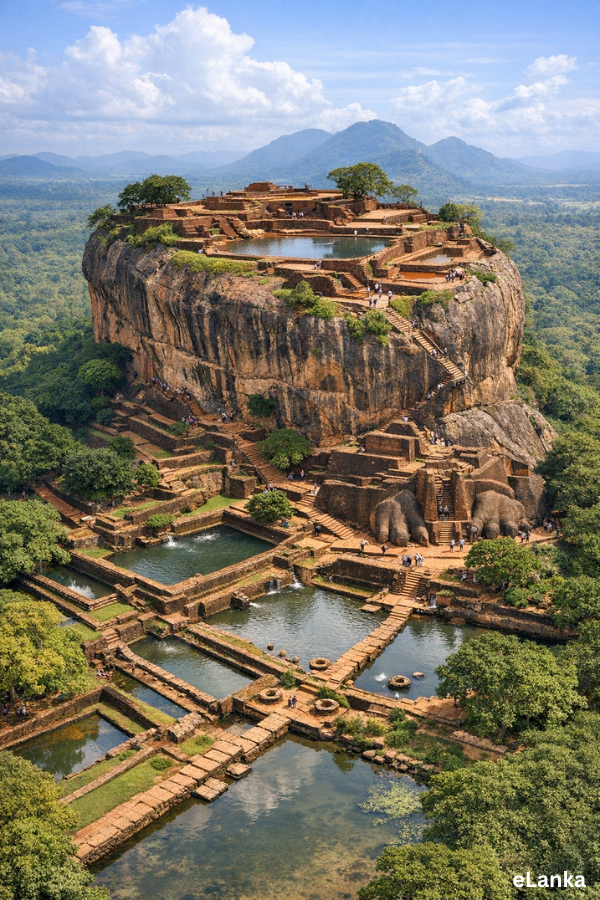
Sigiriya Sri Lanka

WHY WOULD A KING BUILD HIS PALACE ON TOP OF THIS ROCK?

Related News
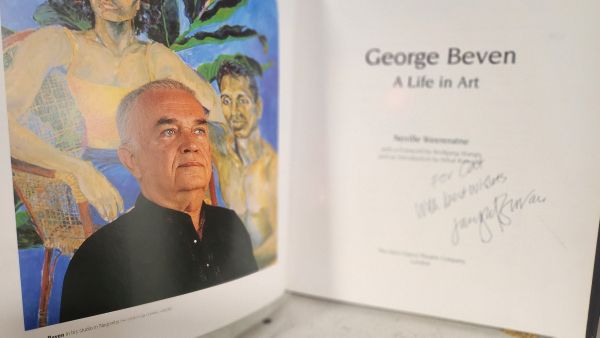
Re-writing history – the queer-washing of prolific Sri Lankan artist George Beven  ( PART ONE ) – by   Cat Clare Wright
Articles

Re-writing history – the queer-washing of prolific Sri Lankan artist George Beven ( PART ONE ) – by Cat Clare Wright

Sash Jayasinghe – 4LANKA 1,400KM Sri Lanka Run 2027
Articles

Sash Jayasinghe’s 4LANKA: 1,400KM Around Sri Lanka – July 2027

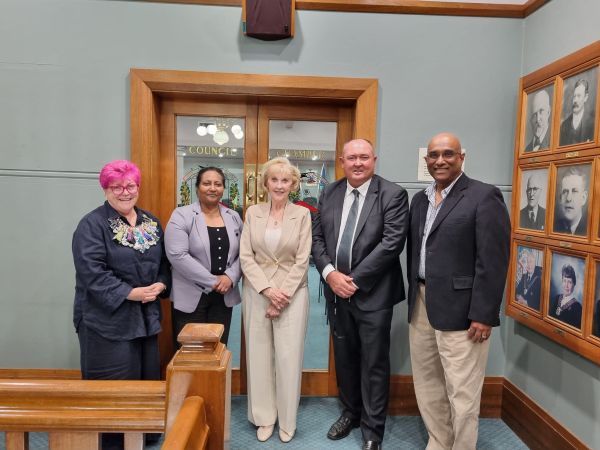
A Vision for Culturally Inclusive Aged Care-Pearl Life Care Meets with Hornsby Shire Council
Articles

A Vision for Culturally Inclusive Aged Care: Pearl Life Care Meets with Hornsby Shire Council

Janani Dananjana Wickramasinghe at Asian Para Games 2026
Articles

Janani Dananjana Wickramasinghe Carries Sri Lanka’s Medal Hopes in Three Events at the Asian Para Games 2026

Sri Lanka U19 Women
Articles

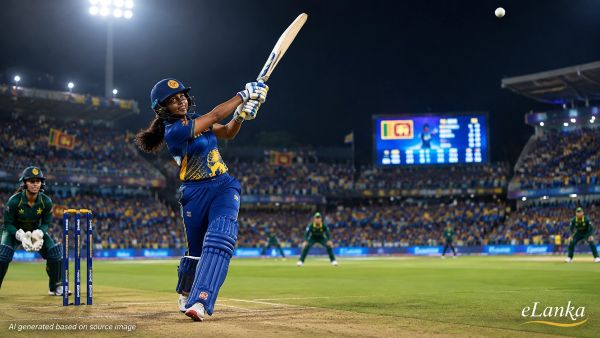
Limansa Thilakarathna and Sanjana Kavindi Lead Sri Lanka U-19 Women Past Pakistan for a Fourth Straight Win

  • Quick Links:
  • Articles
  • DESMOND KELLY
  • Dr Harold Gunatillake
  • English Videos
  • Sri Lanka
  • Sinhala Videos
  • Obituaries
  • eLanka Newsletters
  • Sunil Thenabadu
  • Trevine Rodrigo
  • Dr. Harold Gunatillake
  • Tamil Videos
  • Sinhala Movies
  • eLanka Newsletter
  • Photos

eLanka

Your Trusted Source for News & Community Stories: Stay connected with reliable updates, inspiring features, and breaking news. From politics and technology to culture, lifestyle, and events, eLanka brings you stories that matter — keeping you informed, engaged, and connected 24/7.
Kerrie road, Oatlands , NSW 2117 , Australia.
Email : info@eLanka.com.au / rasangivjes@gmail.com.
WhatsApp : +61402905275 / +94775882546
  • About eLanka
  • Terms & Conditions

Disclaimer:
eLanka is committed to sharing positive and community-focused stories. We do not publish or endorse political, religious, or ethnic viewpoints. The content published on eLanka, including articles and newsletters, reflects the opinions and views of the respective authors and not those of eLanka. eLanka accepts no responsibility or liability for the accuracy, completeness, or consequences of any content provided by contributors.

(c) 2005 – 2025 eLanka Pty Ltd. All Rights Reserved.