In an era defined by rapid technological convergence and shifting global supply chains, industrial policy across emerging economies is undergoing a fundamental metamorphosis. Sri Lanka is positioning itself to execute an ambitious strategic maneuver: leapfrogging traditional, legacy-bound industrial manufacturing stages entirely and moving directly into Artificial Intelligence (AI)-driven advanced materials manufacturing and sustainable mineral processing. According to insights articulated by high-ranking Industry Ministry officials and geopolitical and security strategic advisor Asanga D. Magedaragamage, who advises across the United States and Europe, the nation is poised to transform its subterranean mineral wealth into high-value technological exports.
Developed economies no longer treat advanced materials and artificial intelligence as disparate verticals. Instead, modern material transformations, ranging from the synthesis of solid-state electric vehicle batteries to ultra-pure semiconductor layers and high-performance polymers, rely inherently on AI-driven materials informatics and computing infrastructure. By embracing these cutting-edge methodologies, Sri Lanka aims to transcend its historical reliance on raw mineral extraction, anchoring its economic future in high-tech value addition.
Unlocking Subterranean Wealth Through Artificial Intelligence
At the heart of this industrial pivot lies Sri Lanka’s extraordinary natural mineral endowment. For generations, the island nation has exported raw or minimally processed earth resources, capturing only a fraction of their ultimate commercial value on the global stage. However, modern geopolitical shifts and Western manufacturing demands for diversified critical mineral supply chains have created an unprecedented window of opportunity.
Asanga D. Magedaragamage has emphasized that Sri Lanka must capitalize decisively on its rich mineral deposits, most notably its ultra-pure vein graphite. Boasting an astounding carbon purity level exceeding 99 percent, Sri Lankan vein graphite is recognized globally as an exceptional substrate. When subjected to AI-optimized processing, this material can be refined into pristine graphene, advanced semiconductor anodes, and high-capacity batteries essential for the electric vehicle (EV) revolution. Furthermore, high-grade deposits of ilmenite, rutile, and zircon provide a robust foundation for localized high-tech separation and refinement.

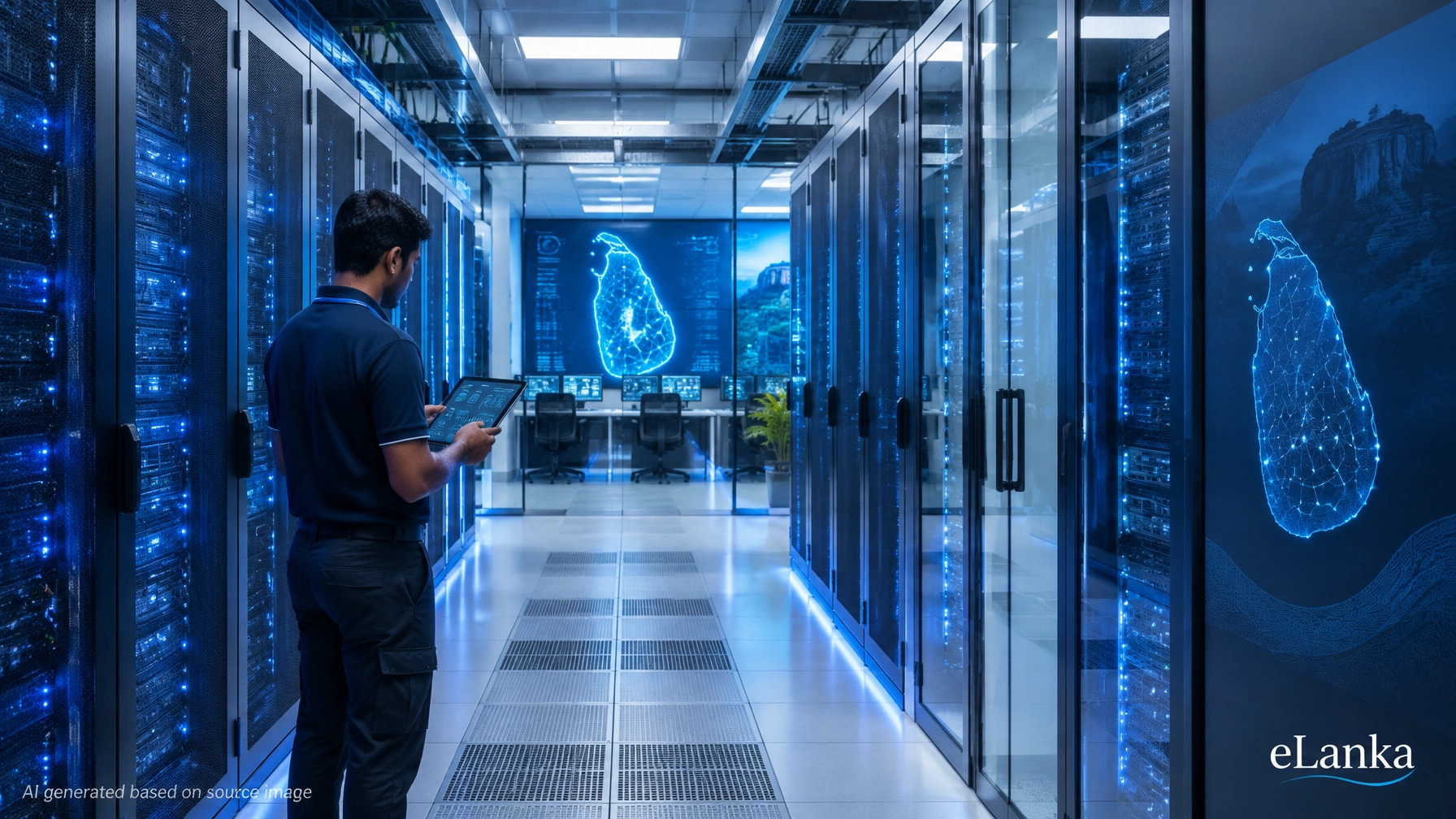
Modern material transformation is fundamentally dependent on AI-driven discovery and computing infrastructure. By deploying localized, low-resource artificial intelligence directly at the extraction and initial processing layers, the nation can bypass obsolete industrial phases. This strategic bypass allows domestic enterprises to transition immediately from raw commodity exporters to creators of high-value, AI-optimised smart materials that meet exacting international standards.
Scaling Up the Sri Lanka Institute of Nanotechnology (SLINTEC)
Realising this ambitious vision requires the strengthening and institutional scaling of existing scientific infrastructure. Industry stakeholders and policy advisors have formally requested the government to significantly expand the operational scope of the Sri Lanka Institute of Nanotechnology (SLINTEC). Moving beyond foundational research, SLINTEC is being called upon to spearhead large-scale manufacturing of advanced materials.

SLINTEC has already demonstrated its capability by successfully moving past raw mining into patented graphene synthesis. As a premier public-private entity, the institute holds multiple global patents for carbon nanotube and graphene oxide production. Advanced materials developed locally are already actively commercialised across diverse industrial sectors. Notable achievements include smart nano-fertilizers transferred to major agricultural conglomerates, moisture-management high-performance smart textiles utilised by global apparel giants such as MAS Holdings, and specialized hydrophobic industrial coatings.
By augmenting SLINTEC’s industrial capacity, Sri Lanka can cement its reputation as a robust, green-powered mineral processing hub in the Indian Ocean region. This positioning directly targets Western technology manufacturers seeking secure, environmentally conscious, and resilient supply chains for critical minerals.
Towards a Sustainable and Technologically Sovereign Future
The transition toward AI-driven advanced materials manufacturing is emblematic of a broader structural expansion following a period of macroeconomic stabilisation. Key industrial sectors across the country are demonstrating a strong shift toward regulatory modernisation and export recovery. Government authorities have locked onto localised high-tech separation of ilmenite, rutile, and zircon, ensuring that these refined materials cater directly to global supply chains for electric vehicles, advanced aerospace engineering, and green energy infrastructure
For the Global Sri Lankan community and expatriates abroad, these developments represent a profound paradigm shift, demonstrating that the nation’s scientific and intellectual capital is capable of competing at the absolute forefront of global innovation. By marrying indigenous mineral wealth with artificial intelligence and nanotechnology, Sri Lanka is not merely modernising its economy; it is rewriting its industrial destiny.
Source: https://lankanews.lk/
This article was written based on the source https://lankanews.lk/, kindly email us at info@eLanka.com.au if any information needs to be corrected.
At eLanka, we respect the rights of creators. If we have used an image you own and you’d like it removed, please email us at info@elanka.com.au and we’ll handle it promptly.