Sri Lanka. Driving Trade, Investment and Innovation across the Indian Ocean – By H.E. High Commissioner Yasoja Gunasekera

H.E. High Commissioner for Sri Lanka, Yasoja Gunasekera
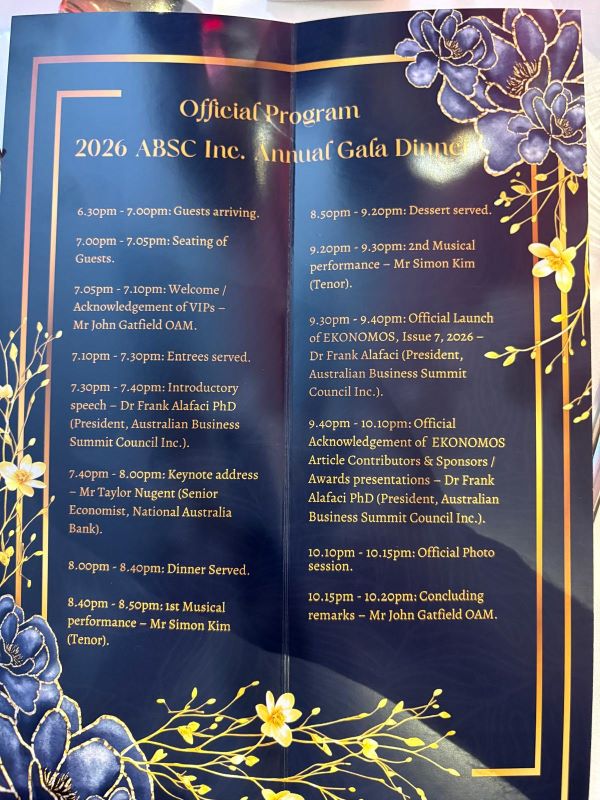
Launch of Ekonomos (Business Affairs Magazine) –
2026 Australian Business Summit Council Inc. ( ABSC ) Annual Gala Dinner
Sri Lanka offers a unique combination of ancient history, rich culture, and exceptional quality of life. International recognition continues to strengthen its global profile, including topping Time Out’s list of places to travel in October 2025, ranking among BBC Travel’s 25 Best Places to Travel in 2025, and securing 7th place in the Condé Nast Traveler Readers’ Choice Awards with a score of 95.56% as one of the world’s premier food destinations.
 While these achievements underscore its global appeal as a tourism destination, they also reflect broader national strengths – stability, cultural richness, and international visibility – that contribute to its growing attractiveness as a business and investment destination. Increasingly, Sri Lanka is being recognised not only for its lifestyle and heritage, but also for its strategic relevance in global trade, logistics, and digital connectivity.
Linking major East–West shipping routes and integrated into global data networks, Sri Lanka is uniquely placed to serve as a gateway between South Asia, the Middle East, Africa, and Southeast Asia. Its geographic advantage, combined with ongoing infrastructure development, progressive economic reforms, and a highly skilled workforce, is enabling the country to transition into a modern, outward-looking economy.
At a time when global supply chains are being reshaped and businesses are seeking resilient, well-connected, and cost-effective markets, Sri Lanka presents a compelling value proposition. Its improving macroeconomic environment, and commitment to innovation and international partnership make it an emerging hub for trade, services, and investment in the Indian Ocean region.
Strategic Location. At the Heart of Global Trade
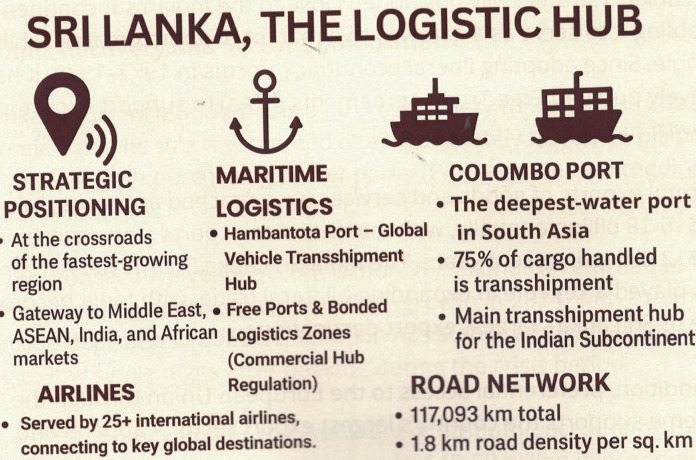
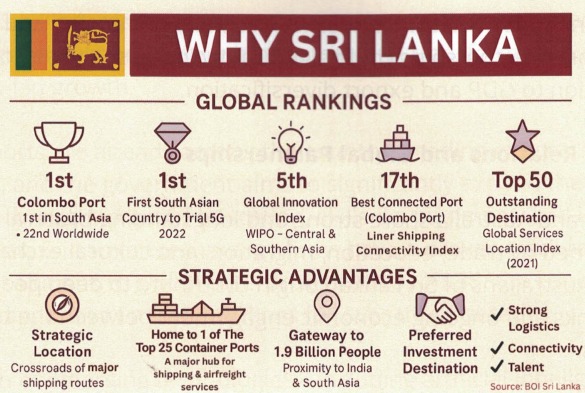
Sri Lanka is at the nexus of major global shipping routes in the Indian Ocean, which is often referred to as the “trade superhighway of the 21st century.” This provides unparalleled connectivity and access to massive regional markets. Historically, it has been a critical maritime destination, from ancient spice routes to modern container shipping lanes, shaping its economy and identity.
The country sits directly adjacent to the main Sea Lanes of Communication (SLOCs), with an estimated two-thirds of the world’s oil shipments and approximately half of global container traffic passing close to its southern coast annually. This strategic importance has enabled Sri Lanka to build a sophisticated maritime infrastructure network, with the Port of Colombo emerging as one of the busiest transshipment gateways in South Asia. The port handles over 7 million Twenty-foot Equivalent Units (TEUs) annually and plays a principal role in facilitating trade for the Indian subcontinent.
Port-related services contribute significantly to national revenue, with the logistics and transport sector estimated to generate over US$4–5 billion annually. Continued investments in deep-water port capacity, including the Colombo Port City and expansion of terminal facilities, are expected to further increase throughput and position Sri Lanka as a leading maritime focal point in the region.
Moreover, its proximity to India – one of the fastest-growing major economies – creates further opportunities for transshipment, regional distribution, and supply chain integration, particularly as global firms seek to diversify production and logistics bases.
Digital Connectivity. A Gateway in the Global Data Network
Sri Lanka benefits from a geographic advantage that extends to its integration within global digital infrastructure. The country serves as a landing point for multiple international submarine cable systems, including SEA-ME-WE 4, 5, and 6, as well as the Bharat Lanka Cable System.
These networks carry over 95% of the world’s data traffic, placing the country in a strategically important position. As a result, it has developed a growing digital services sector, with ICT exports currently valued at approximately US$1.5–2 billion annually, making it one of Sri Lanka’s top export industries.
The presence of high-capacity data connectivity supports the expansion of data centres, cloud services, fintech platforms, and IT-enabled services. With increasing global demand for digital outsourcing and remote service delivery, the country is well-positioned to scale its role as a regional digital hub.
Trade Access and Free Market Evolution
Sri Lanka is strategically positioned close to the Indian subcontinent, enabling it to serve as a gateway to a market of approximately 2 billion people. Since adopting liberal economic reforms in 1977–1978, it has actively pursued Free Trade Agreements (FTAs) to support export-led growth.
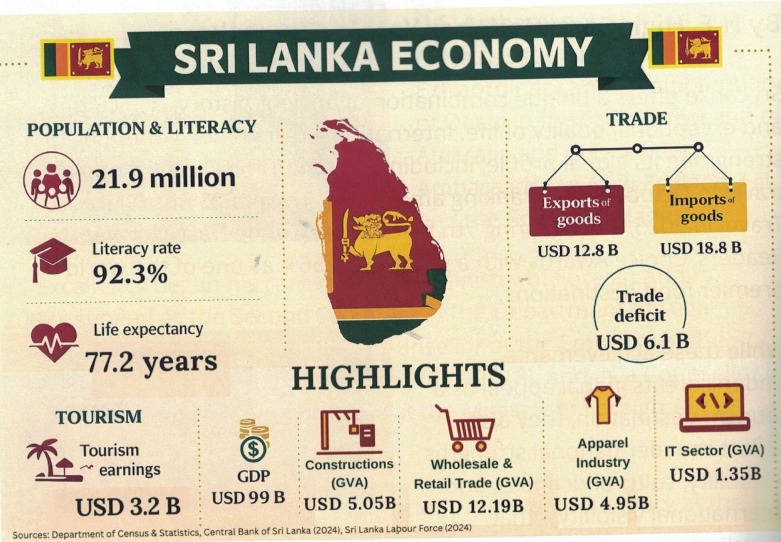
Its total exports of goods and services have reached approximately US$16-18 billion annually, with merchandise exports alone exceeding US$12 billion in recent years. The India-Sri Lanka Free Trade Agreement has played a key role in expanding bilateral trade, with India becoming one of Sri Lanka’s largest export destinations.
In addition, preferential access to the European Union through the GSP+ scheme supports the country’s largest export sector – apparel and textiles – which generates over US$5 billion annually in export earnings. Other key exports include tea, rubber products, spices, and increasingly, IT and business services.
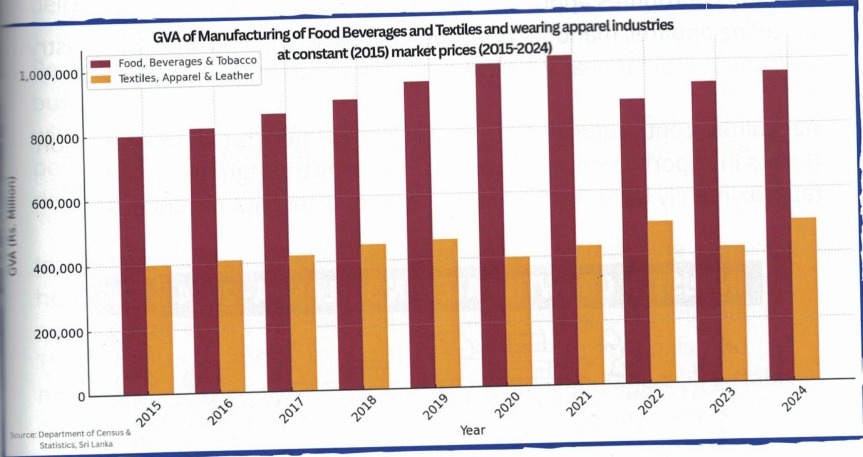
The expansion of trade agreements and preferential market access mechanisms continues to strengthen the country’s position as an export-oriented economy and an attractive base for manufacturing and re-export activities.
Economic Recovery and Sector Composition
Sri Lanka is currently undergoing a strong recovery following the 2022 economic crisis. Its size is estimated at approximately US$80-85 billion in nominal GDP, with purchasing power parity (PPP) estimates exceeding US$300 billion.
After two consecutive years of contraction, the economy returned to growth, recording approximately 5% GDP growth in 2024, with continued expansion expected in 2025-26. Inflation has stabilised significantly, falling to low single digits after peaking during the crisis period.
The Services sector remains the dominant contributor, accounting for around 60% of GDP and generating over US$45-50 billion in economic output. Tourism alone is recovering strongly, with earnings expected to exceed US$3 billion annually, driven by increased international arrivals.
Industry contributes approximately 30% of GDP, with key sectors including apparel, manufacturing, and construction. The apparel industry alone accounts for nearly 40% of total export earnings.
Agriculture contributes just under 10% of GDP, generating several billion dollars in export revenue annually, particularly through tea (approximately US$1.3-1.5 billion), spices, and coconut products.

Investment Environment and Competitive Advantages
Sri Lanka has a workforce of over 8 million people, characterised by high literacy rates exceeding 92% and a strong pipeline of graduates in IT, engineering, finance, and business disciplines. Its education system continues to produce a technically proficient and adaptable labour force, supported by a growing network of universities, vocational institutes, and industry-aligned training programs.
Labour costs are highly competitive compared to regional peers, offering a significant cost advantage for industries such as IT services, business process outsourcing (BPO), knowledge process outsourcing (KPO), and advanced manufacturing. The IT/BPM sector alone employs over 100,000 professionals and continues to expand rapidly, supported by strong English language proficiency and a reputation for high-quality service delivery.
Benefitting from a favourable time zone, Sri Lanka also enables seamless business operations across Asia, Europe, and the Middle East. Combined with strong cultural adaptability and professional standards, this positions the country as an attractive destination for global service delivery.
In addition, the country offers a high quality of life, including accessible healthcare, international-standard education, and relatively low living costs compared to other regional hubs such as Singapore and Dubai. This enhances its appeal for expatriates, digital professionals, and multinational firms seeking to establish regional operations in a stable and liveable environment.
Investor-Friendly Policies and Incentives
Sri Lanka actively promotes Foreign Direct Investment (FDI) as a central pillar of its economic development strategy. Annual inflows currently average approximately US$1-1.5 billion, with clear policy ambitions to increase this to US$3-5 billion annually over the medium term through targeted reforms and sector-specific investment promotion.
Investors can access a comprehensive suite of incentives through the Board of Investment (BOI), including tax holidays, reduced corporate tax rates, accelerated depreciation allowances, and exemptions on import duties for capital goods and project-related inputs, while dedicated investment zones and industrial parks further streamline project implementation and operational efficiency.
The country maintains Double Taxation Avoidance Agreements with over forty countries and Bilateral Investment Treaties that provide legal protection, dispute resolution mechanisms, and enhanced investor confidence. These frameworks contribute to a transparent and rules-based investment environment.
Its liberal foreign exchange regime allows for the full repatriation of profits, dividends, and capital, ensuring flexibility for international investors. Ongoing regulatory reforms aimed at improving ease of doing business, digitalising government services, and strengthening institutional governance are expected to further enhance the country’s competitiveness as an investment destination.
Key Sectors for Investment
Sri Lanka offers a diversified and evolving investment landscape across several high-growth and future-oriented sectors.
The ICT sector continues to expand rapidly, with export earnings approaching US$2 billion annually. Growth is driven by increasing global demand for software engineering, fintech solutions, cybersecurity services, and outsourcing capabilities, enhanced by a skilled workforce and strong integration into global digital value chains.
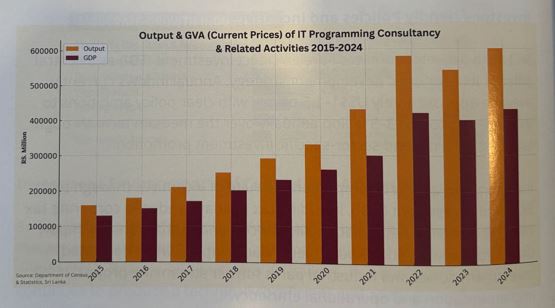
Tourism and leisure represent a major growth opportunity, supported by Sri Lanka’s globally recognised natural and cultural assets. Government targets aim to increase annual tourism revenue to over US$5 billion, with investment opportunities across hospitality, eco-tourism, wellness tourism, and integrated resort developments.

Manufacturing remains a cornerstone of the export economy, particularly in apparel, which is globally recognised for its ethical production standards and high-quality output, and opportunities are also emerging in light engineering, electronics assembly, and value-added manufacturing linked to regional supply chains.
At the same time, there is significant potential for value-added exports within the agriculture and food processing sectors, particularly in tea, spices, coconut-based products, and organic food production. Infrastructure development – especially in renewable energy, logistics, and transport – offers substantial investment possibilities, supported by long-term national development goals.
Digital Economy and Innovation
Sri Lanka has introduced the Digital Economy Roadmap 2030, which aims to expand the digital economy from approximately US$5 billion to over US$15 billion, representing around 12% of GDP. This strategy reflects a strong national commitment to digital transformation and innovation-led growth.
Digital exports are already among the country’s leading export categories, and the government aims to significantly expand the digital workforce through targeted education, skills development, and industry partnerships. Sri Lankan technology firms have a proven track record of delivering solutions to global enterprises such as HSBC, the London Stock Exchange, and Emirates Airlines for over three decades.
The growth of emerging technologies – including artificial intelligence, Internet of Things (IoT), blockchain, and automation – is driving demand for specialised skills and creating new opportunities for innovation. The country is also investing in digital infrastructure, data centres, and smart services to strengthen its position as a regional technology hub.
Start-up ecosystems and innovation hubs are gradually expanding, supported by government initiatives and private sector collaboration, further positioning the country as a competitive player in the global digital economy.
Mining and Mineral Resources. A Value-Addition Opportunity
Sri Lanka possesses a mineral sector with significant untapped potential, particularly in high-value industrial minerals. The country is globally unique as the only source of high-purity crystalline vein graphite, a critical material used in advanced technologies such as lithium-ion batteries, electric vehicles, and graphene-based applications.
In addition to graphite, Sri Lanka has substantial deposits of mineral sands, including ilmenite, rutile, and zircon, which are essential inputs for industries such as aerospace, ceramics, and electronics. Export earnings from mineral resources already contribute hundreds of millions of US dollars annually.
There is considerable scope to move beyond raw material exports toward value-added processing and advanced manufacturing. Strategic investment in downstream industries, technology transfer, and international partnerships could significantly increase the sector’s contribution to GDP and export diversification.
Bilateral Relations and Global Partnerships
Sri Lanka and Australia share strong and longstanding bilateral relations, underpinned by trade, education, migration, and cultural exchange. Over 180,000 Australians of Sri Lankan origin contribute to deep people-to-people links and ongoing economic engagement between the two countries.

Education remains a key pillar of this relationship, with approximately 19,000 Sri Lankan students studying in Australia annually, generating significant export revenue and strengthening professional and institutional connections.
Australian universities are increasingly expanding their presence in Sri Lanka through partnerships, offshore campuses, and collaborative programs. This supports Sri Lanka’s ambition to position itself as a regional education hub while enhancing skills development and knowledge transfer.
Beyond education, there are growing opportunities for collaboration in trade, investment, renewable energy, infrastructure, and digital innovation. These partnerships align closely with shared regional priorities and create a strong foundation for long-term economic cooperation.
These opportunities for strategic partnerships present a natural alignment of interests, building on strong people-to-people links, educational ties, and shared regional outlooks with countries such as Australia.
As Sri Lanka continues its transition toward a more resilient, diversified, and innovation-driven economy, early engagement offers the potential for long-term value creation. Those who recognise the country’s strategic trajectory will be well-positioned to participate in, and contribute to, its next phase of growth as a key hub connecting international markets.
Conclusion
Sri Lanka presents a compelling and increasingly sophisticated case for global engagement, underpinned by its strategic geographic position, strong human capital, and evolving policy framework. Anchored at the crossroads of major shipping and data routes, it comprises a rare combination of physical and digital connectivity that is highly attractive in today’s interconnected economy.
The country’s economic recovery, supported by structural reforms and international partnerships, signals a renewed commitment to stability, transparency, and sustainable growth. At the same time, targeted investment in infrastructure, digital transformation, and value-added industries reflects a forward-looking development strategy designed to integrate it more deeply into worldwide value chains.
For businesses and investors, the country offers not only market access to South Asia and beyond, but also a platform for regional operations across logistics, technology, manufacturing, and services. Its skilled and cost-competitive workforce, combined with investor-friendly policies and improving regulatory frameworks, creates a supportive environment for both established enterprises and emerging ventures.
Importantly, the country demonstrates openness to cross-border collaboration – particularly in areas such as digital innovation, education, and strategic partnerships. This presents a natural alignment of interests, building on strong people-to-people links, educational ties, and shared regional outlooks with countries such as Australia.
As Sri Lanka continues its transition toward a more resilient, diversified, and innovation-driven economy, early engagement offers the potential for long-term value creation. Those who recognise the country’s strategic trajectory will be well-positioned to participate in, and contribute to, its next phase of growth as a key hub connecting international markets.
About H.E. Yasoja Gunasekera
 H.E. Yasoja Gunasekera is the High Commissioner of Sri Lanka to the Commonwealth of Australia.
Her Excellency brings three decades of diplomatic experience, with a career spanning the Legal, South Asia, United Nations, and West & Economic Affairs divisions within the Ministry of Foreign Affairs, including as Additional Secretary overseeing bilateral political affairs.
Ms Gunasekera also served as the Ambassador to Indonesia (2019–2022) and the High Commissioner to Bangladesh (2015–2017), and as the first Consul General at Sri Lanka’s Consulate General in Guangzhou, China, as well as in New Delhi and at the Sri Lankan Permanent Mission to the United Nations in New York, United States of America.
High Commissioner Gunasekera holds a Bachelor of Laws (Hons.) degree from the University of Warwick, United Kingdom and a Master of Arts degree in Foreign Affairs and Trade from Monash University, Melbourne, Australia awarded under an AUSAID scholarship.
source: ekonomos