The Origin of Hindi Film Songs and the First Hindi Film Song-by Gamini Kariyawasam


There are few cultural phenomena as deeply woven into the life of the Indian subcontinent as the Hindi film song. For nearly a century, Hindi cinema has told stories not only through dialogue and images but also through melody. Love, devotion, separation, patriotism, sorrow, celebration and even philosophical reflection have all found expression through the Hindi film song.
Today, a Hindi film is often difficult to imagine without music. But this tradition did not begin with modern Bollywood. Its roots go back to the extraordinary transformation that took place in Indian cinema in 1931, when India entered the era of talking pictures.
The Musical Tradition Before Cinema
The origins of Hindi film music cannot be understood without remembering the long musical traditions of India.
For centuries, music was an important part of Indian cultural life. Classical traditions such as Hindustani music developed alongside devotional singing, folk music, qawwali, bhajans, theatrical music and regional traditions. The great traditions of the “Parsi theatre”, travelling theatrical companies and musical dramas were particularly important to the later development of Indian cinema.
Audiences were already accustomed to stories being accompanied by music and singing. Consequently, when sound technology arrived in Indian cinema, filmmakers did not regard song as something foreign to the cinematic experience. Instead, they naturally incorporated the existing musical culture into the new medium.
This helps explain why songs became such a permanent feature of Indian cinema.
The Coming of Sound
The decisive moment came in 1931 with “Alam Ara”, directed by Ardeshir Irani.

Image Source:Wikipedia
The film premiered at the Majestic Cinema in Bombay (now Mumbai) on 14 March 1931 and is recognized as India’s first sound film. It was produced by Imperial Movietone and starred Master Vithal, Zubeida and Prithviraj Kapoor, among others.
“Alam Ara” was advertised as a film of “talking, singing and dancing,” a description that proved remarkably prophetic. The film contained seven songs, thereby establishing a pattern that would become one of the defining characteristics of Indian cinema.
The introduction of synchronized sound changed cinema completely. During the silent-film era, music was normally supplied separately in the cinema hall by musicians or orchestras. With the talkie, the human voice, dialogue, music and singing could become part of the film itself.
1931 “Alam Ara” film >
And this is where the history of the Hindi film song truly begins.
The First Hindi Film Song .
The song generally recognized as the first song of Hindi cinema was:
“De De Khuda Ke Naam Pe Pyare” >
It appeared in Alam Ara and was sung by Wazir Mohammed Khan, who played the role of a fakir in the film. The song was a simple appeal for charity in the name of God. Yet its historical significance is enormous: it marked the moment when a song became part of India’s new sound-film experience.
The words are generally associated with the lyricist Joseph David, while the musical credit has been the subject of some historical discussion. Sources associated with the film identify Firozshah M. Mistri as a composer, while other historical accounts have also mentioned B. Irani.
Thus, it is safer to recognize the song’s historical importance without oversimplifying the disputed details of its musical credits.
Wazir Mohammed Khan – The Voice That Began an Era
Wazir Mohammed Khan occupies a special place in the history of Indian cinema because his voice is associated with the first recognized Hindi film song.
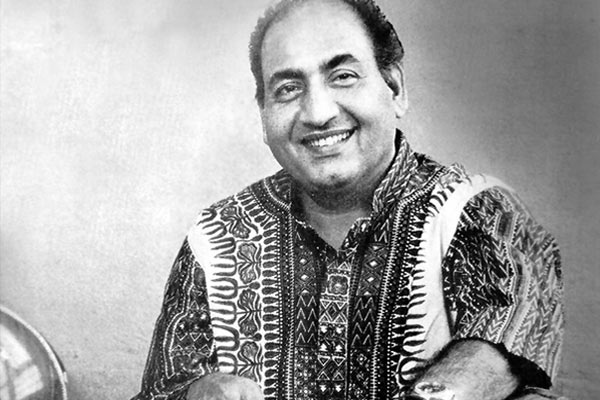
Image Source:Thesportsmanwritesaway
He was not merely a playback singer in the modern sense. In 1931, playback singing did not yet exist in Indian cinema. The performer appearing before the camera had to sing while the sound was being recorded.
This created enormous technical difficulties.
The actors had to perform their scenes while microphones and recording equipment were positioned close enough to capture their voices. The National Film Archive of India notes that “Alam Ara” used a Tanar single-system recording system, in which image and sound were recorded simultaneously.
The musicians also had to perform close to the actors while remaining outside the camera’s view. This was completely different from the sophisticated recording studios and playback systems used by later generations of Hindi cinema.
A Song Recorded Without Playback.
Modern audiences may find it difficult to imagine the conditions under which “De De Khuda Ke Naam Pe Pyare” was recorded.
There was no separate studio recording followed by lip-syncing.
There was no playback singer hidden behind the screen.
There was no sophisticated mixing desk.
The singer had to perform while the scene was being filmed.
The harmonium and tabla accompaniment was arranged near the performance, while the sound was captured directly during filming. A historical study of the birth of the Indian film song describes “Alam Ara” as using live singing because playback technology had not yet been introduced.
This primitive but revolutionary technique gave birth to a tradition that would eventually become one of the world’s largest film-music industries.
Why Did Songs Become So Important in Hindi Cinema?
The extraordinary importance of songs in Hindi cinema was not accidental.
Indian audiences already had a strong cultural relationship with musical storytelling. Classical music, folk traditions, religious songs, devotional performances and theatre had accustomed people to expressing emotion through music.
Cinema simply brought these traditions into a new technological environment.
A song could communicate something that ordinary dialogue could not. A few minutes of music could express:
* love that could not be spoken;
* separation between two people;
* devotion to God;
* longing for home;
* patriotism;
* celebration;
* grief;
* philosophical reflection; and
* the inner emotions of a character.
Consequently, songs became more than entertainment. They became another language of Indian cinema.
The Explosion After *Alam Ara
The success of *Alam Ara* was quickly followed by other musical films.
One of the important early examples was “Shirin Farhad”, released later in 1931. It reportedly contained a remarkable number of song sequences, demonstrating how quickly filmmakers recognized the popularity of musical storytelling.
Another early film, “Indra Sabha”, became famous for its extraordinarily large number of musical sequences. According to historical accounts of Hindi film music, some early productions contained dozens of songs, although this enormous number soon became less common.
Within a few years, the Hindi film industry had established a distinctive formula in which songs were integrated into the narrative.
The Arrival of Gramophone Records
Another major development occurred when Hindi film songs began to be commercially recorded on gramophone records.
By 1934, Hindi film songs were being recorded on gramophone discs, allowing audiences to enjoy popular songs outside the cinema hall.
This was a revolutionary development.
Previously, a song belonged primarily to the performance. Now it could be reproduced, purchased and heard repeatedly.
The song consequently became an independent cultural product.
It could travel from Bombay to Delhi, Calcutta, Lahore, Colombo and other parts of the subcontinent. Film music therefore began to transcend the boundaries of cinema itself.
From Live Singing to Playback Singing
One of the most important technological developments in the history of Hindi film music was the introduction of playback singing.
In the earliest sound films, actors themselves had to sing. But as recording technology improved, singers could record songs separately in a studio. Actors could then move their lips on screen to a previously recorded voice.
This changed everything.
A film no longer needed an actor who was simultaneously an excellent singer. A great actor could be paired with a great singer.
This eventually produced the extraordinary phenomenon of the playback singer.
The later history of Hindi cinema would therefore give the world legendary voices such as K. L. Saigal, Lata Mangeshkar, Mohammed Rafi, Kishore Kumar, Mukesh, Asha Bhosle and many others.

Source:Indianewengland
Asha Bhosle
But their remarkable careers can ultimately be traced back to the technological and artistic breakthrough of the early 1930s.
From Wazir Mohammed Khan to the Golden Age
The distance between Wazir Mohammed Khan’s simple song in *Alam Ara* and the elaborate orchestral compositions of the 1950s and 1960s is enormous.
Yet there is an unbroken historical connection.
The first film song opened the door.
The 1930s developed the musical language of sound cinema.
The 1940s brought remarkable composers and singers.
The 1950s and 1960s produced what many regard as the **Golden Age of Hindi film music.
During this period, composers such as Naushad, Shankar–Jaikishan, S. D. Burman, Madan Mohan, Salil Chowdhury, O. P. Nayyar and others transformed film music into a sophisticated art form.
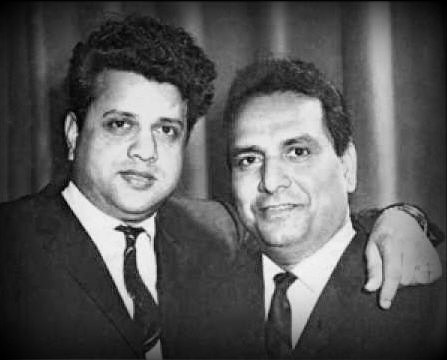
Image Source:shankarjaikishan
Shankar–Jaikishan
Poets and lyricists also became central to the process. The words of Sahir Ludhianvi, Shakeel Badayuni, Shailendra, Majrooh Sultanpuri, Kaifi Azmi and many others gave Hindi cinema a literary dimension.
Thus, the Hindi film song evolved from a simple live performance into a complex collaboration between poet, composer, singer, musician, actor, director and recording engineer.
The Lost First Song
There is a poignant irony in the story of the first Hindi film song.
Although “De De Khuda Ke Naam Pe Pyare” is regarded as a landmark in Indian musical history, the original “Alam Ara” The film is lost. No complete print of the film survives today.
Consequently, the original experience of hearing Wazir Mohammed Khan perform the song in the film has disappeared into history.
This makes the song almost mythical.
We know its title, its singer, its film and its historical significance. But the original cinematic experience that audiences witnessed on that evening in Bombay in 1931 is no longer available to us.
The first great voice of Hindi cinema has therefore become a voice from the past that we cannot hear in its original form.
A Remarkable Beginning
The story of Hindi film music is ultimately a story of technological innovation meeting India’s ancient love of music.
Before “Alam Ara”India had music.
Before “Alam Ara” India had theatre.
Before “Alam Ara, India had singers, poets, composers and musicians.
But “Alam Ara” brought voice, music, drama and moving images together in one recorded medium.
On 14 March 1931, when Wazir Mohammed Khan sang “De De Khuda Ke Naam Pe Pyare” as the fakir in “Alam Ara”, he could hardly have known that his performance would be remembered as the beginning of an extraordinary musical tradition.
From that modest song grew an enormous cultural industry—one that would eventually produce thousands of unforgettable melodies and some of the most celebrated singers, composers and lyricists in the history of world popular music.
Conclusion
The origin of the Hindi film song is therefore not simply the story of one song or one film.
It is the story of a cultural transformation.
“De De Khuda Ke Naam Pe Pyare”, sung by Wazir Mohammed Khan in “Alam Ara” in 1931, stands at the beginning of the recorded Hindi film-song tradition.
From that humble fakir’s song emerged a musical tradition that eventually became inseparable from Indian cinema.
The first song was simple.
Its legacy was anything but simple.
It opened a door through which generations of singers, composers, musicians and poets would enter—and through which Indian cinema would find one of its most distinctive voices.