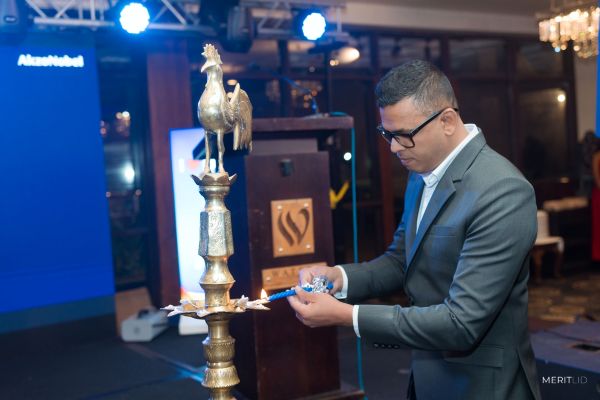
The delicate equilibrium between human settlements and the majestic wildlife of Sri Lanka has reached a significant milestone with the official inauguration of a new conservation initiative. On 15 July 2026, Uga Resorts formally commissioned the second phase of its community elephant coexistence programme at Uga Ulagalla, situated in the historic environs of Anuradhapura. This pioneering project, which features a sophisticated five-kilometre electric community fence, represents a collaborative triumph involving local villagers, the resort management, and the esteemed Centre for Conservation and Research (CCR).
Designed as a proactive response to the persistent challenges of human-elephant conflict in the region, the project serves as a sentinel for 65 farming families. By encompassing approximately 132 acres of vital agricultural land, the initiative ensures that the livelihoods of these individuals are safeguarded from the accidental yet devastating incursions of foraging elephants. The implementation of this phase reflects a substantial financial commitment, with Uga Resorts contributing over LKR 3.17 million toward the total project cost of LKR 4.5 million, illustrating a profound dedication to the social and environmental fabric of the area.
A Strategic Paradigm in Wildlife Coexistence
The methodology employed in this project departs from traditional wildlife management strategies which often seek to confine animals within restricted geographical boundaries. In a departure from conventional “habitat fencing,” which frequently disrupts the natural migratory routes of the endangered Sri Lankan elephant, these “community fences” are strategically positioned around human habitations and cultivated plots. This nuanced approach ensures that the elephants maintain their freedom of movement through the landscape while being discouraged from entering the specific zones occupied by the local community.

Functioning primarily as a psychological deterrent rather than a physical barrier, the fence delivers a mild, non-harmful electric pulse that encourages the elephants to perceive the village perimeter as an undesirable path. This non-lethal and non-confrontational method has been championed by the Centre for Conservation and Research as an instrumental tool in reducing the hostility that can often arise when traditional farming methods are threatened by wildlife. By mitigating crop raiding, the project fosters a culture of tolerance and appreciation for these iconic creatures among the global Sri Lankan community and local residents alike.
The Foundation of Scientific Research
The successful execution of this second phase is deeply rooted in the rigorous academic and field work conducted at the Elephant Research Centre (ERC). Established at Uga Ulagalla in 2020, the centre was founded through the vision of Katharina Raaben, in partnership with the distinguished conservationists Dr Prithiviraj Fernando and Dr Jennifer Pastorini. Their collective expertise has been fundamental in mapping elephant movements and understanding the complex behavioural patterns that inform the placement and maintenance of the fencing systems.

The Elephant Research Centre serves as more than just a repository of data; it is an active hub for education and outreach. By engaging both the local populace and visiting guests, the ERC facilitates a deeper understanding of the ecological importance of the Sri Lankan elephant. The insights gained from this ongoing research were instrumental in the success of the first fencing initiative, which has protected the villages of Pittala Konderama and Karambe since early 2023. Reports from those regions indicate a near-total cessation of elephant-related incidents, providing a robust proof of concept for the current expansion.
Empowering the Local Community
Central to the sustainability of the fencing project is the active participation and investment of the local farmers themselves. Of the total LKR 4.5 million investment, a significant portion, LKR 1.32 million, was contributed by the community. This collective investment ensures a sense of ownership and responsibility among the villagers, who are now empowered to maintain the fence and monitor its efficacy. This model of shared responsibility is the antithesis of top-down conservation and is replete with potential for replication across other conflict-prone regions of the island.

For the 65 families residing within the protected perimeter, the project brings a renewed sense of security. Previously, the threat of nocturnal raids by elephants meant that farmers often had to stay awake through the night to guard their crops, a practice that was both exhausting and inherently dangerous. With the completion of the 5-kilometre fence, these individuals can now focus on the productive cultivation of their 132 acres of land, knowing that their homes and harvests are secured by a system that respects the natural order of the wild.
Sustainable Tourism and Global Responsibility
As a premier destination in the Cultural Triangle, Uga Ulagalla demonstrates how luxury hospitality can serve as a catalyst for meaningful environmental advocacy. The resort provides an exceptional base for members of the global Sri Lankan community and international travellers to explore the UNESCO World Heritage site of Anuradhapura and the surrounding national parks of Minneriya and Wilpattu. However, it is the resort’s commitment to “Good News Stories” and tangible conservation that truly distinguishes it within the industry.

Guests at the resort are invited to experience these conservation efforts first-hand. Through guided visits to the Elephant Research Centre and educational sessions on the Junior Ranger Programme, visitors gain a unique perspective on the challenges and triumphs of wildlife protection in the 21st century. This transparency and involvement allow guests to see their patronage not merely as a leisure activity, but as a direct contribution to the preservation of Sri Lanka’s heritage and the prosperity of its rural communities.
In an era where habitat loss and climate change pose unprecedented threats to biodiversity, the Uga Resorts community elephant fencing project stands as a beacon of innovation and social consciousness. It proves that through the synthesis of scientific research, community empowerment, and corporate responsibility, a future where humans and elephants thrive in harmony is not only possible but actively being built in the heart of Sri Lanka.
Source: https://theartsshelf.com/2026/07/21/uga-resorts-elephant-conservation-project-sri-lanka/
This article was written based on the source https://theartsshelf.com/2026/07/21/uga-resorts-elephant-conservation-project-sri-lanka/, kindly email us at info@eLanka.com.au if any information needs to be corrected.
At eLanka, we respect the rights of creators. If we have used an image you own and you’d like it removed, please email us at info@elanka.com.au and we’ll handle it promptly.