When the Sea Breathes Again: A Heartfelt Human Story Behind the Strait of Hormuz Relief-by Harold Gunatillake

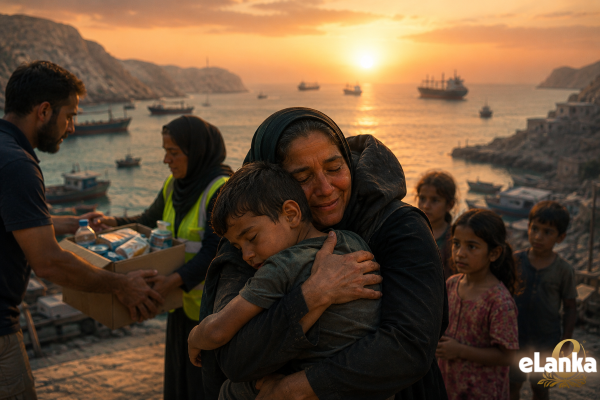
Washington had paved the way for ships to pass safely under U.S. protection, ensuring smooth and secure passage.
Overview:
The U.S. military is quietly assisting and guiding numerous commercial vessels through the Strait of Hormuz to help them avoid Iranian restrictions. By advising ships to sail “dark” (turning off
navigation transponders) and providing a strategic presence, the U.S. has successfully helped about a quarter of the non-Iranian ships trapped in the region find their way out. The U.S. guidance effort operates with care and coordination: U.S. Central Command (CENTCOM) actively advises ships, but due to serious threats from Iranian fast boats and missiles, it is a discreet, coordinated effort rather than an official armed escort. Recently, only about 7 to 9 commercial ships are passing through each day—significantly fewer than the around 100 before the conflict. Nonetheless, the U.S. has helped approximately 70 commercial ships safely exit the waterway in the past week.
For weeks, the world’s busiest shipping lane felt like a tightening fist. Every sailor crossing the Strait of Hormuz carried not just cargo, but a sense of fear. Families back home — in Galle, Jaffna, Trincomalee, Batticaloa — also shared that worry, even if they didn’t say it aloud.
Then, almost like a long-held breath finally let out, the news arrived: Washington had given the green light for ships to pass safely with U.S. protection.
To shipowners, it was a strategic move. But to many of us, it meant something even more personal — a deep sense of relief.
Ask any Sri Lankan seafarer what the Strait of Hormuz means, and they probably won’t think of geopolitics. Instead, they’ll share memories of that quiet moment as their ship enters the narrow waterway — the calm on the bridge, the firm grip on the railings, and that whispered prayer just before dawn. One captain summed it up perfectly: “You don’t fear for the ship. You fear for the people on it.” For the men and women who spend months away from home, knowing that a strong escort now keeps watch over them isn’t just news; it’s a heartfelt promise of their safety.
Families Who Can Finally Sleep
In Panadura, a mother who hasn’t slept properly in days finally closes her eyes, feeling relief at last. Her son, a marine engineer on a tanker, must navigate through Hormuz every month, and she’s finally able to rest a little easier.
In Negombo, a little girl looks up at her father with hope and asks, “Thaththa, is Uncle Amal’s ship safe now?” For the first time in weeks, her father can gently reassure her, “Yes, putha. It is.”
These small but meaningful victories often go unnoticed — the gentle calming of a mother’s heartbeat, a child’s quiet relief, and the peaceful return to a warm, safe home.
Shipowners Are Thankful — But So Are Ordinary People Shipowners have warmly expressed their gratitude to Washington for restoring safe passage. But behind these words are thousands of unseen faces, each with its own stories and hopes.
- Dock workers who depend on steady shipping schedules
- Fishermen whose fuel prices rise with every global shock
- Drivers who fear another sudden petrol hike
- Small businesses that rely on imports to survive
When the Strait of Hormuz is secure, it helps make the world a safer place for everyone.
Understanding why this matters in Sri Lanka’s daily life can help us appreciate the importance of safe, calm seas. As an island nation, we’re connected to the world through the sea, and every litre of fuel, medicine, and food we rely on depends on the peaceful waters far from our shores. When shipowners say, “thank you,” it’s a heartfelt message not just for themselves but for the millions of people who may never set foot on a ship but are directly affected by what happens at sea.
This sense of stability brings many benefits: it helps keep fuel prices steady, makes shipping costs more predictable, reduces shocks to our delicate economy, and gives families some much-needed breathing room. In these challenging times, that extra space is truly valuable and can make a real difference in our daily lives.
A Small Light in a Troubled World
The Gulf remains a tense region, and the world still feels uncertain. But for now, the sea has calmed — just a little, and sometimes, that’s all we need.
It’s enough for a sailor to smile, for a mother to find rest, and for a nation to breathe a sigh of relief.
Ultimately, this story isn’t just about ships and straits. It’s about people — their hopes, fears, and the fragile peace that allows them to keep going.
The Gulf is still a tense region.
The world is still uncertain.
But for now, the sea has calmed — just a little.
And sometimes, that is enough.
Enough for a sailor to smile. Enough for a mother to sleep. Enough for a nation to exhale.
(Inspired me to write this article after viewing a post in THE STRAIT TIMES (Singapore) headed: “Strait of Hormuz ship transits are rising thanks to US help-published May 31st 2026)
End