141 Years of the Buddhist Flag: A Timeless Symbol of Unity and Peace-by Kalani-eLanka
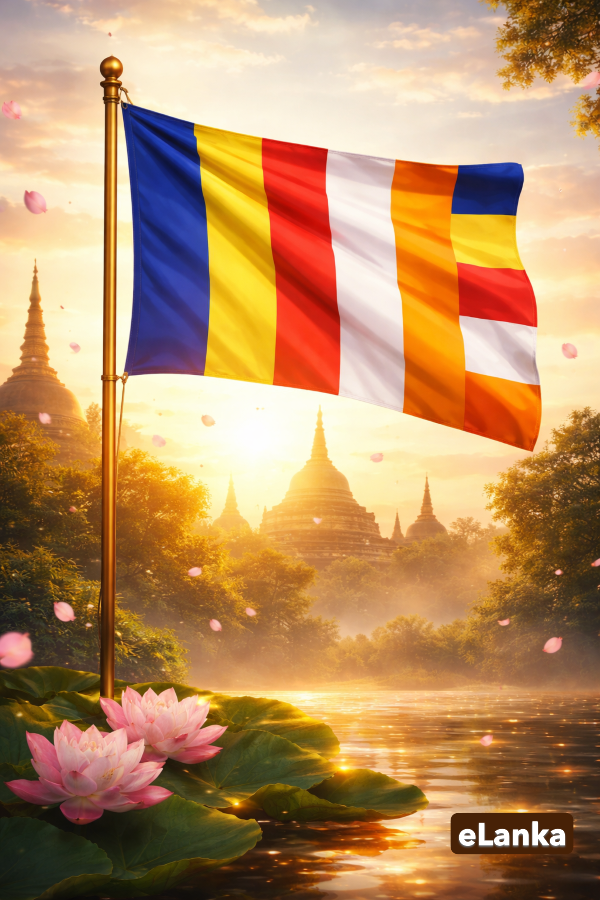
Today marks 141 years since the creation of the Buddhist Flag, which was first designed on 14 February 1885. Since its inception, the flag has stood as a powerful global symbol of Buddhism, representing peace, harmony, wisdom, and unity among Buddhists worldwide.
The Buddhist Flag was created during a period of Buddhist revival in Sri Lanka, at a time when there was a growing need to unite Buddhists under a common identity. The design was developed by the Anagarika Dharmapala together with members of the Buddhist Theosophical Society.
The flag consists of six vertical stripes. The first five colors—blue, yellow, red, white, and orange—represent the rays that emanated from the body of the Buddha after His Enlightenment. The sixth stripe is a combination of these five colors, symbolizing the universality of the Buddha’s teachings and the unity of all beings.
Over the decades, the Buddhist Flag has transcended national boundaries. It is now flown in Buddhist temples, homes, and institutions across Asia and the world, especially on significant days such as Vesak, Poson, and other religious observances. It serves as a reminder of the core values of Buddhism: compassion (karuṇā), loving-kindness (mettā), wisdom (paññā), and peace (santi).
As we commemorate 141 years since its creation, the Buddhist Flag continues to inspire millions, standing not only as a religious emblem but also as a universal symbol of peace and coexistence in an increasingly divided world. Its enduring presence reminds humanity of the timeless relevance of the Buddha’s message and the importance of unity beyond race, nation, or belief.