Lester and Ceylon Theatres : The Peak of a career-By Uditha Devapriya
Source:Island
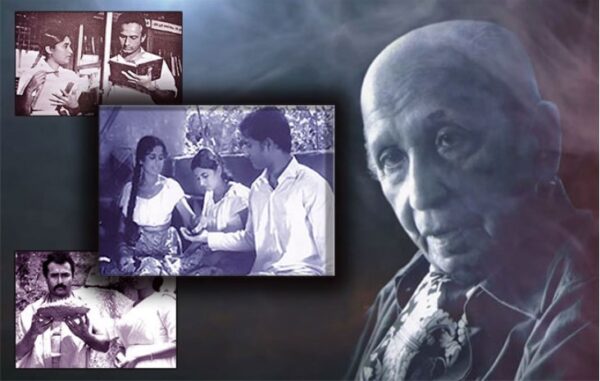
The three films that Lester James Peries directed for Ceylon Theatres – Golu Hadawatha (1968), Akkara Paha (1969), and Nidhanaya (1970) – stand out among the finest ever made in this country. They are an affirmation of life, sweeping epic-like fables that seem to tell us about ourselves, who we are and how we live. When Ceylon Theatres commissioned Peries to take on these projects, it was allegedly on the verge of bankruptcy. As he recalled for A. J. Gunawardena many, many years later, the company had reached a point where it preferred serious, low budget productions to expensive box-office flops.
The trilogy marked Peries’s second foray into a production financed by a mainstream studio. The first was, of course, Sandeshaya, produced by K. Gunaratnam. But Sandeshaya was of a totally different calibre, mainstream and conventional in the best sense of those terms. From an artistic point of view, his reimagining of a Sinhalese uprising against Portuguese rule left much to be desired, though it broke box-office records and found a ready audience in the Soviet Union. It introduced Gamini Fonseka to the screen, topping even the real hero of the story, played by Ananda Jayaratne. It also established Peries’s reputation as someone who could be trusted with a large, lavish production.
His work for Ceylon Theatres did not involve such a production. The situation was such that by that time, the mainstream studio system in the country was falling apart. The State was playing a more interventionist role in the film industry, promoting local productions over the imported variety. This had a profound effect on the studios, forcing them to revise their strategies. At the beginning of the decade, it would have been difficult to imagine a major production company hiring someone like Lester to do not one, not two, but three films in a row: Lester himself has recounted, many times, that while making Gamperaliya the studios effectively blacklisted his crew, refusing to lend them lighting equipment.
By 1968 Lester had earned an unenviable epithet for himself: he had become, in the words of his detractors, a “prestige failure.” On this point he is often compared to Satyajit Ray. But Ray worked within a different frame and a different culture: notwithstanding his refusal to make concessions to the box-office, Ray enjoyed a wider, more diverse market, in which it was possible to sustain an art-house and a commercial film industry at the same time. In Sri Lanka the issue was that even popular films, made by the big studios, were losing money. One of Peries’s friends, the producer P. E. Anthonypillai, had persuaded the Ceylon Theatres Board that “it was better policy to attempt some serious productions.”
The Sinhala film industry has always encountered, or suffered from, a tenuous relationship between cinema and literature, and often the theatre. Most of the early films – including the first, Kadawunu Poronduwa (1947) – were based on novels and plays, if not historical epics which themselves had been adapted as novels and plays. Ornate, decorative, and not a little tawdry, the tenor and mood of these works rang false, and adapted to the screen, they seemed twice or thrice removed from the realities of life. That most of these productions had been shot in the Madras studios reinforced these qualities, particularly with the use of audio-visual elements that were, if not Indian, then evocative of Indian life. Mervyn de Silva no doubt had this in mind when he called Rekava the first Sinhalese film.
By the time Lester James Peries entered the stage in 1956, things had begun to change. Literature and theatre, once laden with high-flown dialogues and ornate landscapes, had become more naturalised. Even Ediriweera Sarachchandra’s attempts at stylised theatre seemed, at least with Maname and Sinhabahu, the twin peaks of his career, truer to life than the John de Silva plays. If Martin Wickramasinghe had spearheaded a revolution in literature in 1947, with Gamperaliya, he completed it in 1956 with Viragaya, and in 1957 with Kaliyugaya, the latter being in my opinion his finest novel. Elsewhere writers like G. B. Senanayake and dramatists like Gunasena Galappatti were experimenting with different styles. The result was an efflorescence of the arts.
In other words, the cultural revolution which led from 1956, and in a way also preceded it, provided a rich storehouse of material for Peries’s films. Meeting Martin Wickramasinghe for the first time, Peries reportedly told him that with the resources of the cinema even a directory could be turned into a film. Wickramasinghe had come from a generation that saw cinema purely as escapist entertainment: his film reviews, including a particularly acerbic one of Asokamala which he charges as having corrupted history, show that he didn’t think of the medium highly. Yet by pioneering a revolution in the arts, he unleashed a paradigm shift in the cinema. It was this which Lester took up, starting with Gamperaliya, the first authentic film – “full of Chekhovian grace” as Lindsay Anderson called it – made here.
These adaptations – and there were many of them in Lester’s career – worked best when the director approached the material from a cinematic rather than an originalist standpoint. What do I mean by “originalist”? I mean that attitude which encourages scriptwriters and filmmakers to literally transpose a novel or a play. Neither Lester nor Regi Siriwardena, his screenwriter and in my opinion the finest screenwriter this country ever produced, went for such an approach with Gamperaliya. Aided in no small part by Tissa Abeysekara, Peries and Siriwardena cut away everything but the barest essentials of the story, which centre on the romance between Piyal and Nanda. Everything else, including Nanda’s brother Tissa’s forays in the city and a side-plot involving Laisa, were removed from the script.
Lester’s next two films – Delovak Athara (1966) and Ran Salu (1967) – are in many ways interconnected. Both were based on original screenplays, though the latter was based on a story P. K. D. Seneviratne wrote for Punya Heedeniya. Both feature Tony Ranasinghe, J. B. L. Gunasekera, and Irangani Serasinghe and both are set in Colombo. They almost seem like an interregnum in Lester’s first few years, though both are, without exception, very finely done and directed. These confirmed his reputation as a prestige failure, even though Ran Salu, no doubt because of its Buddhist and traditionalist theme, became a box-office success. They also established him as a man who could be trusted, and encouraged the justifiably cautious Board at Ceylon Theatres to take him in at P. E. Anthonypillai’s bidding.
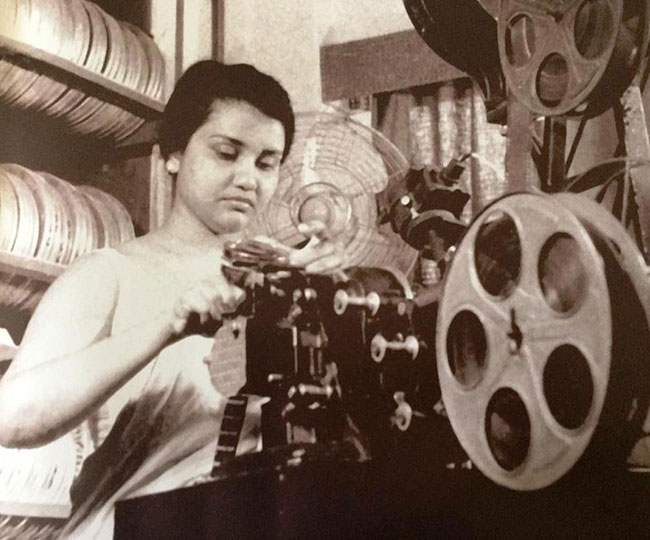
Ceylon Theatres had more or less granted Lester his benediction. Though he had to put up with various constraints – he couldn’t hire his own crew, and even the work he and his wife, Sumitra Gunawardena, supervised, had to be shared, at least in the opening credits, with the studio technicians – he was given “full control over story, script music, editing.” This was a dream come true: the opportunity and carte blanche to do what he wanted. Yet mindful of his responsibilities, he sought to insure himself against box-office failure, something which would obviously have gone against him. With this in view, he opted for a literary “property” which “seemed to go against the grain of his previous work.”
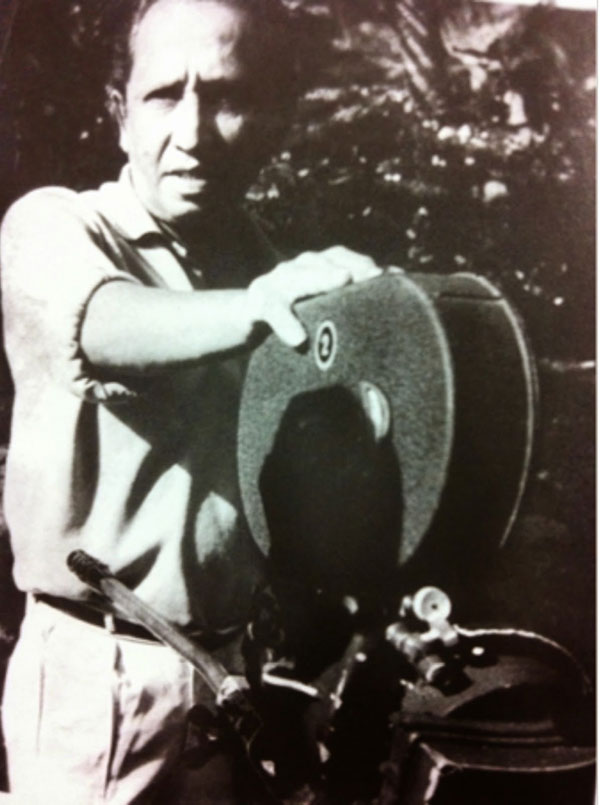
For his first film he went for a middle-brow romance, written by someone who a critic – I think Regi Siriwardena – once fittingly described as having bridged the gap between Martin Wickramasinghe and Sinhala pulp fiction. Karunasena Jayalath’s novels read so smoothly that you can almost quote them from memory. Unlike the later generation of pulp writers, his words rang true to life, because many of these stories were based on his own life. Golu Hadawatha was certainly inspired by his adolescent encounters. It was a clean break from Gamperaliya, and it marked a turning point in Lester’s career. In this he was aided by two of his most frequent collaborators: Siriwardena, who took the dialogues from the novel and turned out the script almost overnight, and Sumitra, who did wonders with the editing and cut the film twice: “first to the narration, then to the musical score.”
The result was one of the finest films ever made in the country. I have written elsewhere about the merits of Golu Hadawatha, and I think from all those qualities I saw in the story, the most striking would have to be the director’s perception of a social class he had never really depicted until then: the rural petty bourgeoisie. Golu Hadawatha is essentially about an interlude between two rural Sinhala Buddhist middle-class lovers, who are tied to their cultural-traditionalist roots but yearn to break away from those ties. How Peries manages to capture this, through the skilful yet highly underrated performances of Wickrema Bogoda and Anula Karunatilake, cannot really be described in words.
The film remains, then as now, an abiding promise of what love means, and more importantly of what a director reputed for high artistic standards could achieve if he were given the money and the resources. It is as much an affirmation of love and life, then, as it is of a visionary’s career.The writer is an international relations analyst, researcher, and columnist who can be reached at udakdev1@gmail.com