News & Community eLanka

eLanka

Friday, 3 Jul 2026
  • Home
  • Read History
  • Articles
    • eLanka Journalists
  • Events
  • Useful links
    • Obituaries
    • Seeking to Contact
    • eLanka Newsletters
    • Weekly Events and Advertisements
    • eLanka Testimonials
    • Sri Lanka Newspapers
    • Sri Lanka TV LIVE
    • Sri Lanka Radio
    • eLanka Recepies
  • Gallery
  • Contact
Newsletter
Sri lankan news
  • eLanka Weddings
  • Property
  • eLanka Shop
  • Business Directory
eLankaeLanka
Font ResizerAa
Search
  • Home
  • Read History
  • Articles
    • eLanka Journalists
  • Events
  • Useful links
    • Obituaries
    • Seeking to Contact
    • eLanka Newsletters
    • Weekly Events and Advertisements
    • eLanka Testimonials
    • Sri Lanka Newspapers
    • Sri Lanka TV LIVE
    • Sri Lanka Radio
    • eLanka Recepies
  • Gallery
  • Contact
Follow US
© 2005 – 2026 eLanka Pty Ltd. All Rights Reserved.
Home » Goodnews Stories Srilankan Expats » Articles » The Sacred Swarnamali Stupa and the Legend of Goddess Swarnamali – By Bhanuka – eLanka
ArticlesBhanuka Nuwan

The Sacred Swarnamali Stupa and the Legend of Goddess Swarnamali – By Bhanuka – eLanka

eLanka admin
Last updated: August 17, 2024 3:27 am
By
eLanka admin
ByeLanka admin
Follow:
Share
6 Min Read
SHARE
Views: 99

The Sacred Swarnamali Stupa and the Legend of Goddess Swarnamali – By Bhanuka – eLanka

The Sacred Swarnamali Stupa and the Legend of Goddess Swarnamali - By Bhanuka - eLanka

The Ruwanwalisaya, also known as the Swarnamali Stupa, is one of the most revered monuments in Sri Lanka, standing majestically in the Sacred City of Anuradhapura. Built by King Dutugemunu in 137 BCE, the stupa is not only an architectural marvel but also a symbol of the island’s deep spiritual heritage. The Swarnamali Stupa has been venerated for centuries, with legends and stories adding layers of spiritual significance to its already sacred status.

The Swarnamali Stupa is celebrated for being enshrined with the largest portion of the Buddha’s sacred relics, making it one of the most important pilgrimage sites for Buddhists around the world. The name “Swarnamali” or “Ratnamali” signifies “sand of gems,” which is reflective of the large quantities of gold, pearls, silver, and other invaluable treasures contained within the stupa. These treasures are believed to symbolize the immeasurable spiritual wealth that the stupa holds.

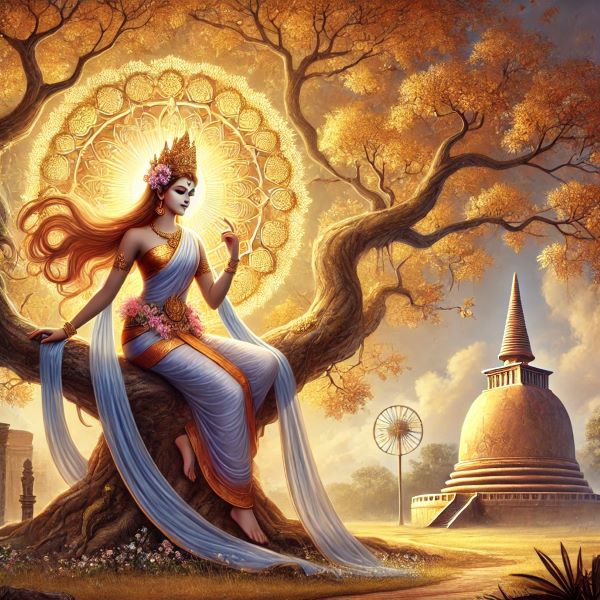
One of the most compelling legends associated with the Swarnamali Stupa is that of Goddess Swarnamali. According to folklore, a beautiful goddess named Swarnamali dwelled in a Ran Thelambu tree at the site where the stupa now stands. When King Dutugemunu decided to construct the stupa, the goddess agreed to vacate the site only after the king promised to name the stupa in her honor. This act of naming not only ensured the protection of the site by the goddess but also imbued the stupa with a divine presence, making it a focal point of veneration.

The architectural grandeur of the Swarnamali Stupa is a testament to the ancient Sri Lankan mastery of construction and devotion. Standing at 300 feet in height and with a diameter of 370 feet, it was the largest stupa in the ancient world. The stupa’s design, resembling a giant water bubble, reflects the Buddhist concept of impermanence, an essential tenet of the Buddha’s teachings. The structure’s golden spire, known as the koth kerella, shines brightly in the sunlight, symbolizing the ultimate truth of Nirvana, which stands above all worldly matters.

Entering the stupa’s compound through one of its four grand gates, visitors are greeted by intricately carved lion figures and a majestic Tusker Wall featuring 338 elephant figures. The inner compound, where the stupa is located, is paved with smooth granite slabs designed to channel rainwater, showcasing the thoughtful engineering behind the stupa’s construction. Surrounding the main stupa are four smaller dagabas, each facing a sub-direction, as if offering their own reverence to the sacred Swarnamali Stupa.

Inside the stupa, the relic chamber holds the sacred relics of the Buddha, which, according to ancient chronicles, include one-eighth of the Buddha’s whole-body relics. The stupa is also home to several statues of the Buddha, including a spectacular marble footprint adorned with 108 auspicious marks. The site is further sanctified by the presence of statues of King Dutugemunu, Queen Viharamahadevi, and other historical figures, who are depicted in acts of worship towards the stupa.

The spiritual significance of the Swarnamali Stupa is further highlighted by the many miracles associated with it. Ancient texts recount how the sacred relics of the Buddha, once enshrined within the stupa, assumed the appearance of the living Buddha and performed the miracle of emitting fire and water simultaneously. This miraculous event, known as the Yamaka Maha Pelahara, is said to occur at the end of 5,000 years of the Buddha’s era, after which the relics will rise to the sky and disappear, marking the culmination of the Buddhist dispensation.

Today, the Swarnamali Stupa stands as a beacon of purity and perfection, drawing countless devotees who seek solace in the Dhamma of the Lord Buddha. The site is not only a symbol of the Buddha’s teachings but also a reminder of the divine protection offered by Goddess Swarnamali, whose presence continues to be felt by those who visit this sacred monument. As Sri Lanka approaches the 2600th Sambuddha Jayanti, the significance of the Swarnamali Stupa remains as profound as ever, offering a connection to the spiritual legacy of the Buddha and the divine forces that protect it.

The connection between this sacred site and Sri Lankan culture is also reflected in the arts, particularly in music. One such tribute is the song “Obe Namin” by W. D. Amaradeva, a revered figure in Sri Lankan music. The song beautifully captures the reverence and devotion associated with Swarnamali. The lyrics speak of the divine presence of Goddess Swarnamali and the sanctity of the stupa, blending spiritual themes with cultural pride.

The connection between this sacred site and Sri Lankan culture is also reflected in the arts, particularly in music. One such tribute is the song “Obe Namin” by W. D. Amaradeva, a revered figure in Sri Lankan music. The song beautifully captures the reverence and devotion associated with Swarnamali. The lyrics speak of the divine presence of Goddess Swarnamali and the sanctity of the stupa, blending spiritual themes with cultural pride.

Click here to receive your free copy of the eLanka Newsletter twice a week delivered directly to your inbox!

TAGGED:Anuradhapura Buddhist historyGoddess SwarnamaliGoddess Swarnamali legendKing Dutugemunu stupaRuwanwalisaya AnuradhapuraSacred Buddha relics stupaSri Lankan architectural marvelsSri Lankan sacred sitesSwarnamali Seya relicsSwarnamali Stupa
Share This Article
Facebook Whatsapp Whatsapp LinkedIn Email Copy Link Print
Previous Article Nandimitra Nandimitra: The Fearless Warrior of King Dutugamunu – By Nadeeka – eLanka
Next Article Sri Lankan Muslim Association of Queensland (SLMAQ) Sri Lankan Muslim Association of Queensland (SLMAQ)
FacebookLike
YoutubeSubscribe
LinkedInFollow
- Advertisement -
Luxury Apartments & An Exclusive Duplex Penthouse for Sale in BAY ONE Residences Colombo-eLanka
- Advertisement -
eLankaproperty - sell property in Sri Lanka, Sri Lanka property for sale, Sri Lanka real estate, Sri Lanka property listings, property marketplace Sri Lanka, land for sale Sri Lanka, houses for sale Sri Lanka, apartments for sale Sri Lanka, commercial property Sri Lanka, luxury villas Sri Lanka, Sri Lankan property investment, buy property in Sri Lanka, Colombo property for sale, beachfront property Sri Lanka, development land Sri Lanka, investment property Sri Lanka, property advertising Sri Lanka, real estate agents Sri Lanka, property brokers Sri Lanka, overseas Sri Lankan property buyers, Sri Lanka property website, list property online Sri Lanka, affordable property listings Sri Lanka, Sri Lanka homes for sale, Sri Lanka land investment, property developers Sri Lanka, real estate marketplace Sri Lanka, Sri Lanka commercial real estate, sell land in Sri Lanka, sell house in Sri Lanka, Sri Lanka property portal, global property marketplace Sri Lanka, Sri Lankan real estate investment, property management Sri Lanka, buy land Sri Lanka, residential property Sri Lanka, holiday homes Sri Lanka, Sri Lanka investment opportunities, real estate advertising Sri Lanka, eLankaProperty
- Advertisement -
ALTAIR
- Advertisement -
Ad image
eLanka Wedding
Most Read

From Village Tanks to Modern Crises: Why D.S. Senanayake’s Rural Vision Still Echoes Across Sri Lanka-by Harold Gunatillake

Cannes Lions-eLanka

Today – Ad Oscars, Bengal Bandits, medical breakthroughs and more!

Stars align for Australian Canadian Co-production now filming in Melbourne

Kokgala (Koggala)

Stories Behind the Names of Places in Sri Lanka: Kokgala (Koggala) – By Nimal Sedera

Black July 1983, Sri Lanka riots 1983, Colombo violence, Niranjan Selvadurai poem, May We Pass Brother poem, Sri Lankan civil unrest poetry, ethnic violence Sri Lanka, 1983 riots eyewitness account, Sri Lankan English poetry, historical poems Sri Lanka, mob violence Colombo, identity and survival Sri Lanka, cultural identity conflict, language and ethnicity Sri Lanka, road to safety poem, Sri Lankan diaspora literature, trauma poetry Sri Lanka, social commentary poetry, Sri Lankan history literature, Black July reflections, Colombo 1983 events

May We Pass Brother? – By Niranjan Selvadurai

Related News
Articles

National NAIDOC Week

Articles

Convenor’s Message – By Dr. Himaya S.W.A

Good News from Jayam, Sri Lanka, Sri Lankan news, Sri Lankan community, Sri Lankan diaspora, Eric Meyer, US Ambassador to Sri Lanka, Lower Malwathu Oya Project, St Joseph Hospital Negombo, Vice Admiral Damian Fernando, Podi Menike, Warsha Karasinghe, UCLA, Zori Dassanayake, Arun Rajkumar, Mercedes F1, Sri Lankan engineer, Youth Affairs Sri Lanka, Anura Kumara Dissanayake, Sri Lanka development, Sri Lankan achievements, Michigan State University, Professor Asgi Fazleabas, Jayam Rutnam, Sri Lanka Foundation, recipes, Roma's Kitchen, Tangy Crab Salad Sandwiches, eLanka, positive news, community newsletter
Articles Jayam Rutnam

Good News From Jayam – By Jayam Rutnam

Ravi Gamage
Articles

Ravi Gamage appointed to the Main Board of Capital Maharaja Group

Qld Sri Lankan Newsletter
Articles

Qld Sri Lankan Newsletter – Dæhæna – July 2026

  • Quick Links:
  • Articles
  • DESMOND KELLY
  • Dr Harold Gunatillake
  • English Videos
  • Sri Lanka
  • Sinhala Videos
  • eLanka Newsletters
  • Obituaries
  • Sunil Thenabadu
  • Dr. Harold Gunatillake
  • Tamil Videos
  • Trevine Rodrigo
  • Sinhala Movies
  • eLanka Newsletter
  • Photos

eLanka

Your Trusted Source for News & Community Stories: Stay connected with reliable updates, inspiring features, and breaking news. From politics and technology to culture, lifestyle, and events, eLanka brings you stories that matter — keeping you informed, engaged, and connected 24/7.
Kerrie road, Oatlands , NSW 2117 , Australia.
Email : info@eLanka.com.au / rasangivjes@gmail.com.
WhatsApp : +61402905275 / +94775882546
  • About eLanka
  • Terms & Conditions

Disclaimer:
eLanka is committed to sharing positive and community-focused stories. We do not publish or endorse political, religious, or ethnic viewpoints. The content published on eLanka, including articles and newsletters, reflects the opinions and views of the respective authors and not those of eLanka. eLanka accepts no responsibility or liability for the accuracy, completeness, or consequences of any content provided by contributors.

(c) 2005 – 2025 eLanka Pty Ltd. All Rights Reserved.