



This situation is like a conflict within another conflict, showcasing how complex and challenging such issues can be-by Harold Gunatillake


Image Source:Ndtv
Pictures coming out of Tehran have shown destruction after six days of United States-Israel strikes, as a sports stadium in the Iranian capital looks to have been damaged.
Global conflicts are frequently exacerbated by conflicts of interest, wherein the personal, financial, or political motives of decision-makers compromise their neutrality. These circumstances present significant risks, as private interests—such as corporate profits, political influence, or familial connections—take precedence over public responsibilities, thereby undermining trust in governance and fostering instability.
Nuclear missiles weighing approximately 3 tons are frequently specialised, smaller-yield tactical or earth-penetrating weapons rather than large intercontinental ballistic missiles (ICBMs). An illustrative example is the United States B61-11 nuclear earth- penetrating device, which is air-dropped to neutralise fortified
targets, occasionally deployed in conjunction with conventional bunker busters exceeding 2 tons in weight.
This information was disclosed in a post on YouTube, which stated
that Iran has utilised these missiles and caused destruction in a section of Israel’s capital city, Tel Aviv.
It is found that Iran hasn’t been confirmed to have 3-ton nuclear missiles, and there is no evidence of such missiles being used.
Recent reports indicate that Iran launched ballistic missiles at the US-UK base in Diego Garcia; however, they did not reach the intended target. The missiles possessed a range of approximately 4,000 km, surpassing Iran’s previously declared limit of 2,000 km.
The situation is escalating with Israel and the US increasing attacks on Iran’s missile capabilities, which is a concern, but it’s unclear if they have nuclear-capable missiles.
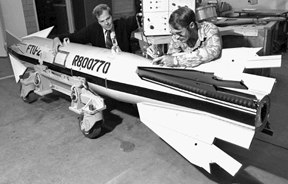
Image Source:Nukestrat
The present circumstances between Iran and Israel are profoundly tense, marked by recent escalations
in hostilities. Israeli Prime Minister Benjamin Netanyahu maintains that Iran has lost the capacity to enrich uranium or manufacture ballistic missiles after twenty days of U.S.- Israel air strikes.
The Iranian government has committed to continuing its nuclear program despite international pressure. The International Atomic Energy Agency (IAEA) has
confirmed damage to Iran’s Natanz nuclear facility; however, no radiation leakage has been reported.
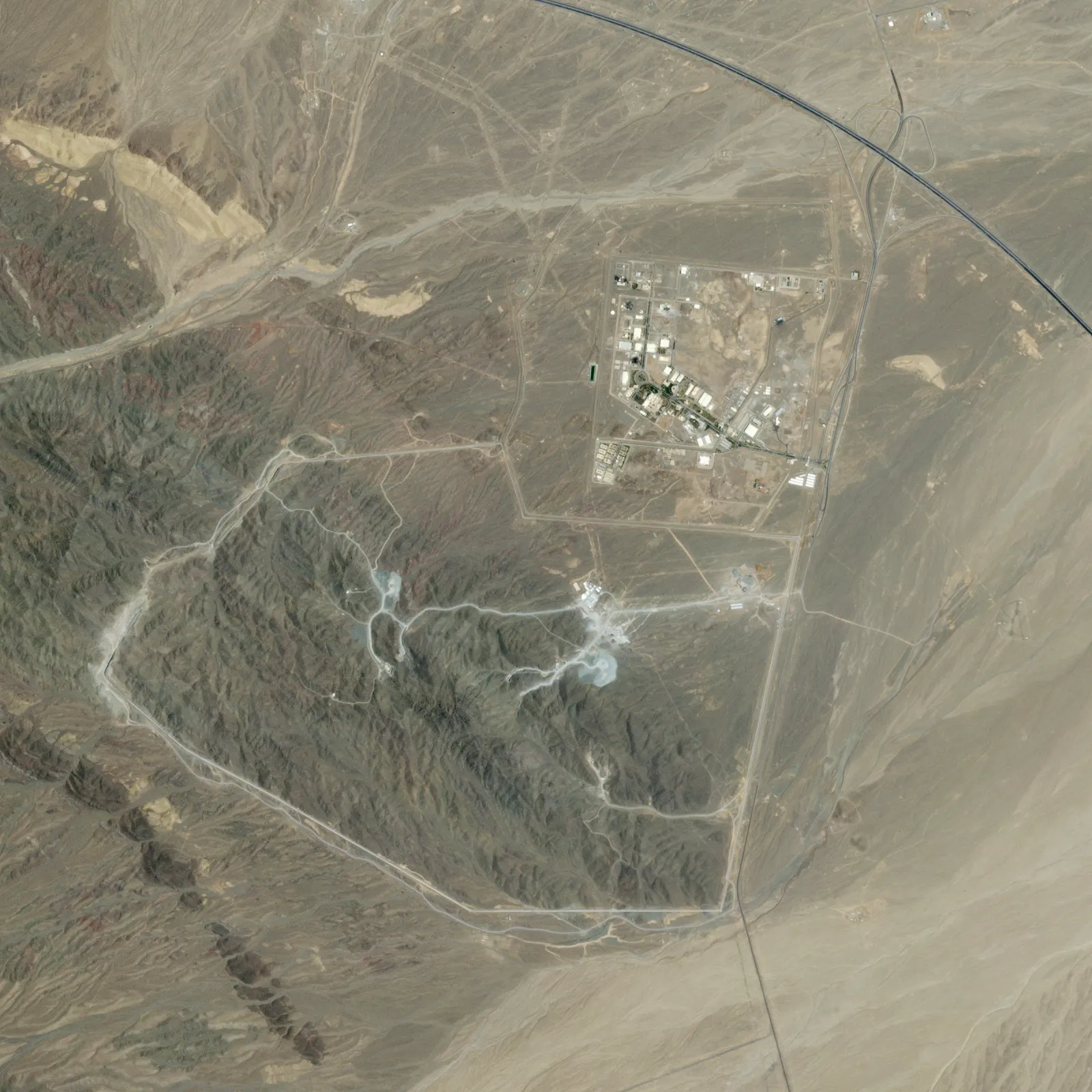
Image Source:Newsweek
The US and Israel have been conducting strikes on Iranian targets, with the US reportedly using bunker buster bombs to target the Natanz facility.
Key implications:
The conflict has disrupted oil supplies, causing prices to rise and potentially affecting global economic stability.
The international community is calling for de-escalation and a return to diplomatic efforts, with the United Kingdom and other nations urging restraint and a negotiated resolution.
The humanitarian situation in the Middle East, particularly in Iran and Lebanon, is dire. Over 1,444 people have been killed and 18,551 injured in Iran due to US-Israel attacks since February 28, 2026.
The closure of the Strait of Hormuz: The UN has called for an end to Tehran’s closure of the Strait of Hormuz, suggesting the organisation could help protect the waterways and de-escalate attacks.
US president threatens to take out Iranian energy facilities – ‘starting with the biggest one first’ – if Tehran does not reopen the strait.
Donald Trump has given Iran 48 hours to reopen the Strait of Hormuz to shipping or face the destruction of its energy infrastructure, as Tehran launched its most destructive attack yet on Israel.
The ultimatum, issued just a day after the United States president’s statement about contemplating a “winding down” of military activities following three weeks of conflict, arrived at a time when the principal oil passage remained essentially closed and thousands more United States Marines were deploying to the Middle East.
Trump stated on Truth Social that the United States would “hit and obliterate” Iranian power plants—”starting with the largest one”—if Tehran did not fully reopen the strait within 48 hours, specifically by
23:44 GMT on Monday, according to the timing of his post. (The Guardian).
Iran’s foreign minister, Abbas Araghchi, stated that Tehran has imposed restrictions solely on vessels originating from countries engaged in hostilities against Iran, and will extend assistance to others that abstain from participating in the conflict.
Global Impact:
Disrupted supplies may lead to increased prices, as has been observed, impacting global energy markets and economies.
The Strait of Hormuz, a vital maritime route for oil transportation, represents a significant concern, as prospective disruptions could adversely affect international trade.
According to reports from March 2026, President Trump has not withdrawn the U.S. military from the region; however, he has stated that the United States is “winding down” military operations against Iran and expects other nations to assume responsibility for safeguarding the Strait of Hormuz.
President Trump has pressured NATO allies, including the UK, Japan, and China, to send ships to secure the vital waterway. Several countries, however, initially offered only muted responses to these requests.
The Strait remains highly volatile with significant shipping disruptions. While President Trump expressed a desire to stop American vessels from covering the strait, he has continued to send U.S. Marines and naval support, while simultaneously aiming to reduce the U.S. footprint.
Trump has described the escorting of tankers through the strait as a “simple military manoeuvre” and is reportedly deploying additional warships and thousands of Marines to the region to ensure the safety of commercial vessels.
Targeting Kharg Island: U.S. forces have already targeted over 90 military installations on Kharg Island—Iran’s principal oil export hub—including mine storage facilities, air defence systems, and
naval bases. Former President Trump has issued a warning that future military action may focus on the island’s vital oil infrastructure if the blockade remains in place.
Tehran has issued a warning that any attack on its energy infrastructure or the seizure of Kharg Island would result in a “massive retaliation” directed at the oil facilities of U.S. allies in the Gulf region, including Saudi Arabia and the United Arab Emirates.
Recently, Trump set a 48-hour deadline (until around midnight GMT on Monday, March 23) for Iran to fully open the strait. He warned that failure to do so could lead to the “obliteration” of its largest power plants.
- The military did something huge, as seen by clicking the link
https://www.instagram.com/reel/DWBwIBVDURg/?igsh=ZGUzMzM 3NWJiOQ
The United States Central Command (CENTCOM) has reported the destruction of an Iranian ballistic missile assembly facility located southeast of Tehran, known as the Kuh-e Barjamali site. CENTCOM states that the facility was utilised for the production of close-, short-, and medium-range ballistic missiles.
The United States Central Command (CENTCOM) has reported the destruction of an Iranian ballistic missile assembly facility located southeast of Tehran, known as the Kuh-e Barjamali site. CENTCOM states that the facility was utilised for the production of close-, short-, and medium-range ballistic missiles.
Iranian ballistic missiles struck Israel overnight, inflicting
https://www.instagram.com/reel/DWNTK7qjUNs/?igsh=ZGUzMzM3 NWJiOQ==
Let us remain optimistic and hold positive expectations. End