Sinhala and Tamil New Year
Source : Dæhæna – April 2026
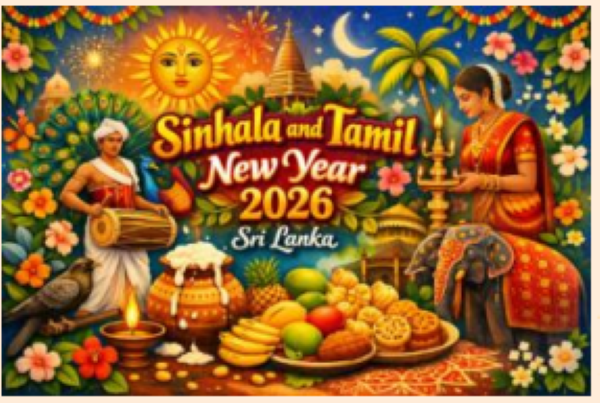
The Sinhala and Tamil New Year, celebrated in April, is one of the most important cultural festivals for Sri Lankans. Known as Aluth Avurudu in Sinhala and Puthandu in Tamil, it marks the transition of
the sun from Pisces to Aries in the traditional astrological calendar. While the festival originated in Sri Lanka, it is now celebrated enthusiastically by Sri Lankan communities living all around the world. For the Sri Lankan diaspora, the New Year is not only a cultural celebration but also a meaningful way to preserve identity, traditions, and a sense of community.
In countries such as Australia, the United Kingdom, Canada, and the United States, Sri Lankan families
and community organisations organise New Year celebrations that closely follow Sri Lankan customs.
Traditional rituals such as lighting the oil lamp, preparing milk rice, and observing auspicious times are carefully followed. Families often dress in traditional clothing and prepare festive foods such as kavum, kokis, and other sweetmeats. These activities help recreate the atmosphere of the celebrations back home.
Community gatherings are an important part of the New Year for Sri Lankans living abroad. Cultural associations, temples, and community groups organise large events featuring traditional games, music, and dance performances. Games such as tug-of-war, pillow fighting, and breaking clay pots bind folded (කනා මුට්ටි ෙැසීම), are played with great enthusiasm by both adults and children. These events bring people together, strengthening friendships and building connections within the diaspora community.
For younger generations born outside Sri Lanka, the Sinhala and Tamil New Year plays a particularly important role. It gives them an opportunity to learn about their heritage, traditions, and cultural values.
Through participation in rituals, food, music, and games, children gain a deeper understanding of their cultural roots and family history.
The Sinhala and Tamil New Year serves as a powerful symbol of unity, renewal, and cultural pride for Sri Lankans around the world. Even when they live far from their homeland, the festival helps members of
the diaspora stay connected to their traditions and to one another. In this way, the celebration continues to preserve Sri Lankan culture across generations and across continents.