Tinnitus-by Harold Gunatillake

Reader’s query series—thank you so much for your questions! We really appreciate your curiosity and enthusiasm. Keep them coming, and we look forward to helping you find the answers you’re seeking.
Dr Harold Gunatillake OAM, FRCS, FICS.FIACS,AM(Sing), MBBS(Cey).
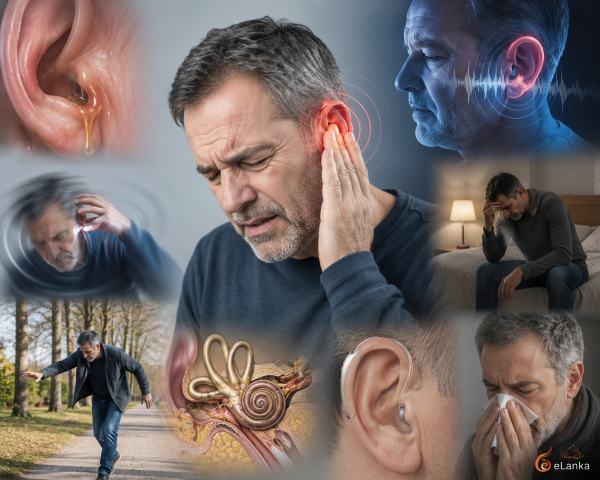
Tinnitus and balance issues can be quite challenging, but you’re not alone in facing these concerns. There are ways to manage and improve your situation, and reaching out for support is a great first step. Remember, help is available, and with the right guidance, you can find relief and regain your confidence.
“I’ve been experiencing an earache, tinnitus, and some fluid discharge from my left ear for a while now. A reader from Perth kindly reached out to me, asking for some advice.
. Over the past 10-15 years, this has gradually led to complete hearing loss in that ear. Luckily, the earache and fluid discharge stopped many years ago, but the tinnitus persists and has become a significant part of my daily life. I often experience dizziness and a
feeling of imbalance, especially in the mornings or right after I start walking again after sitting for a while. A few years ago, I also had episodes of vertigo. Sometimes, I get mild sinus issues and phlegm buildup. Since I only have about 25% hearing in my right ear, I now wear a hearing aid in that ear.
I’m experiencing ongoing symptoms like TINNITIS, DIZZINESS, and IMBALANCE. Recently, I’ve also noticed a loud, roaring noise in my left ear, like an aeroplane landing, that sometimes makes me feel dizzy or like I’m about to black out—especially when I lie down on my left side to sleep. During these times, I can also feel my heartbeat and blood circulation in my left ear, along with a feeling of heaviness or fullness in both ears.
My current medications include Amlodipine, Ramiprill, Rosuvastatin (20mg), Thyroxine, Fenofibrate, Aspirin, and Unimax D.
I truly value your insights and would be grateful for any treatment options you might recommend. Thank you so much for any help you can offer!”
This is a story I often hear from many of my colleagues: being healthy when young, and now facing challenging moments in their lives that are affecting their well-being.
Let’s explore my reader’s story together, discover what we can learn from it, and explore some helpful ways to make the rest of life more comfortable and enjoyable.
Fluid leaking from the left ear could be related to a past chronic middle ear infection from around ten years ago. At some point, the eardrum might have ruptured, leading to ongoing discharge.
Interestingly, this discharge can sometimes help relieve pressure if it’s left untreated.
Let’s take a closer look at what tinnitus really is. Tinnitus happens when you hear ringing, buzzing, or hissing sounds even though there’s no actual sound around you.
It often begins with damage to the tiny hair cells in your inner ear, but in the end, it’s your brain that produces these imaginary sounds to fill in the missing auditory signals.
However, it’s helpful to remember that tinnitus can sometimes be a sign of various medical conditions. Addressing the root cause may help reduce the tinnitus, and there are supportive strategies available if hearing loss is a factor. Taking these steps can make a positive difference.
Now, let’s explore the different conditions that can lead to tinnitus.
Have you ever wondered what typically causes tinnitus? Let’s explore some of the most common reasons behind this condition. Damage to your inner ear can cause tinnitus. Some common causes are:
Hearing loss is a very common cause of tinnitus. Did you know that about 8 to 9 out of 10 people with long-term tinnitus also have some underlying hearing loss? Recognising this link can really guide you toward the best ways to manage symptoms.
Age-related hearing loss is the most common cause of tinnitus, underscoring how age-related conditions can affect hearing health and potentially lead to tinnitus.
Noise exposure can significantly affect your hearing in various ways. Even just one loud noise, like at a concert or from gunfire, might lead to tinnitus — that ringing in your ears. And if you’re frequently around noisy machinery at work or in a factory, that repeated exposure can also cause hearing issues. Healthcare providers often refer to this as noise-induced hearing loss, emphasising the importance of protecting your ears.
Dental problems, such as issues with your teeth or bite, can sometimes lead to tinnitus.
Taking good care of your teeth and talking to your dentist can really help keep everything in check! Remember, a little routine checkup goes a long way in maintaining a healthy smile.
Ear conditions like earwax buildup or an ear infection can sometimes make it harder to hear the sounds around you, which might make tinnitus stand out more. Taking care of your ear health can help reduce these issues and improve clarity.
Head and neck injuries, such as concussions or whiplash, can sometimes lead to tinnitus. Taking care of yourself and seeking medical advice if you experience any symptoms is always a good idea.
Certain medications like antibiotics, antidepressants, cancer treatments, and NSAIDs can sometimes lead to this symptom. If you’re concerned, it’s always a good idea to talk with your healthcare provider.
Temporomandibular joint (TMJ) disorders are quite common and can sometimes cause discomfort, but don’t worry—there are ways to find relief and feel more comfortable again.
Sometimes, ongoing headaches or dizziness might lead to tinnitus. Tinnitus can also be a sign of other conditions, such as:
Eustachian tube dysfunction can be quite uncomfortable, but remember, you’re not alone in this. Many people experience similar issues, and there are effective ways to find relief. Don’t hesitate to talk to a healthcare
professional for support and guidance—help is available!
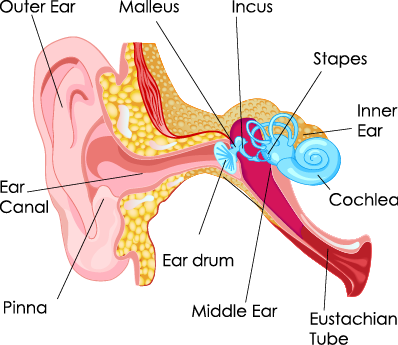
Eustachian tubes are small, narrow passages that connect your middle ear to the back of your throat and upper nasal
cavity. Their main job is to help balance the air pressure inside your ear and drain away any extra fluid. This crucial function not only helps prevent uncomfortable pressure but also keeps you feeling more comfortable and safeguards against middle ear infections.
Meniere’s Disease:
Ménière’s disease is a long-lasting inner ear condition that can cause sudden spells of intense vertigo, hearing changes, ringing in the ears, and a sensation of fullness in the ear. While there’s no cure yet, many people find that symptoms can be well managed with lifestyle changes and medical treatments.
It is a disorder caused by fluid buildup in the chambers of the inner ear. Several factors, including allergies, an abnormal immune response, head injury, migraine headaches, or a viral infection, may cause it.
Diuretics are often prescribed as a regular treatment for Meniere’s disease. They work gently by reducing excess fluid in the inner ear, helping keep the condition in check. Since they are used over the long term, diuretics can significantly reduce the frequency of vertigo attacks. In some cases, they can even help stabilise hearing, offering valuable relief and support.
It’s best to be mindful of certain foods when managing Meniere’s syndrome, as some might trigger symptoms. Staying informed and making thoughtful choices can really help you feel more in control of your health.
Wondering about which foods to steer clear of with Meniere’s? It’s a good idea to be mindful of your diet and avoid foods that might trigger symptoms.
Talking with a healthcare professional can offer you personalised advice to help you stay comfortable and healthy.
Here are some foods you might want to skip for now:
Most canned foods, unless the label says low or no sodium. … Processed foods like cured and smoked meats—such as bacon, hot dogs, sausage, bologna, ham, and salami—are quite popular, but it’s good to enjoy them in moderation.
Packaged foods like macaroni and cheese and rice mixes are convenient options enjoyed by many. They bring a sense of comfort and ease to mealtime, making cooking simpler and more enjoyable.
Anchovies, olives, pickles, and sauerkraut.
Soy and Worcestershire sauces.
Many people with Meniere’s disease notice they feel better when they engage in regular vigorous aerobic activities, such as biking or rowing. However, it’s important not to push yourself too hard—if vigorous exercise feels too much, try gentler options like yoga or a nice walk instead. Listening to your body is the key to feeling your best.
In the final stage of Meniere’s Disease, you’ll notice a substantial hearing loss as vertigo starts to ease. It’s quite common to feel discomfort from certain sounds or overall loud noises, and some sounds might even seem distorted. As hearing challenges increase, you might also find your balance getting a bit worse, but you’re not alone in this, and help is available.
While there’s currently no cure for Ménière’s disease, finding the right approach depends on whether you’re focusing on managing daily symptoms, preventing vertigo attacks, or dealing with crises. Treatment is highly personalised, and most plans fall into three main types.
- Daily Maintenance & Prevention
These medications are taken continuously to reduce the frequency and severity of vertigo attacks and protect hearing:
Diuretics (Water Pills), as mentioned earlier, are often the first-line treatment. They help your body rid itself of excess fluid, which may reduce inner-ear fluid pressure. Commonly prescribed options include Dyazide (triamterene/HCTZ) and Diamox (acetazolamide).
Betahistine: Commonly prescribed in Europe, the UK, and Canada, this medication is used to improve blood flow and relieve fluid pressure in the inner ear.
- Acute Vertigo Attacks
If you ever have a sudden and severe attack—like vertigo, spinning sensations, or nausea—your doctor might recommend some medications to take right away.
Motion Sickness Medicines: Drugs like meclizine (Antivert) or dimenhydrinate (Dramamine) reduce the spinning sensation and provide quick relief.
Anti-Nausea Medicines: Medications like promethazine (Phenergan) help manage and prevent vomiting during severe episodes.
Sedatives: Benzodiazepines such as diazepam (Valium) suppress the vestibular system to help quickly control symptoms.
- Steroid Therapy
For cases that do not respond to oral medication, your ENT may recommend:
Middle Ear Injections: Injecting corticosteroids (such as dexamethasone) directly into the middle ear can reduce or eliminate vertigo episodes.
Disclaimer: Because every case is different, it is critical to consult a specialist to determine the best treatment protocol for your specific symptoms.
Now, let’s take a moment to talk about the imbalance when walking, as mentioned earlier. I’m glad we’re exploring this together!
Imbalance when walking is often caused by issues in the systems that help your body maintain balance and stay aware of its position. This includes the inner ear (vestibular system), the brain, the nerves and muscles in your legs, and your eyesight.
Feeling unsteady while walking can happen for a variety of reasons. It’s often related to inner ear issues like vertigo, nerve damage in the legs, such as peripheral neuropathy, changes in vision, or weakness in muscles and joints. Sometimes, it might also be a side effect of certain medications. Remember, understanding the cause can help you find the right solutions.
Peripheral Neuropathy: Nerve damage (often linked to diabetes or vitamin deficiencies) can reduce sensation in your feet, making it difficult for your brain to determine your body’s position.
Neurological Conditions: Diseases such as Parkinson’s disease or multiple sclerosis can impair the nervous system’s ability to coordinate movement.
Vision Problems: Conditions like cataracts, glaucoma, or simply needing an updated glasses prescription can compromise your spatial awareness.
Medications & Dehydration: Certain sedatives or blood pressure drugs, as well as low blood pressure or dehydration, can cause light-headedness.
If you ever feel dizzy or unsteady while walking — which can be quite upsetting — there are simple home remedies and gentle movements you can try before getting out of bed to help you feel more balanced and secure.
When you wake up and get out of bed in the morning, take your time and move gently. You might find it calming to close your eyes as you do this.
Why not try some simple leg exercises while you’re lying down before you sit up? You might also enjoy gently swinging your legs forward and backwards while sitting on the edge of your bed. It’s a wonderful way to keep your muscles and joints active, helping you feel more confident and comfortable getting up and walking around.
Massage your feet, including the soles and heels, to stimulate your nerves.
These movements and exercises offer a gentle way to help you get up and walk to the toilet as part of your daily routine. They’re designed to support your comfort and independence, giving you confidence with each step.
Consider taking supplements like B12, vitamin D, magnesium, and others after checking your blood levels, as they might be beneficial for you.
Orthostatic hypotension, also known as postural hypotension, happens when your blood pressure drops suddenly as you stand
up after sitting or lying down. This quick drop can make you feel dizzy, but don’t worry — it usually passes quickly. Just take your time standing up to help prevent this. It’s a normal physiological response and isn’t something to be concerned about.
I hope this article is helpful for everyone dealing with these issues. Just a simple hour or two of walking each day can really make a difference and help resolve many of these problems.
End