SRI LANKA NEWS
May 2026
Compiled by Victor Melder

The Sri Lanka Coast Guard rescued 19 people from drowning during April 2026 in a series of operations carried out along popular beaches around the island. The rescued group included both locals and tourists, with 14 foreign nationals and 5 Sri Lankans. They were saved at different coastal locations where lifeguard posts were actively monitoring swimming and sea conditions. Victims ranged in age from 5 to 62 and included visitors from countries such as France, Germany, India, Russia, Switzerland, and Australia. Officials said the rescues were conducted through 16 lifeguard stations set up at key tourist beaches, where personnel responded to emergencies during the month. The Sri Lanka Coast Guard also noted that since its establishment in 2010, it has rescued a total of 2,629 people from drowning incidents. Of those, 1,221 were foreign tourists. (Daily Mirror, 1.5.2026)
The consumer inflation measured by the Colombo Consumer Price Index (CCPI) jumped in April as the higher fuel prices caused by the war in Iran fed quickly through the rest of the economy sending the prices of almost everything higher. As a result the inflation in the Colombo district came in at 5.4 percent from a year ago, more than twice from the 2.2 percent in March. With the jump in prices in April, the inflation is now above the Central Bank’s medium term target of 5.0 percent which was earlier expected for the second half of this year. But the war in Iran and the resulting price increases quickened the pace of prices than the earlier expected. The prices measured monthly too rose sharply by 3.0 percent from a 0.3 percent increase in March. The thrice raised fuel prices in March, on average by about 36 percent have sent shockwaves through the rest of the economy, lifting the prices of both food and non-food prices higher by a lot. For instance, the non-food inflation rose by 6.8 percent in April 2026 from a year ago, up from 2.9 percent in March, led by the transport sub-category as the prices of petrol and diesel rose which in turn sending the fares of bus and three-wheelers higher. The housing, water, electricity and other fuels sub-category also rose significantly caused by the higher electricity, LP gas and kerosene prices. Almost all sub-categories under non-food inflation rose in April from the levels in March with the non-food index rising 3.6 percent, up from 0.8 percent in March. Meanwhile, food prices rose by 2.8 percent annually from 0.7 percent in March while the prices measured monthly too jumped 1.7 percent from a negative 0.8 percent in March. Except for a few food types, all else rose in prices with the prices of rice, green gram, dried fish, eggs, coconut oil, dhal and sugar prices riseing the most. New Year festive demand too had an impact on the April prices. The future prices could largely depend on the prices at the pump which is due to be determined at midnight today as the monthly fuel price revision is due today. The global oil prices rose to the highest levels yesterday since the Iran war began causing more strain on household budgets. Sri Lanka is also planning to raise electricity prices again next week, the second such increase in about a month. (Daily Mirror, 1.5.2026)
The government is moving to strictly enforce and update regulations governing the foreign travel of Buddhist monks, aiming to restore order and address serious misconduct within the clergy. Deputy Minister of Buddhasasana, Religious, and Cultural Affairs Gamagedara Dissanayake said that the ministry will ensure laws are properly implemented for monks intending to travel abroad. A system previously existed requiring any monk travelling internationally to obtain recommendations from their chief monk, regional Nayaka Thera and the Mahanayake Theras (chief prelates) of their respective chapter. However, Minister Dissanayake admitted that for various reasons, this process had become disorganised over time. The government is now taking steps to reinstate and effectively implement this procedure for all future foreign travel by monks. This decision follows lengthy discussions between registrars representing all chapters (Nikayas) of the clergy and the President. During these meetings, numerous issues regarding the conduct of monks were discussed, resulting in a firm agreement that obtaining prior permission from chief prelates must be mandatory before any foreign travel. The Deputy Minister referred to the recent arrest of 21 monks linked to drug trafficking as a deeply unfortunate situation, highlighting the need for stronger measures to prevent such incidents from recurring. While assuring that the law will take its proper course concerning the arrested monks, he said that broader systemic reforms are underway. As a result, detailed discussions were held earlier this week with chapter registrars, the Attorney General, and officials from the Buddhasasana Ministry. Proposals have already been put forward to fast-track amendments to the Vihara Devalagam Ordinance. (Daily Mirror, 3.5.2026)
Raising concern over the prevalence of childhood obesity in Sri Lanka, Consultant Paediatrician Dr. Maheshaka Wijayawardena said 10–15% of school-aged children are overweight or obese in urban areas. Speaking to the Daily Mirror, Dr. Wijayawardena said childhood obesity has emerged as one of the most pressing public health challenges globally, with a steady rise now seen in low-and middle-income countries, including Sri Lanka. He noted that the country is experiencing a “double burden” of malnutrition, where undernutrition continues to exist alongside increasing rates of obesity, particularly in urban centres such as Colombo. Dr. Wijayawardena explained that childhood obesity is measured using Body Mass Index (BMI) adjusted for age and sex, with values above the 95th percentile indicating obesity. He stressed the importance of early detection through regular monitoring. He warned that the condition carries serious health consequences affecting multiple organ systems. These include a higher risk of hypertension, abnormal cholesterol levels, insulin resistance, type 2 diabetes, fatty liver disease, and respiratory issues such as sleep apnoea. Orthopaedic complications, skin conditions, and psychosocial issues such as low self-esteem, anxiety, and depression are also common among affected children. “Obese children are more likely to become obese adults, increasing their risk of heart disease, kidney disease, and certain cancers later in life,” he said. According to Dr. Wijayawardena, the rise in childhood obesity is driven by a combination of factors, including increased intake of processed foods and sugary beverages, reduced physical activity, excessive screen time, poor sleep patterns, and environmental changes linked to urbanisation. Genetic factors, while significant, often interact with lifestyle habits. Dr. Wijayawardena stressed that addressing the issue requires a coordinated effort involving healthcare providers, schools, policymakers, and families. He highlighted the need for stronger school meal policies, regulation of food advertising, and improved urban planning to promote active living. “Childhood obesity is not just about weight—it is a gateway to lifelong disease,” he added. (Daily Mirror, 6.5.2026)
Sri Lanka currently has around 2,500 registered thalassemia patients, with an additional 45 to 60 children newly diagnosed each year, Non-Communicable Diseases Unit of the Health Ministry Director Dr. Srini Alahapperuma said. Addressing the media, she said that the country operates 15 dedicated thalassemia treatment centres, while carrier status can be identified through a simple full blood count test, enabling early detection and intervention. Meanwhile, Specialist in Hematology at the Lady Ridgeway Children’s Hospital, Dr. Nipunika Senadhira, said that bone marrow transplantation is being carried out as a method of treatment and potential cure for thalassemia patients at the hospital in Borella. However, she stressed that prevention remains the most crucial approach in addressing the disease burden. Dr. Senadhira further emphasized that young women, in particular, must pay close attention to screening and prevention measures before marriage to reduce the risk of passing on the condition. Medical Officer-in-Charge of the Ragama Thalassemia Treatment Unit, Mrs. Soumya Warnakulasuriya, said her centre is prepared to provide treatment services to thalassemia patients from across the island. She added that efforts are underway to further expand facilities to strengthen patient care services.(Daily Mirror, 8.5.2026)
A herd of more than 20 wild elephants that raided the Kottukachchiya division has wreaked havoc, destroying houses and cultivated land. Villagers who expressed concern about the threat of wild elephants in the area, said civilian life in several villages had been disrupted. They said the marauding herd caused extensive damage to several houses and destroyed cultivated land and home garden crops. The villagers said more than 50 coconut trees in the Enungoda village had been pulled down. The owner of the land, Jagath Wickremasinghe said the herd frequenting the Kiraloya reservation, roam the villages at night and destroy crops . Wickremasinghe said he had erected an electric fence spending more than Rs. 300,000 to protect his coconut plantation but the marauding herd had hurled massive logs onto the fence and destroyed it.” Meanwhile, Puttalam District Asst. Director of Wildlife, Eranda Gamage said several teams had been deployed to drive away the marauding herd. (Daily Mirror, 10.5.2026)
Sri Lanka’s official reserve assets held by the Central Bank of Sri Lanka (CBSL) declined by $ 267 million in March to $ 6.76 billion, amid lower foreign currency reserve holdings and continued external financing obligations. According to the latest CBSL data, foreign currency reserves fell by $ 295 million to $ 6.54 billion in March from $ 6.83 billion in February amid escalating global energy supply shocks due to the US-Israel war on Iran. Gold holdings also edged lower, declining by $ 3 million to $ 219 million from $ 222 million a month earlier. Despite the decline in headline reserves, CBSL data also showed the country continues to face sizeable near-term foreign currency obligations. Predetermined short-term net drains on foreign currency assets amount to $ 2.1 billion over the next 12 months, comprising repayments relating to foreign currency loans, securities, and deposits. The aggregate short position in forwards and futures in foreign currencies vis-à-vis the rupee, including the forward leg of currency swaps, amounted to $ 3.87 billion. The position reflects future foreign exchange obligations arising largely from swap-related transactions, although the CBSL said the major share of swaps is expected to be rolled over, limiting immediate reserve outflows. External sector inflows nevertheless remained relatively resilient during the first quarter of 2026, despite widening trade pressures. Sri Lanka’s trade deficit widened to $ 2.3 billion during the January-March period, while tourism earnings amounted to $ 954 million. Workers’ remittances remained robust at $ 2.3 billion during the first quarter, continuing to provide a key buffer to the external account amid rising energy-related import pressures linked to the Middle East conflict.The CBSL on Friday shared data foreign currency purchases and sales from the domestic market.. It became a net seller of US dollars in April, marking the first time in 22 months. The CBSL recorded net dollar sales of $ 13 million in April 2026. The last instance of net dollar sales was reported in June 2024. Despite the April reversal, the Central Bank remained a net purchaser of foreign exchange during the first four months of 2026, buying a cumulative $ 697.2 million, following net purchases of around $ 2 billion in 2025. (Financial Times, 11.5.2026)
Sri Lanka’s national poverty line increased to Rs. 16,690 per person per month in March 2026, up from Rs. 16,571 in February, reversing the brief easing recorded earlier and pointing to renewed pressure on minimum household consumption costs .According to district-level estimates released by the Department of Census and Statistics, the March increase follows a decline from Rs. 16,730 in January to Rs. 16,571 in February. The latest data suggest that basic expenditure requirements began edging upward again before the full economic effects of the Middle East conflict could filter through domestic prices. Colombo continued to record the highest poverty threshold in the country at Rs. 18,000 in March, marginally lower than Rs. 18,044 in January but higher than February’s Rs. 17,872, reflecting persistently elevated urban living costs. Among other districts, Gampaha, Kalutara, Nuwara Eliya and Kegalle remained relatively high-cost areas, with poverty lines generally exceeding Rs. 17,000 per month. At the lower end, Monaragala recorded the lowest poverty line at Rs. 15,958 in March, followed by Kilinochchi and Hambantota, continuing the pattern of comparatively lower consumption costs in those districts. The March data indicate that while short-term price pressures moderated in February, minimum expenditure requirements resumed an upward trend in March across most districts. Compared with March 2025, poverty thresholds were higher across the board, reflecting the continued rise in the cost of essential food and non-food consumption over the past year. The data also show relatively limited month-on-month volatility, suggesting broadly stable regional price movements despite gradual upward pressure on household expenditure levels. Compared to January 2026, the national poverty line in March 2026 was marginally lower, easing from Rs. 16,730 to Rs. 16,690, a decline of Rs. 40. The district-level data show a similar pattern across much of the country. While poverty thresholds rose again in March from February levels, they generally remained slightly below January figures, suggesting that the February easing was only partially reversed. Colombo, for instance, recorded a poverty line of Rs. 18,044 in January, which declined to Rs. 17,872 in February before recovering to Rs. 18,000 in March, still Rs. 44 below the January level. The data therefore point to a short-term softening in February followed by renewed upward pressure in March, though not yet returning to January highs in most districts. On a year-on-year basis, however, March 2026 levels remain notably above March 2025 across all districts, indicating that the broader trend in minimum consumption costs remains upward. (Financial Times, 11.5.2026)
After much delay, the Parliament yesterday approved regulations under the Immigration and Emigration Act, paving the way for free visa entry for travellers from 40 countries in a move aimed at accelerating tourism growth and improving the country’s competitiveness as a global travel destination. Presenting the regulations in Parliament, Public Security and Parliamentary Affairs Minister Ananda Wijepala said the expanded free visa facility will now cover key tourism source markets including the UK, US, Canada, Australia, China, India, Japan, Germany, France, Russia, and several countries across Europe, the Middle East, and Asia. The Minister noted that the free visa facility had previously been available only to seven countries; China, India, Indonesia, Japan, Malaysia, Russia, and Thailand, but the latest regulations significantly broaden access as the Government seeks to attract a larger share of global travelers. Under the new framework, eligible visitors will be granted a 30-day free visa. However, travelers will still be required to complete all standard immigration procedures, including obtaining an Electronic Travel Authorisation (ETA) prior to arrival. The waiver applies only to visa fees. Wijepala told Parliament that the Treasury is expected to forgo around $ 75 million in visa fee revenue under the scheme. However, the Government estimates that the policy could generate an additional 247,000 tourist arrivals, resulting in roughly $ 317 million in tourism earnings and a projected net economic gain of around $ 242 million. The move marks the culmination of a policy that was first announced in 2024, but repeatedly delayed amid administrative and political transitions (Financial Times, 11.5.2026)
Sixteen major reservoirs and ten medium‑scale reservoirs under the control of the Irrigation Department are currently releasing water following heavy rainfall, according to H.M.P.S.D. Herath, Director (Water Management Engineer) of the department. Among the major reservoirs releasing water are Rajanganaya in Anuradhapura, Sorabora Wewa in Badulla, Weerawila, Lunugamvehera, and Weheragala in Hambantota, Magalla and Deduru Oya in Kurunegala, Wemedilla and Nalanda in Kandy, and Alikota Ara in Monaragala.Herath noted that due to intense rainfall in the Kalawewa river basin in recent days, the Rajanganaya, Devahuwa, and Wemedilla reservoirs are discharging water. Twelve sluice gates of the Rajanganaya reservoir have been opened, releasing about 18,500 cubic feet of water per second. Similarly, heavy rainfall in the Kirindi Oya river basin has led to the release of water from Lunugamvehera, Tissa Wewa, Weerawila, Yoda Wewa, and Alikota Ara reservoirs. Six sluice gates of Lunugamvehera have been opened, discharging around 7,100 cubic feet of water per second. At Weheragala, six sluice gates are open, releasing more than 2,400 cubic feet of water per second into the Menik Ganga. Medium‑scale reservoirs currently releasing water include Angamuwa, Boburuella, Mahasiyambalangamuwa, Saddhatissa, Malimpotha, and Marathamadu. Herath cautioned that water release volumes may change depending on rainfall, and urged residents living near reservoirs and in low‑lying areas to remain vigilant. (Newswire, 14.5.2026)
Sri Lanka has taken steps to conserve and officially gazette the country’s first-ever geothermal wetland, located at Kapurulla in the Bogamuyaya Grama Niladhari Division of Maha Oya in the Ampara District. The Environment Ministry said the Kapurulla Hot Water Wetland spans 20.1 hectares and is being conserved in collaboration with the National Water Supply and Drainage Board, Central Environmental Authority and the Department of Forest Conservation. According to the Ministry, the wetland is the first geothermal wetland discovered in Sri Lanka. Unlike the country’s other hot springs, which are mostly found as small pools, the Kapurulla wetland is characterized by its marshy landscape where heated water bubbles to the surface from underground rock layers. Environmental officials said that the wetland possesses rare geological features and supports heat-resistant bacteria, microorganisms, unique aquatic plants and a variety of bird species due to its unusually high water temperature. The Ministry said that conserving the site could create opportunities for international scientific research related to geology and thermal springs, while also promoting sustainable eco-tourism in the region. An official inspection of the wetland was carried out on May 12 under the patronage of Deputy Minister of Environment Anton Jayakody. The event was attended by local officials, Members of Parliament, local council representatives and residents.(Daily Mirror, 14.5.2026)
Sri Lanka Police issued an urgent public advisory in response to a reported rise in teenage and underage pregnancies, calling on parents, guardians and children to work together to prevent further incidents and protect children’s welfare. Police said stronger family involvement is essential, warning that a lack of parental attention and emotional support can make children more vulnerable to exploitation and risky behaviour. They said busy work schedules often limit the time parents can spend with their children, resulting in growing emotional distance within families. Police said some children, particularly teenage girls, may turn to social media platforms and online interactions for emotional connection when adequate family support is absent. They warned that such situations can increase exposure to inappropriate contacts and potential abuse. To address the issue, police urged parents to create open, supportive home environments where children feel safe discussing personal problems without fear. Police encourages guardians to monitor changes in behaviour such as declining academic performance, increased secrecy, excessive smartphone use, or social withdrawal, and to respond with guidance and counselling rather than punishment. Children, especially young girls, are advised to exercise caution when using social media platforms such as Facebook, Instagram, and WhatsApp, and to avoid sharing personal information or engaging with strangers online. They are also encouraged to immediately report any suspicious behaviour or harassment to trusted adults, including parents, teachers, or school authorities. The Sri Lanka Police further urged the public to use emergency hotlines 119, 118, 109, or 107 in cases of abuse, exploitation, or danger. Meanwhile, the National Child Protection Authority reported a significant number of child-related complaints in 2025. According to the agency, 10,455 complaints were received during the year, including 545 cases of sexual harassment and 231 cases of grave sexual abuse. The authority also recorded 38 rape cases, 150 incidents of cyber abuse targeting children, and 20 attempted child suicides. In addition, nine cases of child marriage and 79 teenage pregnancies were reported, along with other concerns such as children without birth certificates and minors left behind when parents migrate overseas. (Daily Mirror, 18.5.2026)
A father and his daughter have died after they were attacked by an elephant in the Moragahaulpatha area of Wilgamuwa. The Police Media Division stated that the two victims were confronted and attacked fatally by an elephant yesterday (15) morning while the father was taking his daughter to her workplace on a motorcycle. Preliminary investigations have revealed that a 57-year-old father and his 25-year-old daughter who are residents of Wanarawa, Perakanatta area have been killed by the elephant attack. Both the victims have succumbed to their injuries while being taken for treatment to the Wilgamuwa Hospital. The Wilgamuwa Police is conducting further investigations into the incident. (Daily News, 16.5.2026)
Sri Lanka’s tourism earnings fell sharply in April, with official data showing the sector’s foreign exchange inflows dropped to their lowest monthly level in nearly three years, underscoring mounting pressure from weaker arrivals, softer visitor spending, and global geopolitical uncertainty.
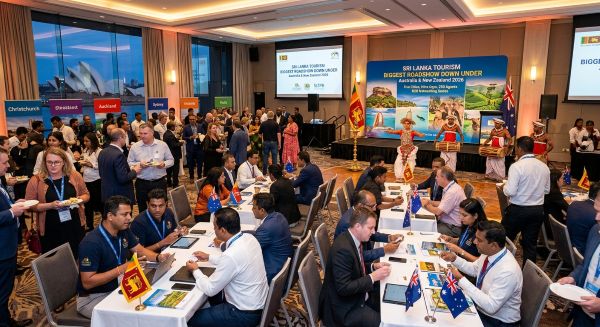
According to the latest data released by the Central Bank of Sri Lanka (CBSL), tourism earnings in April 2026 declined by 39% year-on-year (YoY) to $ 157.1 million, marking the weakest monthly performance since 2023 and extending a worrying downtrend in one of the country’s key foreign exchange earning sectors. The latest decline represents the eighth monthly contraction in tourism earnings over the past 10 months, highlighting sustained volatility in the sector despite earlier signs of recovery. The April figure marks the second consecutive official tourism revenue release since the escalation of the US-Israel war on Iran, which began on 28 February and has weighed on global travel sentiment. Cumulative earnings for the first four months of 2026 also weakened significantly, falling 19.4% YoY to $ 1.11 billion compared to $ 1.37 billion during the same period last year. The downturn reflects both weaker arrivals and lower per capita spending. As per data from the Sri Lanka Tourism Development Authority (SLTDA), tourist arrivals in April dropped 22.32% YoY to 135,643, recording the weakest monthly performance so far in 2026. Last week, The Hotels Association of Sri Lanka (THASL) cautioned that the country risks losing billions in potential revenue, unless authorities urgently address mounting policy delays, foreign exchange leakages, weak regulation, and the absence of sustained global destination marketing. They warned against the widening gap between visitor arrivals and tourism receipts, noting it could lead to missing its long-term revenue targets unless urgent structural reforms are introduced immediately. Industry analysts say the weaker performance also reflects lower visitor spending, with authorities recently revising average daily tourist expenditure down to $ 148 from $ 171 based on updated visitor spending surveys. The latest figures suggest Sri Lanka’s tourism sector is facing a widening gap between rising infrastructure capacity and actual revenue generation, even as the Government maintains ambitious targets of attracting 3 million tourists and generating $ 4 billion in tourism earnings this year. In 2025, Sri Lanka recorded a modest 1.6% increase in tourism earnings to $ 3.22 billion, while arrivals climbed 15.1% to a record 2.36 million visitors, signalling a recovery that now appears to be losing momentum. Tourism currently contributes around 3% to Sri Lanka’s economy, still below the nearly 5% contribution recorded before the 2019 crisis period. In a bid to stimulate demand, the Government recently moved closer to implementing its long-delayed free visa policy after the Cabinet approved draft regulations for parliamentary submission, a move industry stakeholders hope could help restore competitiveness and support arrivals in the months ahead. (Financial Times, 18.5.2026)
A high-level discussion aimed at protecting Sri Lanka’s northern coastal waters and marine ecosystems was held today at the Environment Ministry, with special focus on preventing environmental pollution and strengthening marine conservation efforts. During the meeting, attention was focused on tackling environmental threats in the northern seas and accelerating the declaration of new Marine Protected Areas (MPAs) in the region. Officials stressed that protecting the marine ecosystem is essential for conserving biodiversity, safeguarding the livelihoods of fishing communities and strengthening Sri Lanka’s maritime standing internationally. The discussion also highlighted the growing threat posed by Illegal, Unreported and Unregulated (IUU) fishing activities. The Deputy Ministers noted that such practices pose serious risks to marine biodiversity and the economic stability of local fishermen, calling for stronger surveillance and stricter law enforcement measures. Concerns were also raised over destructive fishing methods, including dynamite fishing, unauthorized spearfishing and the use of banned fishing gear, which continue to damage coral reefs and threaten endangered marine species.Officials further discussed shortcomings in the management and regulation of fishing harbours, identifying the absence of proper governance mechanisms as a major vulnerability. As part of the conservation initiative, several islands and surrounding marine zones in the Northern Province have been identified to be declared as Marine Protected Areas. Authorities clarified that the proposed MPAs would not affect the livelihoods of local communities, but instead promote sustainable fishing practices and eco-tourism opportunities. The meeting also proposed the establishment of a multi-sector working group comprising representatives from the Ministries of Tourism, Fisheries, Defence, Environment and Justice to implement a joint mechanism to protect the country’s coastal and marine resources, with the Ministry of Environment taking the lead role. Officials said the initiative would help Sri Lanka strengthen its commitment to global biodiversity conservation while enhancing the international recognition of the country’s northern marine zones. (Daily Mirror, 19.5.2026)
An investigation has been launched into the dissarearance of 42 invaluable ancient paintings which had been kept at the National Art Gallery, Minister of Buddhasasana, Religious and Cultural Affairs Sunil Senevi said today. He told Parliament that a physical verification survey conducted in 2015 by the Board of Survey appointed by the then Director of Cultural Affairs to inspect the paintings and sculptures at the National Art Gallery had found that 42 paintings had gone missing. Responding to a question by SJB MP Mujibur Rahman, the Minister said according to the physical verification survey, the official ledger and stock books show a collection of 281 paintings but the physical number of paintings is 239. The Minister said a preliminary investigation has been initiated by an inquiry committee appointed by the Secretary to the Ministry of Buddhasasana and Religious Affairs in addition to the police investigation adding that evidence has has been recorded from relevant officials.(Daily Mirror, 21.5.2026)
The Department of Wildlife Conservation said that 128 wild elephant deaths have been reported between January 1 and May 15 this year. According to the latest data, 20 elephants died due to shootings, while 15 deaths were caused by electrocution. The department also said that 10 elephants died after eating ‘hakkapatas’ and five others died after falling into cultivation wells. In addition, several elephant deaths were reported due to poisoning, train collisions and drowning. The highest number of wild elephant deaths was reported from the Eastern region. Deaths were also reported from the Polonnaruwa and Anuradhapura wildlife zones. Meanwhile, the Department of Wildlife Conservation points out that 35 human deaths caused by wild elephant attacks have also been reported so far this year. (Daily Mirror, 21.5.2026
The Central Bank has been printing money in 2025 and 2026 paving the way for the current forex issue, Free Lawyers alleged yesterday. Chief Executive Free Lawyers Keerthi Tennekoon alleged that the Central Bank has printed money worth Rs 1,653 billion in 2025 while it has printed money worth Rs 610.7 billion from January to March this year. The total money supply has been expanded up to Rs 16,585.7 billion as at March this year. Coming up with more allegations the Free Lawyers CEO said the Central Bank Governor who had called the heads of commercial banks had informed them to maintain the rupee within the range of Rs 329 to Rs 335 against the US dollar. “The Central Bank has used rupees which were in its safes to purchase dollars from the commercial banks. “The interest rates have increased up to 8.75 percent as of yesterday while the outstanding state debt has increased to Rs 29,994.69 in 2025 compared to Rs 28,240.22 as of November 2024. In addition, the vehicle market is in disarray while the Government has been forced to increase fuel prices once again,” he added. “ The Central Bank should provide answers to these allegations without coming up with short media releases,” he added. (Daily Mirror, 27.5.2026)
A 25-year-old mother accused of selling her 20-day-old infant for Rs. 100,000, along with a woman alleged to have bought the baby were arrested by officers attached to the Puttalam Divisional Crime Investigation Unit, the Sri Lanka Police said. The arrests were made following investigations into an incident reported from the Kammandaluw area in Pallama. Police said the infant had allegedly been handed over to a woman residing in the Kadayamottai area of Madurankuliya, with the transaction reportedly carried out by the husband of the woman for a sum of Rs. 100,000. Investigators revealed that the young mother had been in a relationship with a man said to be addicted to liquor and that the couple had been facing severe financial hardship. Owing to their inability to care for the newborn, the baby had allegedly been sold shortly after birth. Police further stated that the woman who received the child had been married for over 18 years but did not have a child. Acting on information, the couple had allegedly arranged to take custody of the infant after paying the agreed amount once the woman gave birth. However, police pointed out that the transfer of the child had taken place outside the legally accepted adoption procedures required under Sri Lankan law. As a result, the biological mother, the woman who bought the child, and several others connected to the incident were taken into custody. Further investigations are being conducted by the Puttalam Divisional Crime Investigation Unit.(Daily Mirror, 237.5.2026)