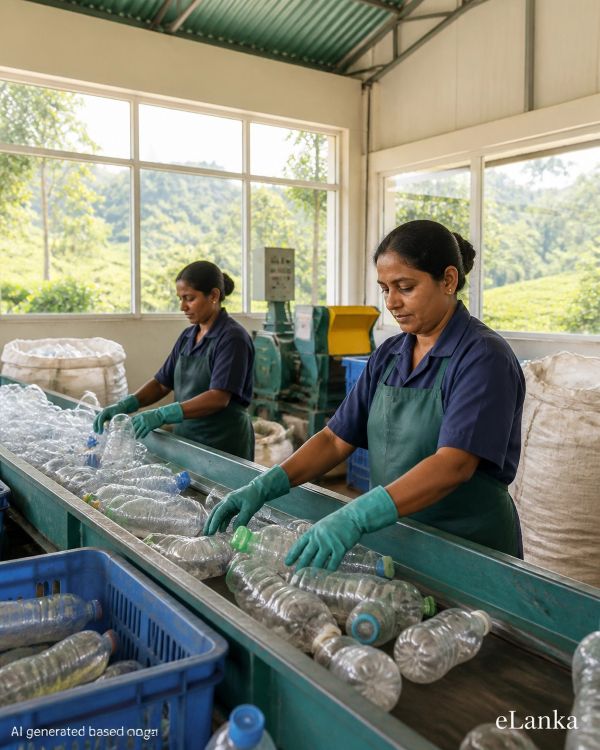
Sri Lankan exporters face harsh new EU Packaging rules-By Arundathie Abeysinghe

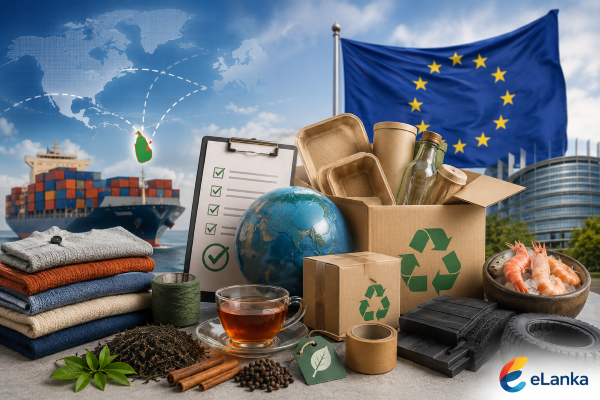
Economic analysts are of the view that new regulations governing EU Packaging Waste and Green Claims Directives coming into effect in September 2026 will be a significant non-tariff barrier to Sri Lankan exporters. With less than three months for the rules to take effect, majority of exporters might not be ready for these changes in entry into the European Union (EU) marketplace. The EU is the largest marketplace for Sri Lankan products, especially garments. The EU Packaging and Packaging Waste Regulation adopted in December 2024 and entered into force on February 11, 2025 replaces the old Packaging and Packaging Waste Directive.
With the EU Packaging and Packaging Waste Regulation (PPWR) coming into force in September with new recyclable requirements, it is necessary for businesses placing goods on the EU market to adhere to packaging, labelling, reusing and restrictions on using certain materials.
Currently, Sri Lanka exports a wide range of goods to the EU, including tea, apparel, spices, rubber products as well as seafood. Hence, these rules affect them directly.
According to Chairman/CEO Dilmah Tea Company Dilhan C. Fernando, considered as an expert on sustainable business practices “the new regulation establishes sustainability and labelling requirements from production to waste management. Labelling and digital requirements also add cost. Hence, Sri Lankan exporters will need to invest in updating labels, potentially incorporating QR codes as well as sorting information, to meet new EU standards.”
“Due to time pressure, with September 2026 fast approaching, exporters who supply EU buyers should already be in conversation with their buyers and reviewing their packaging specifications now,” Dilhan said.
Economic analysts Thushari Galappathi and Shirantha Hewapathirana informed that “the new requirements include recyclability, minimum recycled content, labelling, packaging minimisation, including reuse/refill obligations. From September this year, there is also a ban on food packaging containing PFAS (per- and polyfluorinated alkyl substances) above set concentration limits as well as an Extended Producer Responsibility (EPR), requiring companies to consider the full lifecycle of their packaging. In June 2025, following pressure from the European People’s Party, the European Commission announced its intention to withdraw the Green Claims Directive (GCD) proposal.”
“Although, the formal withdrawal has not yet been finalised, trilogue negotiations were cancelled. Even without the directive, the Empowering Consumers for the Green Transition Directive (ECGT) is already implemented as a law. From September 2026, it will ban generic green and ESG (Environmental, Social, and Governance performance) claims without independent certification and offset-based ‘climate neutral’ product claims across the EU. Hence, the regulation is extended beyond green claims. Green marketing claims must also be substantiated. Even though the GCD is paused, the ECGT tightens what exporters can claim regarding environmental performance, especially climate and carbon labels. Climate neutral and generic sustainability labels will also require defensible, evidence-based substantiation.” Thushari and Shirantha emphasized.
According to senior officials of Export Development Board (EDB), “the apparel sector must invest in advanced solutions such as ADB-GS1 Digital Link technology to track carbon footprint and meet strict EU transparency demand, while tea and food manufacturers must ensure food contact materials are free of prohibited substances such as PFAS and packaging materials are minimized and recyclable. Meanwhile, major manufacturers and smallholder supply chains in the rubber industry face increased pressure to adhere to packaging and deforestation regulations.”
“For packaging purposes, it is necessary to work with European buyers to review current packaging specifications and avoid generic ‘green’ claims on packaging until defensible certifications are obtained. To track supply chain procedures, it is necessary to prepare for transparency requirements by mapping supply chains and acquiring necessary sustainability certifications. Exporters can leverage advisory tools from the EDB for compliance guidance.”