A Drone Strike in Hormuz And the Shockwaves That Will Hit Sri Lanka’s Poor First-by Harold Gunatillake

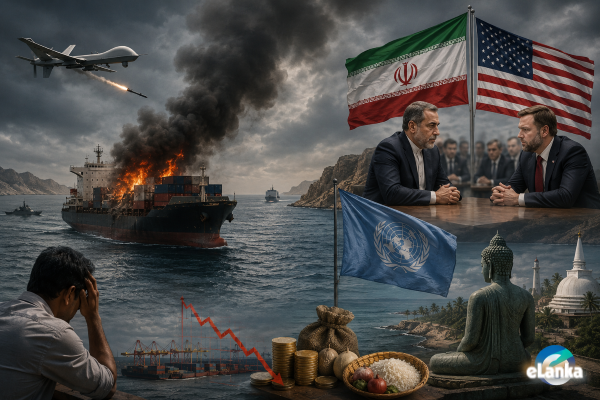
Additionally, the United Nations has paused its efforts to evacuate ships from the Strait of Hormuz.
The drone strike on a cargo vessel in the Strait of Hormuz earlier this week may initially seem to be another chapter in the extensive and contentious rivalry between Iran and the United States.
However, for nations such as Sri Lanka — characterised by their small size, considerable debt, reliance on imports, and ongoing efforts to restore economic stability — this singular incident has implications that extend well beyond the military arena.
The assault, corroborated by United States officials and maritime authorities, occurs during a sensitive period. A sixty-day ceasefire agreement between Washington and Tehran had provided a rare
opportunity for nuclear negotiations. However, the fragile tranquillity has been disturbed by regional tensions: clashes between Israel and Hezbollah, Iranian threats to obstruct maritime shipping, and vehement U.S. rhetoric that nearly disrupted negotiations. Even following a meeting between U.S. Vice President JD Vance and Iranian officials in Switzerland, ambiguity intensified when Iran publicly denied consent to routine United Nations nuclear inspections.
This represents more than merely a diplomatic setback; it constitutes a direct economic threat to the developing world.
Sri Lanka’s Economy Cannot Endure Another External Shock.
The Strait of Hormuz represents the world’s most sensitive oil artery. Any instability — even a solitary drone strike — can induce panic within global markets. Consequently, oil prices rise within hours, insurance premiums for maritime vessels escalate, and freight costs increase.
For affluent nations, such fluctuations are manageable. However, for Sri Lanka, they constitute destabilising shocks. The country imports nearly all of its fuel, and each increase in global oil prices results in:
- Elevated electricity tariffs
- Increased bus and train fares
- Higher costs for food transportation
- Elevated fertiliser and production expenses
In a nation where many families allocate approximately half of their income to food and transportation, even a modest rise in fuel prices imposes a substantial national burden.
The Poor Will Pay the Price First
When global tensions escalate, the Sri Lankan rupee depreciates. Consequently, import bills increase, and inflation begins to reemerge. The economically disadvantaged — who lack savings, buffers, and access to credit — experience immediate hardship. A
fisherman in Trincomalee will incur higher kerosene costs. A vegetable vendor in Dambulla will face increased transportation expenses. A mason in Colombo will pay more for daily meals. A mother in Batticaloa will bear additional costs for cooking gas.
Geopolitical conflicts occurring thousands of kilometres away translate into a crisis within Sri Lanka’s domestic environment.
Shipping Disruptions Will Hit Every Household
Should shipping companies reroute vessels away from the Gulf or enforce higher insurance premiums, Sri Lanka’s import costs are expected to escalate comprehensively. This escalation impacts products such as:
- Wheat flour
- Cooking oil
- Pharmaceuticals
- Machinery
- School supplies
- Fertilizer
Sri Lanka’s delicate recovery remains vulnerable to additional increases in import expenses. The nation continues to service debts, negotiate with creditors, and grapple with rebuilding confidence.
Tourism and Remittances Are at Risk
Two pillars uphold Sri Lanka today: tourism and remittances. Both are susceptible to external pressures.
Tourism: Global instability adversely affects long-haul travel, leading airlines to increase ticket prices. Consequently, tourists may postpone their plans, risking the recovery of Sri Lanka’s already fragile tourism sector.
Remittances: Nearly one million Sri Lankans are employed in the Middle East. Escalating tensions could compromise job security, and any reduction in remittances would adversely impact the Sri Lankan rupee and exacerbate domestic poverty.
Sri Lanka Is a Bystander — But Never Immune
The tragedy lies in the fact that Sri Lanka does not play any role in this conflict. It has no influence, no leverage, and no seat at the negotiating table. Nevertheless, it will endure the repercussions more acutely than the nations directly involved. This represents the harsh reality of global geopolitics: the smallest economies bear the brunt of the most significant shocks.
What Sri Lanka Must Do Now
Sri Lanka is unable to influence the actions of Iran or the United States; however, it can undertake preparatory measures.
- Enhance fuel reserves to mitigate the impact of abrupt price fluctuations.
- Expedite renewable energy initiatives to lessen reliance on imported petroleum.
- Diversify sources of imports to prevent excessive dependence on Gulf maritime
- Implement targeted subsidies and food security programs to safeguard low-income households.
- Achieve stabilisation of the rupee through disciplined fiscal management and incentives for
These measures are not merely long-term aspirations; they constitute immediate priorities.
A Call for Global Responsibility
The international community must prevent another Gulf crisis. Nations such as Sri Lanka cannot sustain further collateral damage. Diplomacy should take precedence—not for the benefit of superpowers, but for the millions of ordinary citizens in vulnerable nations who suffer the repercussions of each drone strike, blockade, and failed negotiation. Sri Lanka has already endured significant hardship and should not be compelled to bear the costs of a conflict in which it is not involved.