Poson Poya: Celebrating the Arrival of Buddhism in Sri Lanka – By Malsha – eLanka
Every year, millions of Buddhists in Sri Lanka and around the world observe Poson Poya, one of the most sacred religious festivals in the Buddhist calendar. Celebrated on the full moon day of June, Poson commemorates the historic introduction of Buddhism to Sri Lanka over 2,300 years ago. More than a religious observance, Poson is a celebration of compassion, wisdom, generosity, and the enduring cultural heritage that has shaped the identity of the Sri Lankan people.
The Historical Significance of Poson
Poson Poya marks the arrival of Arahant Mahinda Thera, the son of Emperor Ashoka of India, who brought the teachings of Lord Buddha to Sri Lanka during the reign of King Devanampiyatissa in the 3rd century BCE.
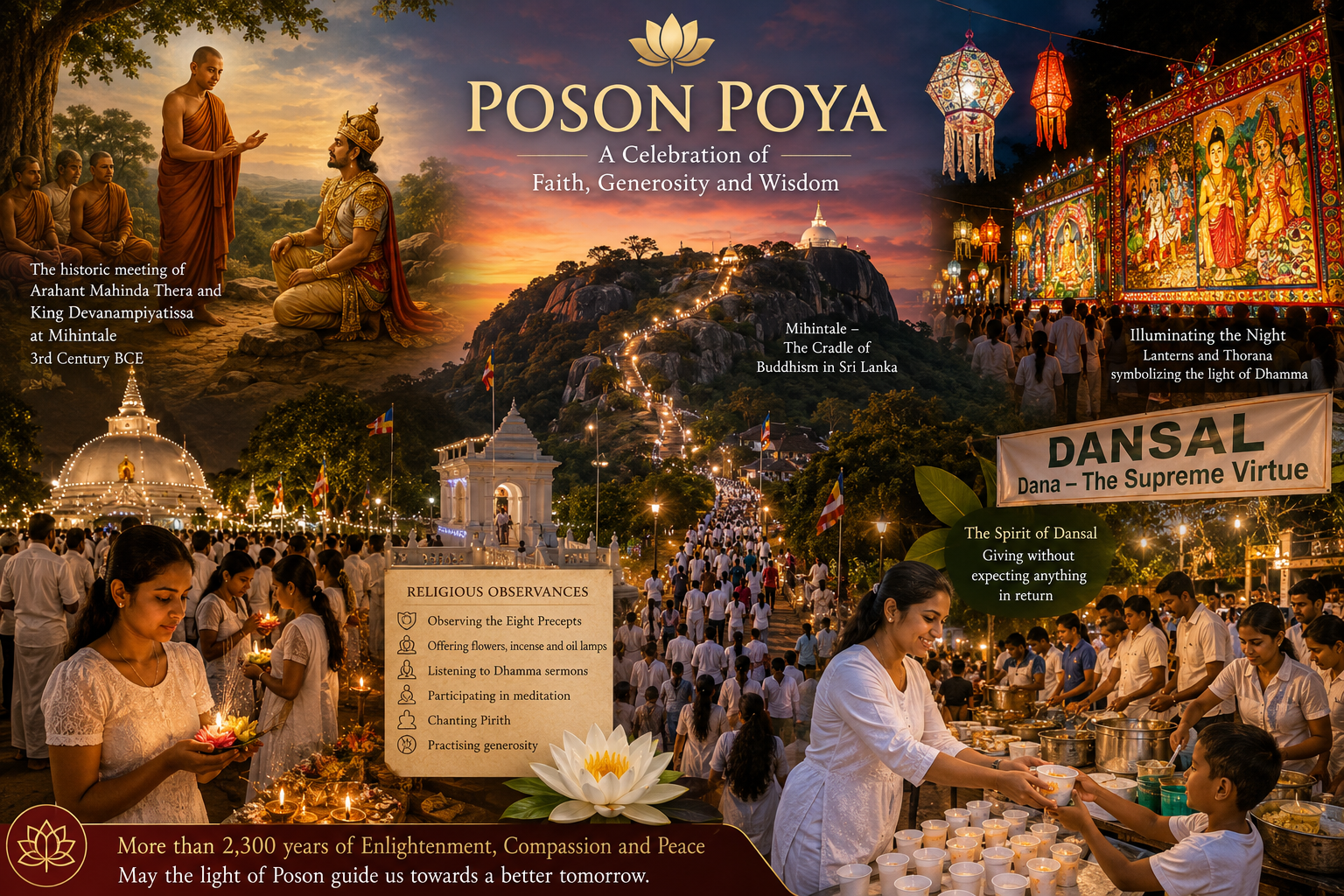
According to historical chronicles such as the Mahavamsa, Arahant Mahinda met King Devanampiyatissa at Mihintale while the king was on a hunting expedition. Before introducing the Buddha’s teachings, Mahinda Thera tested the king’s intelligence with a series of philosophical questions. Impressed by the king’s wisdom and readiness to understand the Dhamma, Mahinda delivered the first Buddhist sermon on Sri Lankan soil.
This remarkable encounter transformed the island forever. King Devanampiyatissa embraced Buddhism, and it soon became the guiding philosophy of the kingdom, influencing governance, education, architecture, literature, art, and daily life for centuries.
Mihintale – The Cradle of Buddhism in Sri Lanka
Mihintale, located near Anuradhapura, is regarded as the birthplace of Buddhism in Sri Lanka. During Poson, hundreds of thousands of devotees make the pilgrimage to this sacred mountain to commemorate the historic meeting between Mahinda Thera and King Devanampiyatissa.
Climbing the ancient stone steps to the summit is considered both a physical and spiritual journey. Pilgrims visit sacred sites including the Ambasthala Dagoba, Aradhana Gala, Maha Seya, and numerous ancient monasteries that stand as timeless reminders of Sri Lanka’s Buddhist heritage.
The peaceful atmosphere, illuminated temples, and continuous chanting create an unforgettable spiritual experience.
Religious Observances
Poson is a day devoted to religious practice and self-reflection. Buddhists begin the day by visiting temples dressed in white, symbolizing purity and simplicity.
Common religious activities include:
- Observing the Eight Precepts (Ata Sil)
- Offering flowers, incense, and oil lamps
- Listening to Dhamma sermons
- Participating in meditation programs
- Chanting Pirith (protective Buddhist scriptures)
- Practising generosity through acts of giving
Many devotees spend the entire day at temples, focusing on spiritual development and cultivating mindfulness.
The Spirit of Dansal
One of the most beloved traditions of Poson is the Dansal, where volunteers freely distribute food and beverages to anyone without distinction. Inspired by the Buddhist virtue of Dana (generosity), these charitable stalls appear across cities, villages, and pilgrimage routes.
Typical offerings include:
- Rice and curry meals
- Ice cream
- Herbal drinks
- Tea and coffee
- Rice porridge (Kenda)
- Sweetmeats
- Fresh fruit
- Bottled water
The concept of Dansal reflects the Buddhist ideal of giving without expecting anything in return. Families, businesses, community organizations, and temples often collaborate to organize these events, fostering unity and kindness throughout the country.
Illuminating the Night
As darkness falls, Sri Lanka transforms into a breathtaking display of lights. Streets and temple grounds are decorated with colourful lanterns (Vesak Kudu) and elaborate Thorana, illuminated panels depicting stories from the Buddha’s life and Jataka tales.
Although lanterns are more commonly associated with Vesak, Poson decorations have grown increasingly popular, especially around Anuradhapura and Mihintale, creating a festive yet deeply spiritual atmosphere.
Poson and Sri Lankan Culture
Poson has played a significant role in preserving Sri Lanka’s cultural identity. The arrival of Buddhism influenced every aspect of society, from architecture and sculpture to language, literature, medicine, and environmental conservation.
Ancient monasteries became centres of education where monks taught philosophy, medicine, astronomy, and literature. Massive irrigation systems, magnificent stupas, and sophisticated urban planning flourished under Buddhist kings who embraced the principles of compassion and responsible governance.
Many of these achievements remain visible today in the ancient cities of Anuradhapura and Polonnaruwa, both recognized as UNESCO World Heritage Sites.
Lessons for Modern Society
The teachings commemorated during Poson remain remarkably relevant in today’s fast-paced world. The festival encourages people to practise compassion instead of anger, generosity instead of selfishness, and wisdom instead of ignorance.
In an era marked by social divisions, economic challenges, and environmental concerns, Poson reminds us of the importance of peaceful coexistence, respect for all living beings, and ethical living.
Many devotees also use the occasion to reduce waste, engage in community service, donate blood, visit children’s homes and elder-care facilities, and support charitable initiatives.
Poson Around the World
Sri Lankan Buddhist communities across Australia, the United Kingdom, Canada, the United States, New Zealand, Europe, and the Middle East also celebrate Poson with great devotion.
Temples organize special religious programs, meditation retreats, Dhamma discussions, lantern exhibitions, and cultural performances that help younger generations understand the significance of the festival while preserving their cultural roots abroad.
These celebrations strengthen community bonds and ensure that the values of Buddhism continue to flourish across generations.
A Timeless Message
Poson Poya is far more than a historical anniversary. It is a celebration of enlightenment, compassion, and the transformative power of wisdom. The arrival of Buddhism in Sri Lanka changed the course of the nation’s history, laying the foundation for a civilization rooted in peace, learning, and moral responsibility.
As devotees gather at temples, climb the sacred steps of Mihintale, and share food through acts of generosity, the timeless message of Poson continues to inspire millions: that true happiness comes not through material wealth, but through kindness, self-discipline, and understanding.
More than twenty-three centuries after Arahant Mahinda Thera first shared the Buddha’s teachings with King Devanampiyatissa, Poson remains a living reminder that the light of wisdom can illuminate hearts, unite communities, and guide humanity toward a more peaceful and compassionate future.
At eLanka, we respect the rights of creators. If we have used an image you own and you’d like it removed, please email us at info@elanka.com.au and we’ll handle it promptly.
Thanks.
eLanka teamnbsp;