Book Review: Atomic Habits by James Clear – By Donald Sarath Gunatillake
Source : Dæhæna – September 2026
 One of the most successful and widely acclaimed self-improvement books of the last decade is Atomic Habits, written by James Clear and published in 2018. More than 30 million copies have reportedly been sold worldwide, and the book has been translated into more than 60 languages. A Sinhala translation, Dakinna Wenaswa Jeevithaya (දකින්න නවනස්ව ජීවිතය), was published in Sri Lanka in 2023.
The central message of the book is that making small improvements consistently can eventually produce remarkable results. Clear suggests that if we improve by just 1% each day, these small gains can compound to produce an enormous difference over the course of a year. Similarly, undesirable habits can
gradually be reduced and eventually eliminated when we consistently change our behaviour and environment.
To illustrate this principle, Clear describes the remarkable transformation of British cycling under coach and consultant Dave Brailsford, who was appointed in 2003. At that time, British cyclists had enjoyed very limited success for many years, and no British cyclist had won the Tour de France.
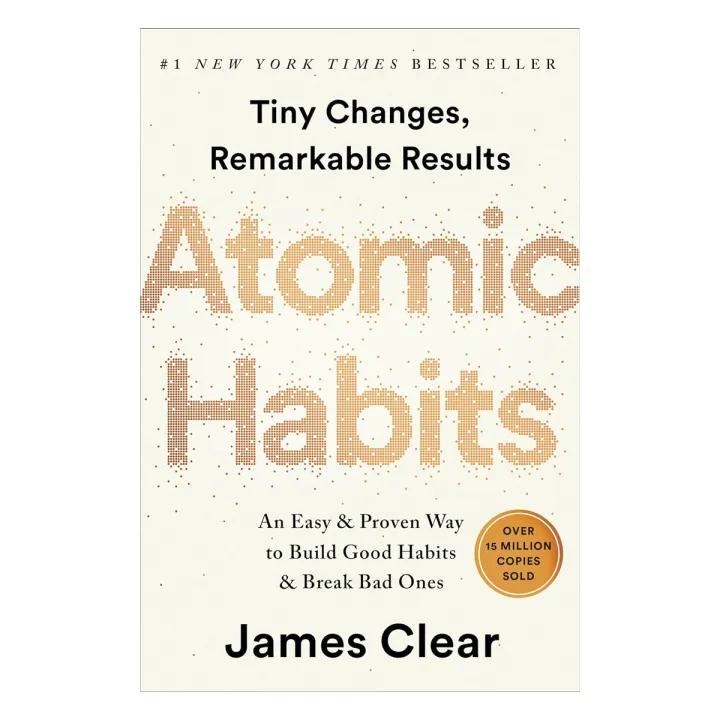
Image Source : daraz.lk
Brailsford introduced what he called the principle of “marginal gains”—looking for tiny improvements in every aspect of cycling performance. The team redesigned bicycle seats for greater comfort, experimented with different fabrics and clothing, improved recovery methods, and paid careful attention to nutrition, sleeping conditions and many other seemingly minor details. They even looked at ways of reducing the riders’ chances of becoming ill.
Individually, these changes appeared insignificant. Collectively, however, they produced extraordinary results. Within a few years, British cyclists began achieving unprecedented success, including numerous Olympic gold medals. In 2012, Bradley Wiggins became the first British cyclist to win the Tour de France. The lesson was clear: small improvements, consistently applied, can accumulate into remarkable achievements.
Clear also challenges the traditional emphasis on setting goals. While goals are important, he argues that greater attention should be given to the systems and routines we follow every day. A goal tells us what
we want to achieve, whereas a system determines what we do consistently to get there.
The author describes habits as the small building blocks of our lives. Although individual habits may appear insignificant, they can gradually build upon one another and produce results far greater than the initial effort might suggest.
Clear presents four basic laws for developing good habits: Cue, Craving, Response and Reward. The cue triggers the brain to initiate a behaviour; craving provides the motivation; response is the actual behaviour or action; and reward provides the satisfaction that reinforces the habit.
Overall, Atomic Habits is a practical and highly readable book for anyone who wants to improve their life, advance in their profession, develop a new skill or overcome an undesirable habit. Its greatest strength is that it does not promise overnight transformation. Instead, it teaches us that meaningful change can begin with very small steps, provided we practise them consistently.
I found this message particularly valuable because it reminds us that we do not always have to make dramatic changes to improve our lives. Sometimes, the smallest changes, repeated every day, can eventually make the biggest difference.
I would therefore highly recommend Atomic Habits to our readers as a worthwhile and practical guide to creating positive and lasting change.
Donald Sarath Gunatillake
Donald Gunatillake is a retired Civil Engineer living in Brisbane.
At eLanka, we respect the rights of creators. If we have used an image you own and you’d like it removed, please email us at info@elanka.com.au and we’ll handle it promptly.
Thanks.
eLanka teamnbsp;