Image source: supplied by Desi Australia
A young Sri Lankan-Australian community contributor has been recognised for using creativity, cultural understanding and historical education to help children from diverse backgrounds connect with the Anzac story.
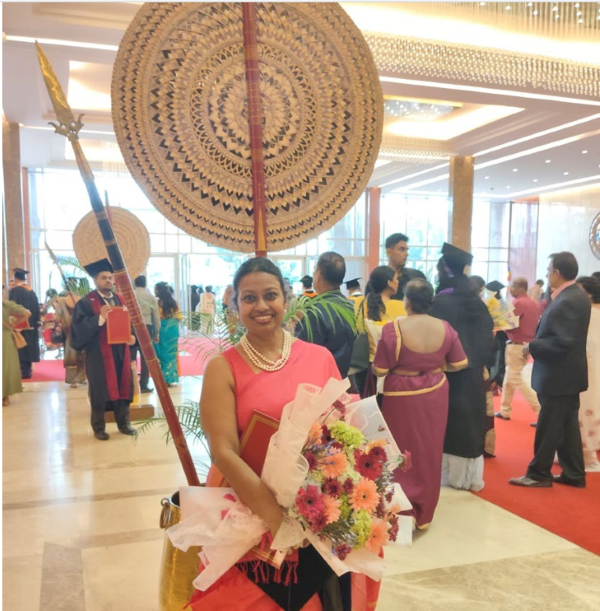
Ruvi Pooliyadde received the Emerging Young Leader Award at the 2026 Blacktown City Multicultural Awards, following a series of community projects that began when she was only nine years old. Her work, which combines crochet, children’s literature and bilingual storytelling, has created an especially meaningful connection between her Sri Lankan heritage and an important part of Australia’s national history.
The recognition was reported by Desi Australia on 1 September 2026, in a feature examining community contributions across Blacktown. Ruvi’s achievement stands apart as a compelling example of youth leadership developed through small, purposeful acts that have gradually acquired wider educational and cultural significance.
A community project that began with a crochet hook
Ruvi’s involvement began with the creation of handmade poppies for the Blacktown RSL Sub-Branch, an initiative undertaken to honour Australian veterans and help preserve the significance of the Anzac story for future generations.
The poppy has long been associated with remembrance in Australia and other Commonwealth countries, and its symbolism is often introduced to children through commemorative ceremonies, educational programmes and community activities. By crocheting poppies herself, Ruvi transformed that familiar symbol into a practical expression of respect, patience and participation.
The project also demonstrated how a young person could contribute to community life without requiring significant resources or institutional authority. A ball of yarn, a crochet hook and an understanding of the poppy’s meaning became the instruments through which Ruvi began engaging with veterans, community organisations and younger Australians.
Her contribution was not limited to the completed craftwork. The project encouraged conversations about remembrance, service and the ways in which Australians from different cultural backgrounds can participate in shared national traditions. In that respect, the handmade poppies became more than decorative objects; they functioned as accessible educational tools and as visible signs of intergenerational connection.

AI-generated illustration based on the themes reported by Desi Australia.
From handmade poppies to bilingual storytelling
Ruvi later extended the project into children’s literature through The Birth of the Poppy Flower, a bilingual children’s book written in Sinhala and English.
The book introduces younger readers to the meaning of the poppy and the Anzac story, while presenting that history in a form that can be approached by families with different linguistic and cultural backgrounds. Its bilingual structure is particularly significant for Sri Lankan-Australian households, where children may be developing an understanding of both their family heritage and the broader history of the country in which they live.
Through Sinhala, the book provides a direct cultural point of recognition for Sri Lankan children and families. Through English, it makes the story accessible within Australian schools, libraries and multicultural community settings. The combination creates an educational bridge rather than treating cultural identity and Australian history as separate subjects.
The approach is also valuable because it avoids the assumption that historical education must be culturally uniform. Children who see their language and family background represented in learning materials may be more willing to engage with unfamiliar subjects, ask questions and understand that national stories can be approached from many perspectives.
In Ruvi’s case, the poppy project and the book operate together. The crochet work offers a tangible and visual introduction to remembrance, while the bilingual publication provides a narrative framework through which children can explore the origins and meaning of the symbol. The antithesis between a simple handmade object and a carefully developed children’s book illustrates the progression of her work from personal initiative to community education.
Connecting Sri Lankan heritage with Australian history
Ruvi’s achievement is especially relevant to the global Sri Lankan community because it demonstrates that cultural heritage can strengthen, rather than limit, participation in Australian civic life.
Sri Lankan families in Australia maintain a rich range of linguistic, religious, artistic and social traditions, while their children grow up within Australia’s schools, institutions and public commemorative practices. For younger members of the community, the challenge is not necessarily choosing between two identities, but finding constructive ways for those identities to inform one another.
Ruvi’s work offers one such model. Her Sri Lankan background is not presented as separate from the Anzac story; instead, it becomes part of the way that story is explained and shared. The use of Sinhala alongside English allows a familiar family language to participate in an Australian historical conversation, creating space for children to learn about remembrance while also recognising their own cultural inheritance.
This form of engagement has broader implications for multicultural education. When children from diverse backgrounds are invited to understand Australian history through inclusive and representative resources, community participation becomes more accessible. The process can also encourage families to discuss the meaning of service, sacrifice and belonging across generations.
The initiative therefore reflects a wider principle: shared history is strengthened when it is made available to all sections of the community. Rather than being confined to formal ceremonies, remembrance can be expressed through craft, storytelling, language learning and local relationships.

AI-generated illustration based on the themes reported by Desi Australia.
Recognition as an emerging young leader
The Emerging Young Leader Award acknowledges the continuity of Ruvi’s contribution, from her early work for the Blacktown RSL Sub-Branch to the later development of a bilingual book for children.
Youth awards often recognise potential, but Ruvi’s story reflects more than potential alone. It records a sustained effort that has evolved over time, with each stage building upon the previous one. The original crochet project established a practical connection with veterans and remembrance, while the book expanded the project’s educational reach.
The award also highlights the importance of providing young people with opportunities to contribute meaningfully to community life. When youth initiatives are taken seriously, they can develop into programmes that encourage learning, dialogue and participation well beyond their original scope.
According to the Desi Australia report, Ruvi was also recognised as One to Watch at the 2026 Premier’s Awards for Women, a distinction noted through an attributed congratulatory message by Warren Kirby MP. This additional recognition places her work within a broader public acknowledgment of young women whose leadership is already producing practical benefits in their communities.
The combination of honours suggests that Ruvi’s contribution has attracted attention not merely because of her age, but because of the clarity of purpose behind her work. Her projects are accessible, carefully considered and capable of encouraging others to take part.

AI-generated illustration based on the themes reported by Desi Australia.
An example for families and community organisations
Ruvi Pooliyadde’s recognition provides an instructive example for families, schools, libraries, RSL branches and Sri Lankan community organisations seeking to encourage young people’s involvement in Australian public life.
Her work demonstrates that community leadership can begin with an activity that appears modest but carries a clear purpose. Crochet became a means of honouring veterans; a children’s book became a means of explaining history; and bilingual writing became a way of ensuring that children from different backgrounds could see themselves within a shared community story.
Such initiatives are particularly valuable in Western Sydney, where people from many national, linguistic and cultural backgrounds live, study and work alongside one another. In this environment, projects that promote understanding through creativity can be instrumental in building trust and encouraging genuine participation.
Ruvi’s story also offers a positive reminder that cultural connection need not be confined to festivals or heritage celebrations. Sri Lankan identity can be expressed through service, education and engagement with the history of Australia, creating a more complete and confident form of belonging.
The achievement is therefore both personal and representative. It celebrates a young Sri Lankan-Australian who has developed an original contribution, while also illustrating the positive role that children and young people can play in strengthening local communities.
Through crocheted poppies and a bilingual book, Ruvi Pooliyadde has helped bring together Sri Lankan heritage, Australian remembrance and the imagination of younger readers. Her Emerging Young Leader Award at the 2026 Blacktown City Multicultural Awards is a fitting acknowledgement of a contribution that is thoughtful in origin, practical in form and increasingly significant in reach.
eLanka continues to share positive stories about Sri Lankans in Australia and around the world, helping readers remain connected with community achievements, cultural initiatives and inspiring examples of service.
Source: https://desiaustralia.com/news/major-cities/sydney/sydwest-ruvi-pooliyadde-and-dr-kanan-shah-honoured-for-strengthening-blacktowns-diverse-community/
This article was written based on the source https://desiaustralia.com/news/major-cities/sydney/sydwest-ruvi-pooliyadde-and-dr-kanan-shah-honoured-for-strengthening-blacktowns-diverse-community/, kindly email us at info@eLanka.com.au if any information needs to be corrected.
(adsbygoogle = window.adsbygoogle || []).push({});
At eLanka, we respect the rights of creators. If we have used an image you own and you’d like it removed, please email us at info@elanka.com.au and we’ll handle it promptly.