News & Community eLanka

eLanka

Sunday, 13 Sep 2026
  • Home
  • Read History
  • Articles
    • eLanka Journalists
  • Events
  • Useful links
    • Obituaries
    • Seeking to Contact
    • eLanka Newsletters
    • Weekly Events and Advertisements
    • eLanka Testimonials
    • Sri Lanka Newspapers
    • Sri Lanka TV LIVE
    • Sri Lanka Radio
    • eLanka Recepies
  • Gallery
  • Contact
Newsletter
Sri lankan news
  • eLanka Weddings
  • Property
  • eLanka Shop
  • Business Directory
eLankaeLanka
Font ResizerAa
Search
  • Home
  • Read History
  • Articles
    • eLanka Journalists
  • Events
  • Useful links
    • Obituaries
    • Seeking to Contact
    • eLanka Newsletters
    • Weekly Events and Advertisements
    • eLanka Testimonials
    • Sri Lanka Newspapers
    • Sri Lanka TV LIVE
    • Sri Lanka Radio
    • eLanka Recepies
  • Gallery
  • Contact
Follow US
© 2005 – 2026 eLanka Pty Ltd. All Rights Reserved.
Home » Goodnews Stories Srilankan Expats » Articles » Spera Unveils South Asia’s First Homegrown Security Humanoid, Built by Sri Lankan Engineers
Articles

Spera Unveils South Asia’s First Homegrown Security Humanoid, Built by Sri Lankan Engineers

eLanka admin
Last updated: September 10, 2026 9:46 am
By
eLanka admin
ByeLanka admin
Follow:
Share
12 Min Read
SHARE
Views: 214

Spera Unveils South Asia’s First Homegrown Security Humanoid, Built by Sri Lankan Engineers

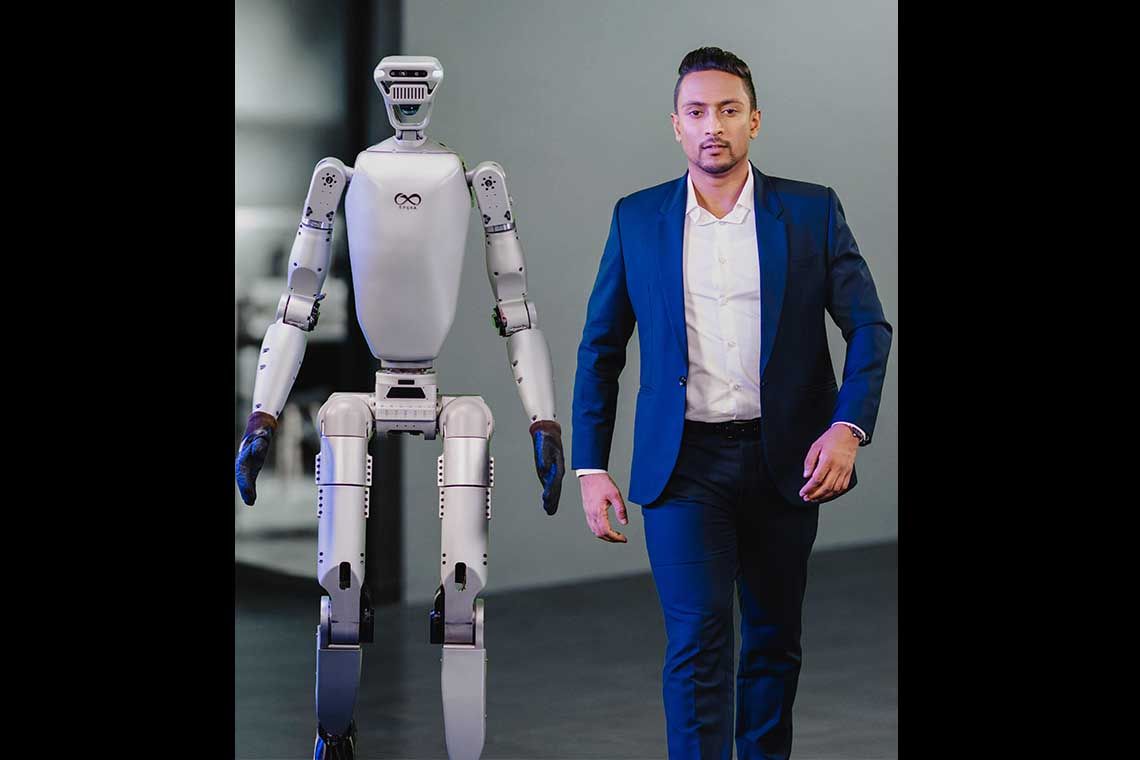
Spera Humanoid – Prototype One, unveiled by Sri Lankan technology company Spera

Contents
  • Spera Unveils South Asia’s First Homegrown Security Humanoid, Built by Sri Lankan Engineers
  • A locally engineered robotics milestone
  • Technical features designed for human environments
  • Security and defence ambitions
  • Spera 2.0 and the emerging humanoid economy
  • A positive signal for Sri Lankan innovation

Original source image: Spera Humanoid – Prototype One. Credit: Businesscafe.

Sri Lankan technology company Spera has unveiled Spera Humanoid – Prototype One, described in reporting by Businesscafe, Gold FM News and LankaTalks as South Asia’s first homegrown full-scale bipedal humanoid developed specifically for security and defence applications.

The unveiling, reported between 3 and 9 September 2026, represents a significant development for Sri Lanka’s emerging deep-tech sector, since the platform is understood to have been designed and developed from the ground up by Sri Lankan engineers rather than imported as a completed system or assembled locally from a foreign-developed robotics platform.

Led by founder and Chief Executive Officer Sahan Yapa, Spera is presenting the prototype as an internationally oriented security platform, while also emphasising the longer-term objective of building a globally competitive humanoid robotics industry from Sri Lanka.

AI-generated editorial illustration of a Sri Lankan-built bipedal security humanoid in a futuristic robotics laboratory

A locally engineered robotics milestone

The development of a full-scale humanoid requires the integration of mechanical engineering, electronics, software development, artificial intelligence, sensing systems and control technologies, all of which must operate in coordination if a robot is to move safely and interact with complex environments.

Spera’s unveiling is therefore notable not merely because a humanoid robot has been displayed, but because the company has asserted that the platform is the product of original Sri Lankan research, engineering and development. That distinction is important in a sector where many robotics systems are imported, adapted or assembled using externally developed components and intellectual property.

Sahan Yapa’s professional journey has reportedly been closely connected to the project. His early interest in machinery developed into self-directed learning in software development, electronics, mechanics and robotics, while the company’s earlier software activities helped generate experience and resources that could be reinvested into advanced robotics research.

The result is a prototype intended to demonstrate that Sri Lankan engineering teams can address technically demanding problems and develop systems with potential relevance beyond the domestic market.

Sri Lanka’s technology economy has traditionally been associated with software services, information technology outsourcing and digital entrepreneurship. Spera’s work points towards a broader opportunity in which software capability is combined with physical engineering, advanced manufacturing and artificial intelligence. This transition will require sustained investment in laboratories, specialised education, testing facilities and supply chains, but the prototype provides an important example of what local technical talent can pursue.

AI-generated illustration of a bipedal humanoid robot undergoing balance and perception testing in a Sri Lankan robotics laboratory

AI-generated contextual illustration based on the source image. Credit: eLanka.

Technical features designed for human environments

According to the published reports, Spera Humanoid – Prototype One incorporates several capabilities intended to support security-related operations in environments originally designed for people.

The platform uses bipedal locomotion, allowing it to move on two legs rather than relying on wheels, tracks or a fixed structure. A bipedal configuration may offer advantages when navigating spaces containing stairs, narrow passages, uneven surfaces and other features that are common in human-built facilities. It also presents substantial engineering challenges, because balance, foot placement, body movement and energy management must be controlled continuously.

The humanoid is also reported to feature high-torque actuation, referring to the powerful motors and mechanical systems used to move and stabilise the robot’s joints. Such actuation is central to the operation of a full-scale bipedal machine, where the legs, arms and torso must be coordinated with sufficient force and precision.

A further feature is five-finger manipulation. Human-shaped hands with articulated fingers can allow a humanoid platform to interact with objects, controls and equipment that were designed for human use. The reported capability does not, by itself, establish that the prototype can perform every task carried out by a person; rather, it indicates that Spera is developing a platform capable of more refined physical interaction than a robot limited to simple gripping or fixed tooling.

For environmental awareness, the prototype is reported to use 3D LiDAR perception. LiDAR systems measure surrounding surfaces and objects using reflected light, producing spatial information that can assist with mapping, obstacle detection and navigation. When combined with other sensors and control systems, three-dimensional perception may help a robot interpret the structure of a site and operate with greater awareness of its surroundings.

The platform also includes onboard artificial intelligence, which is intended to support perception, interpretation and operational decision-making. The available reporting does not suggest that the prototype should be regarded as entirely independent of human supervision. Instead, its artificial intelligence capabilities should be understood as part of a broader system that combines machine perception with human oversight.

Finally, Spera has reported long-range teleoperation, enabling a human operator to supervise or control the platform from a remote location. This feature is particularly relevant to security and defence applications, where a robot could potentially be assessed for work in hazardous or restricted environments while reducing the immediate physical exposure of personnel.

AI-generated contextual illustration of a robotic five-finger hand interacting with a secure control interface

AI-generated contextual illustration based on the source image. Credit: eLanka.

Security and defence ambitions

Spera has positioned the humanoid as a platform for security and defence-related applications, particularly in high-risk operational environments. The company’s stated ambition is to develop systems capable of supporting human operators where mobility, situational awareness and remote intervention may be valuable.

Potential applications in this field could include observation, patrol support, inspection of hazardous areas, access to difficult locations and assistance with tasks that may expose personnel to unnecessary risk. However, the prototype’s unveiling should not be interpreted as evidence of confirmed defence procurement, operational deployment or signed commercial contracts.

The available reporting does not identify confirmed procurement agreements, investment figures or contracted deployments involving Spera Humanoid – Prototype One. At this stage, the platform should be regarded as a substantial prototype milestone and as an expression of the company’s future ambitions.

That distinction strengthens rather than diminishes the significance of the announcement. Deep-tech products normally progress through stages of validation, controlled testing, pilot activity and refinement before they are introduced into demanding operational environments. A prototype provides an opportunity to evaluate balance, reliability, safety, communications, maintenance requirements and the practical value of the system.

AI-generated illustration of remote supervision of a humanoid robot by a Sri Lankan engineer

AI-generated contextual illustration based on the source image. Credit: eLanka.

Spera 2.0 and the emerging humanoid economy

Spera has reported that a second-generation model, Spera 2.0, is already in development, with plans to introduce the platform in several countries as the technology progresses. These plans remain ambitions rather than confirmed market outcomes, but they demonstrate the company’s intention to develop a product with international relevance.

The global humanoid robotics industry is attracting growing attention because such machines are being designed to function in workplaces, industrial facilities and public environments that have already been configured for human movement. The emerging sector brings together robotics, artificial intelligence, advanced materials, industrial automation, telecommunications and remote operations.

For Sri Lanka, participation in this field could generate benefits beyond the sale of a single product. It could encourage the development of specialised engineering careers, strengthen links between universities and industry, create opportunities for component manufacturing and help retain technical talent by connecting local expertise with international markets.

The most valuable outcome may therefore be the engineering capability developed during the process. Building a humanoid robot requires teams to solve difficult problems repeatedly, learn from failed prototypes and establish methods for testing systems under real-world conditions. Those capabilities can eventually contribute to other sectors, including industrial automation, medical devices, logistics, agriculture and disaster-response technology.

The wider importance of Spera’s announcement lies in this combination of ambition and local capability. A platform engineered in Sri Lanka for a global market challenges the assumption that advanced physical technology must always be imported into the country. It also adds a new dimension to the country’s established reputation for software and digital services.

A positive signal for Sri Lankan innovation

Spera Humanoid – Prototype One remains a developing technology, and its future success will depend on rigorous testing, reliable production, responsible use and the ability to translate a promising prototype into a safe and practical platform.

Nevertheless, the unveiling is a positive signal for Sri Lanka’s innovation landscape. It demonstrates that local engineers are engaging with one of the most technically demanding areas of modern technology and that Sri Lankan companies are prepared to pursue ambitious projects with international aspirations.

As Spera advances towards Spera 2.0 and evaluates opportunities in overseas markets, the company’s progress will be watched with interest by engineers, educators, investors and members of the global Sri Lankan community. The project’s central message is clear: with sustained effort, technical knowledge and a willingness to learn from failure, sophisticated robotics can be researched and developed from Sri Lanka for the wider world.

eLanka continues to share positive stories about Sri Lankan achievements in technology, business, education and innovation. Readers can explore the eLanka website and earlier coverage of robotics and automation developments in Sri Lanka.

This article was written based on the source https://businesscafe.lk/business-news/technology/21703-spera-unveils-south-asia-s-first-homegrown-security-humanoid, kindly email us at info@eLanka.com.au if any information needs to be corrected.

This article was written based on the source https://hirunews.lk/goldfmnews/487515/lankas-spera-unveils-south-asias-first-homegrown-security-humanoid, kindly email us at info@eLanka.com.au if any information needs to be corrected.

This article was written based on the source https://lankatalks.com/post/spera-unveils-south-asias-first-homegrown-security-humanoid, kindly email us at info@eLanka.com.au if any information needs to be corrected.

(adsbygoogle = window.adsbygoogle || []).push({});

Click here to receive your free copy of the eLanka Newsletter twice a week delivered directly to your inbox!

At eLanka, we respect the rights of creators. If we have used an image you own and you’d like it removed, please email us at info@elanka.com.au and we’ll handle it promptly.

TAGGED:3D LiDAR roboticsAI robotics Sri Lankabipedal humanoid robotdeep-tech Sri Lankadefence roboticsfive-finger robotic handhumanoid robotics Sri LankaPrototype OneRobotics and artificial intelligencerobotics innovation Sri LankaSahan Yapasecurity humanoid robotsecurity roboticsSouth Asia homegrown humanoidSpera 2.0Spera HumanoidSpera TechnologySri Lankan engineersSri Lankan humanoid robotSri Lankan InnovationSri Lankan technologyteleoperation robot
Share This Article
Facebook Whatsapp Whatsapp LinkedIn Email Copy Link Print
Previous Article Verifying the Origin of Everything-by W. Suresh Madusanka 01 Verifying the Origin of Everything-by W. Suresh Madusanka
Next Article Sri Lanka malaria-free status WHO Commends Sri Lanka for a Decade Free from Malaria and Maternal and Neonatal Tetanus
FacebookLike
YoutubeSubscribe
LinkedInFollow
- Advertisement -
eLankaproperty - sell property in Sri Lanka, Sri Lanka property for sale, Sri Lanka real estate, Sri Lanka property listings, property marketplace Sri Lanka, land for sale Sri Lanka, houses for sale Sri Lanka, apartments for sale Sri Lanka, commercial property Sri Lanka, luxury villas Sri Lanka, Sri Lankan property investment, buy property in Sri Lanka, Colombo property for sale, beachfront property Sri Lanka, development land Sri Lanka, investment property Sri Lanka, property advertising Sri Lanka, real estate agents Sri Lanka, property brokers Sri Lanka, overseas Sri Lankan property buyers, Sri Lanka property website, list property online Sri Lanka, affordable property listings Sri Lanka, Sri Lanka homes for sale, Sri Lanka land investment, property developers Sri Lanka, real estate marketplace Sri Lanka, Sri Lanka commercial real estate, sell land in Sri Lanka, sell house in Sri Lanka, Sri Lanka property portal, global property marketplace Sri Lanka, Sri Lankan real estate investment, property management Sri Lanka, buy land Sri Lanka, residential property Sri Lanka, holiday homes Sri Lanka, Sri Lanka investment opportunities, real estate advertising Sri Lanka, eLankaProperty
- Advertisement -
ALTAIR
- Advertisement -
Ad image
eLanka Wedding
Most Read
Kamzy Gunaratnam Norway Minister of Transport

Kamzy Gunaratnam: From Jaffna Refugee to Norway’s Minister of Transport Kamzy Gunaratnam has been appointed Norway’s Minister of Transport. Image credit: Colombo Times. The appointment of Kamzy Gunaratnam as Norway’s new Minister of Transport represents a proud and historic development for Sri Lankan Tamils and the wider global Sri Lankan community, marking the latest stage in a remarkable public-service journey that began in Jaffna and continued through refugee resettlement, local government and national politics in Norway. Gunaratnam, a Norwegian Member of Parliament of Sri Lankan Tamil heritage, formally assumed the ministerial position at 12 noon on 11 September 2026, following a cabinet reshuffle by the government led by Norwegian Prime Minister Jonas Gahr Støre. She succeeds Jon-Ivar Nygård, who stepped down from the portfolio. The appointment places Gunaratnam at the head of one of Norway’s most important public sectors, with responsibility for roads, railways, public transportation and wider transport infrastructure. The position carries substantial national significance in a country where reliable mobility, regional connectivity and environmental sustainability are closely connected to economic development and social inclusion. A journey from Jaffna to Norway Kamzy Gunaratnam was born in Jaffna, Sri Lanka, in 1988. When she was three years old, she left the country with her parents and moved to Norway as a refugee, fleeing the civil war that had caused prolonged hardship and displacement across Sri Lanka. Her early circumstances were therefore shaped by uncertainty and relocation, yet the subsequent course of her life demonstrates the capacity of education, civic participation and public service to transform personal challenges into national leadership. From a young age, Gunaratnam became actively involved in politics and public affairs. Her engagement developed within Norway’s democratic institutions, where she gradually established herself as a prominent representative of the Labour Party and as a voice for inclusive public policy. Her story is significant not merely because of the senior office that she now holds, but also because it illustrates the many stages through which a person can contribute to a new country while retaining a meaningful connection with their family heritage. Her experience reflects the resilience of Sri Lankan families who have established new lives across the world and who continue to participate constructively in the societies in which they live. Leadership in Oslo Between 2015 and 2021, Gunaratnam served as Deputy Mayor of Oslo, Norway’s capital and largest city. The role provided extensive experience in local government, municipal administration and the practical delivery of services affecting residents in their daily lives. Oslo is a complex urban centre in which transport, housing, environmental policy, public safety and social inclusion are closely interrelated. Experience within the city administration would have required an understanding of how public decisions affect communities across different neighbourhoods, as well as the importance of long-term planning in a rapidly changing metropolitan environment. Gunaratnam’s years as Deputy Mayor also established a foundation for her later work in national politics. Local government frequently provides the most direct encounter with public concerns, since roads, public transport, urban development and essential services are experienced by residents at close range. Her transition from municipal leadership to national office was confirmed at the 2021 Norwegian parliamentary election, when she was elected to the Storting, Norway’s national parliament, as a candidate for the Norwegian Labour Party. Election to the Storting The Storting is Norway’s central legislative institution, and election to the parliament represents a significant public mandate. Gunaratnam’s arrival in the national legislature placed her within the country’s principal forum for shaping laws, approving public expenditure and scrutinising government policy. Her parliamentary career has been viewed in the context of her long-standing commitment to environmental sustainability and public transportation. Those areas are particularly relevant to Norway’s future, as the country continues to consider how infrastructure can support economic activity while reducing environmental pressures and improving access for communities across urban and regional areas. The transport portfolio is broad and demanding. It encompasses the maintenance and development of roads, the operation and expansion of railway networks, public transport systems and major infrastructure projects. Decisions within the ministry can influence commuting patterns, regional opportunity, freight movement, road safety and the ability of citizens to access employment, education and essential services. For Gunaratnam, the new appointment brings together several strands of her previous experience: municipal leadership in Oslo, parliamentary service, environmental advocacy and an established interest in public transportation. These responsibilities will now be applied at a national level. Sustainability and public transport Norway’s geography gives transport policy particular importance. The country extends across a long and varied landscape, encompassing major cities, coastal communities, mountainous areas and remote regions. Efficient infrastructure is therefore essential for maintaining national connections, while sustainable transport options are increasingly important in addressing environmental concerns. Gunaratnam’s strong commitment to environmental sustainability and public transportation is seen as especially relevant to the ministry’s responsibilities. Public transport can reduce congestion, improve mobility for people who do not drive and support the development of more environmentally responsible communities. Railways and buses also play a wider social role. When public transport is dependable and affordable, it can connect people with employment, education, healthcare and cultural life. In regional areas, infrastructure investment may strengthen local economies and reduce isolation, while in cities it can contribute to more efficient and liveable urban environments. As Minister of Transport, Gunaratnam will therefore be responsible for a sector that extends well beyond physical infrastructure. Roads and railways are visible elements of the portfolio, but the underlying objective is the creation of a connected society in which people and goods can move safely, efficiently and sustainably. A source of pride and inspiration Gunaratnam’s appointment has been welcomed as a major achievement by Sri Lankan Tamils in Norway and by Sri Lankans around the world. Her life story, from a childhood shaped by forced migration to a senior position in the Norwegian Government, offers an especially powerful example of perseverance and civic contribution. The achievement also highlights the breadth of Sri Lankan talent in international public life. Across Australia, the United Kingdom, Canada, the United States, New Zealand, Europe and the Middle East, Sri Lankan professionals and community members continue to contribute to government, business, education, medicine, technology, the arts and public administration. For people of Sri Lankan Tamil heritage, Gunaratnam’s appointment carries an additional cultural and historical significance. It demonstrates that heritage and public responsibility can exist together, with personal origins forming part of an individual’s story while public service remains directed towards the needs of the entire population. Her appointment is not simply a milestone in one political career. It is also an encouraging reminder that public institutions can be strengthened when people from varied backgrounds are able to participate fully in national life. Gunaratnam’s journey from Jaffna to Oslo, and from refugee childhood to ministerial office, stands as an inspiring example of determination, democratic participation and service to the wider community. For the global Sri Lankan community, her success provides a moment of immense pride. It also offers younger generations an example of what can be achieved through commitment, education, principled participation and a willingness to serve others. eLanka continues to share positive stories about Sri Lankans and Sri Lankan families living in Australia and around the world. Through its online community platform, eLanka connects readers with news, achievements, events and useful information that celebrate the continuing contribution of Sri Lankan people internationally. Source: https://colombotimes.net/sri-lankan-woman-kamzy-gunaratnam-becomes-norways-minister-of-transport/ This article was written based on the source https://colombotimes.net/sri-lankan-woman-kamzy-gunaratnam-becomes-norways-minister-of-transport/, kindly email us at info@eLanka.com.au if any information needs to be corrected. Click here to receive your free copy of the eLanka Newsletter twice a week delivered directly to your inbox! At eLanka, we respect the rights of creators. If we have used an image you own and you’d like it removed, please email us at info@elanka.com.au and we’ll handle it promptly.

Sri Lanka amphibious boat

Sri Lanka Unveils ‘Iguana’ , Its First Locally Built Amphibious Boat for Export

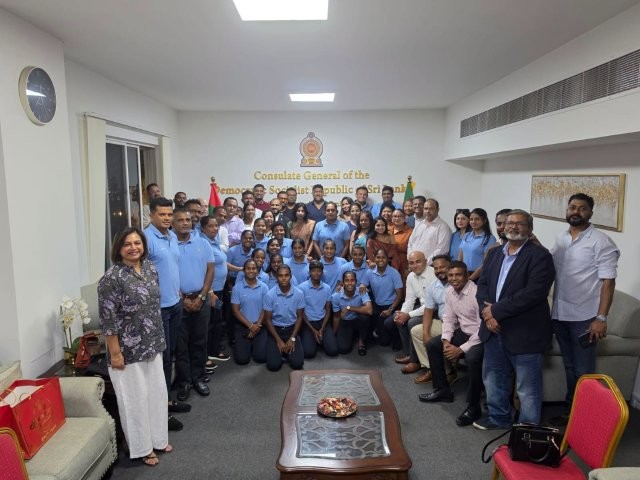
The Consulate General of Sri Lanka in Dubai hosted the Sri Lanka Women’s National Cricket Team to a special dinner at the Consulate General premises

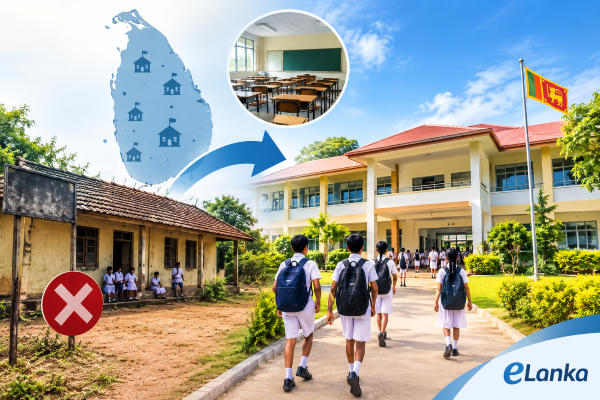
Education Ministry’s restructuring impact closure of one-third of public schools By Arundathie Abeysinghe

Education Ministry’s restructuring impact closure of one-third of public schools By Arundathie Abeysinghe

Celebrating 80 Years of Life & Achievements of Dr. Somaratne Dissanayake.

Related News
Articles

HCA Newsletter

Articles Dr Harold Gunatillake

Streamlining Sri Lanka’s Health System: President AKD’s Primary-Care Reform Vision-by Harold Gunatillake

The Brad & Kiara Show
Articles The Brad and Kiara Show - Sydney

The Brad & Kiara Show

Articles Trevine Rodrigo

Chamari Athapaththu’s heroic Sri Lankans storm into Asia Cup final against India.  Plucky Lankans usurp Pakistan after keen tussel.  BY TREVINE RODRIGO IN MELBOURNE.  (eLanka Sports Editor)

Beverly Hills Polo Club Celebrates the Journey to the Crown with Miss Grand Sri Lanka 2026 01
Articles

Beverly Hills Polo Club Celebrates the Journey to the Crown with Miss Grand Sri Lanka 2026

  • Quick Links:
  • Articles
  • DESMOND KELLY
  • Dr Harold Gunatillake
  • English Videos
  • Sri Lanka
  • Sinhala Videos
  • Obituaries
  • eLanka Newsletters
  • Sunil Thenabadu
  • Dr. Harold Gunatillake
  • Trevine Rodrigo
  • Tamil Videos
  • Sinhala Movies
  • Photos
  • eLanka Newsletter

eLanka

Your Trusted Source for News & Community Stories: Stay connected with reliable updates, inspiring features, and breaking news. From politics and technology to culture, lifestyle, and events, eLanka brings you stories that matter — keeping you informed, engaged, and connected 24/7.
Kerrie road, Oatlands , NSW 2117 , Australia.
Email : info@eLanka.com.au / rasangivjes@gmail.com.
WhatsApp : +61402905275 / +94775882546
  • About eLanka
  • Terms & Conditions

Disclaimer:
eLanka is committed to sharing positive and community-focused stories. We do not publish or endorse political, religious, or ethnic viewpoints. The content published on eLanka, including articles and newsletters, reflects the opinions and views of the respective authors and not those of eLanka. eLanka accepts no responsibility or liability for the accuracy, completeness, or consequences of any content provided by contributors.

(c) 2005 – 2025 eLanka Pty Ltd. All Rights Reserved.