Sri Lanka’s Balancing Act Between India and China-by Harold Gunatillake

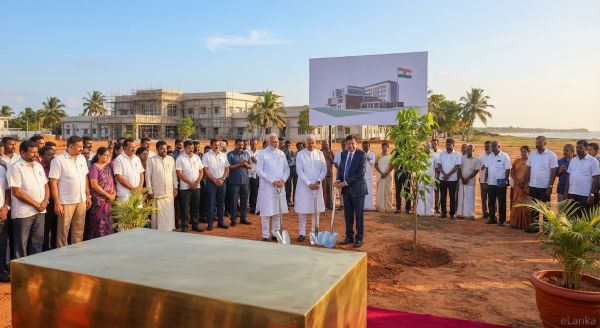
This is my account of the recent foundation-laying ceremony on 16 September 2026 at Mannar District General Hospital, which includes a Rs. 600 million Accident and Emergency Unit funded entirely by a grant from the Government of India.
I authored this article in response to a comment made by Mr Rankothge within the same article, titled “Indian Grant.”
Mr Rankothge’s remarks are as follows:
“Another dimension to India’s friendship with Sri Lanka under NPP govt:
AKD stupidly moved away from China and became a blind pet of India. India is more towards the USA as well under Modi. China is worried. To counter this, China may be trying to create something to hurt India and SriLanka. A new “Eelam” combining Tamil Nadu and N&E India is very sensitive to political developments in Tamil Nadu. Now a very popular actor is the top guy for Tamil Nadu. Or, to counter this, China may help another Rajapaksa to take the top position in the country to regain lost ground”.
Please watch this with an open mind:
Here are my thoughts for you:
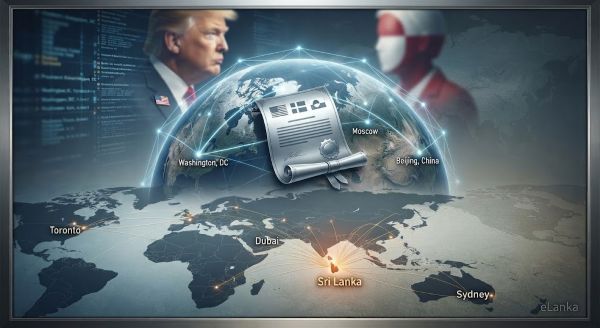
Sri Lanka’s recent partnership with India—symbolised by New Delhi’s grant to establish a modern Accident and Emergency Unit at Mannar Hospital—has rekindled discussions among analysts both domestically and internationally.
For the global Sri Lankan diaspora, the central issue is not India’s or China’s comparative advantage, but whether Sri Lanka can ultimately adopt a foreign policy rooted in equilibrium rather than reliance.
India’s developmental footprint in Sri Lanka has become quite evident. It has generously contributed over USD 7.5 billion in support, including USD 850 million in grants. This aid has gone towards housing, railways, digital identity systems, renewable energy, and emergency healthcare, making a meaningful difference. India’s thoughtful USD 4 billion support during Sri Lanka’s 2022 economic crisis stands out as one of the most impactful regional efforts in recent South Asian history.
China’s contributions, however, are equally woven into the national fabric. Chinese grants funded the BMICH, Nelum Pokuna Theatre, the Lady Ridgeway Hospital wing, and the Supreme Court Complex. Beijing also supplied critical military hardware during the final phase of Sri Lanka’s civil war, when other nations withheld support. China’s investments in ports, energy, and infrastructure continue to shape the island’s long-term economic landscape.
Some commentators worry that Sri Lanka’s current political leadership has “moved away” from China and become overly dependent on India.
Some individuals speculate about potential destabilisation scenarios linked to Tamil Nadu politics or renewed separatist movements. These concerns reflect the region’s complex history, but they lack credible geopolitical support.
China’s interests in Sri Lanka are commercial and strategic, not ethnic; India’s security presence in the island is deep; and Tamil political actors today seek rights and development, not secession.
The true narrative is simpler: Sri Lanka is working to restore equilibrium after years of disproportionate foreign involvement. The nation cannot risk alienating China, nor can it afford to disregard India—its nearest neighbour, primary first responder, and most dependable development collaborator.
Stability requires equidistance, not equivalence.
For the diaspora watching from afar, the Mannar project is not a symbol of subservience. It reminds us that Sri Lanka’s recovery will depend on pragmatic partnerships, transparent governance, and a foreign policy that prioritises national interest over political nostalgia.
Sri Lanka should prioritise stability and self-preservation over partisanship.
By Dr Harold Gunatillake OAM