


William Gopallawa: The Kandyan Gentleman Who Served Ceylon and Sri Lanka for Six Decades

AI-generated illustration, not a historical photograph. An authentic Wikimedia Commons photograph of Gopallawa meeting US President John F. Kennedy in the Oval Office in 1961 is available through Wikipedia and has not been reproduced here.
William Gopallawa MBE (Sinhala: විලියම් ගොපල්ලව; Tamil: வில்லியம் கோப்பல்லாவ) spent nearly six decades in public life, serving in local government, law, municipal administration, diplomacy and national office. Born at Dullewe Maha Walauwa in Dullewe, Aluvihare, near Matale, on 17 September 1896, he was the last Governor-General of Ceylon and, after the country became a republic in 1972, its first President.
His career spanned an important period in the island’s history, from the final years of Ceylon’s constitutional association with the British Crown to the establishment of the Republic of Sri Lanka. His progression through civic and administrative roles offers a window into the changing institutions of the country.
A note on dates: Sources differ on some biographical details. Wikipedia gives Gopallawa’s birth date as 17 September 1896 and his death as 31 January 1981 in Colombo, aged 84. The archived Daily News profiles give 1897 as his birth year and record different details about his death. This article follows the dates given in the Wikipedia account and notes the discrepancy.
Early life and education
Gopallawa was born into a Kandyan family. Through his mother, Tikiri Kumarihamy Dullewe, he was related to Dullewe Dissava, who signed the Kandyan Convention of 1815 on behalf of the Sinhalese. His father, Tikiri Bandara Gopallawa, died when William was three years old.
He began his education at the Dullewe village school and St. John’s College in Kandy. He later attended Dharmaraja College, Kandy, where he was a Scout, and continued at St. Anthony’s College. After sitting the Cambridge Senior Certificate Examination in 1917, he returned to Matale and joined the tutorial staff of the Buddhist English School, now Vijaya College.
While teaching, he helped establish a library and a Scout troop at the school. These activities formed an early part of a career that would later combine professional work with civic and institutional responsibilities.

AI-generated illustration of a school setting inspired by the period; it is not a historical photograph.
Law and local government
In 1920, Gopallawa joined Ceylon Law College. He was enrolled as a proctor and notary public in 1924 and began legal practice in Kandy as a junior to Bernard Aluwihare. His work extended across Matale, Dumbara and Kandy.
His municipal career began in 1926, when he won a seat on the Matale Urban Council. He served on the council for 13 years, including five years as chairman. Biographical accounts describe him as the youngest Urban Council Chairman in Ceylon at the time.
In 1939, Gopallawa was appointed the first Municipal Commissioner of the newly established Kandy Municipal Council. He held the post through the Second World War, when the work of municipal administration continued amid the demands of a period of international conflict. Accounts also describe his administrative response during the intense floods of 1950.
In 1951, he became Municipal Commissioner of the Colombo Municipal Council, serving until 1957. His work in Kandy and Colombo placed him at the centre of local administration in two of the island’s principal cities. He was appointed a Member of the Order of the British Empire in the 1953 Coronation Honours.
Diplomatic service
Gopallawa’s public career next moved into diplomacy. He was posted as Ambassador to China in 1960 and, on 7 September 1961, was appointed Ambassador to the United States. During his diplomatic service in Washington, he met President John F. Kennedy in the Oval Office of the White House.
The historic photograph of that meeting, held through Wikimedia Commons, can be viewed from the William Gopallawa article on Wikipedia. It is not reproduced in this profile. His diplomatic service was followed by his return to Ceylon in 1962, when he was nominated to serve as Governor-General.
Governor-General of Ceylon
Gopallawa assumed office as Governor-General on 2 March 1962, succeeding Sir Oliver Goonetilleke. He was the second native Ceylonese to hold the post and the first Buddhist to serve as the viceregal representative of Queen Elizabeth II. He remained in office until 1972, serving during the tenures of three governments.
The constitutional responsibilities of the office were evident after the 1965 general election. The United National Party won a majority of parliamentary seats, and Gopallawa invited it to form a government. The decision is recorded in biographical accounts as a significant instance of the Governor-General responding to the parliamentary result.
The transition to the Republic
On 22 May 1972, Ceylon became the Republic of Sri Lanka. The Governor-General’s office ended, and Gopallawa became the country’s first President. The role was largely ceremonial and non-executive. He served as President until February 1978.
The change of title reflected a constitutional transformation: the country had become a republic, and the head-of-state role was now held by a President rather than a Governor-General representing the British monarch. Gopallawa’s service across both offices made him a direct link between these two stages of Sri Lanka’s constitutional history.

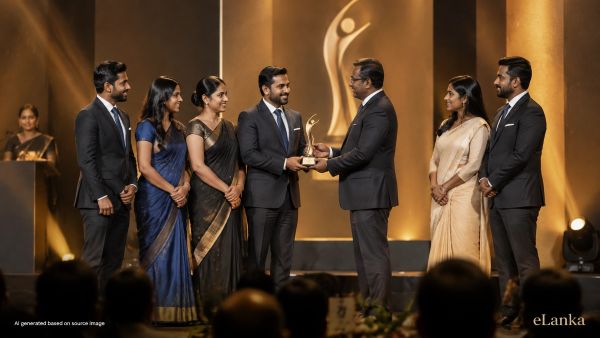
AI-generated illustration of a ceremonial setting. It is not a historical photograph and does not depict verified participants or a specific event.
Gopallawa also served internationally as the fifth Chairperson of the Non-Aligned Movement, from 16 August 1976 to 4 February 1978. During his presidency, he represented Sri Lanka at the February 1975 coronation of Nepal’s Crown Prince Birendra and undertook a state visit to Bangladesh in March 1977.
His institutional responsibilities extended to higher education. He served as Chancellor of the University of Sri Lanka at Peradeniya, Vidyodaya University and Vidyalankara University. In 1962, he received honorary doctorates from the University of Ceylon, Vidyalankara and Vidyodaya.
Family and later years
Gopallawa married Seelawathie Rambukwella in 1928. Sources differ on the number of their children: Wikipedia records five, while one archived Daily News profile names four. The discrepancy is retained here rather than resolved without further supporting documentation.
According to Wikipedia, Gopallawa died in Colombo on 31 January 1981, aged 84. The archived Daily News tributes record differing details about his death, as noted above.
From his early education in Matale and Kandy to his service in municipal offices, diplomatic posts and the presidency, Gopallawa’s life crossed a broad range of public responsibilities. His biography provides a useful historical perspective on civic administration, diplomacy and the institutional transition from Ceylon to the Republic of Sri Lanka.
Sources
- Wikipedia: William Gopallawa
- Daily News: “William Gopallawa” (archived biographical tribute)
- Daily News: “William Gopallawa, the first President” (archived tribute)
- Sunday Observer: “William Gopallawa: a dignified symbol of the nation”
- The New York Times: “William Gopallawa, 83, Ex-Sri Lanka President”
This article was written based on the source https://en.wikipedia.org/wiki/William_Gopallawa, https://web.archive.org/web/20121008115945/http://www.dailynews.lk/2009/01/30/fea02.asp, https://web.archive.org/web/20070930033528/http://www.dailynews.lk/2003/05/22/fea05.html, https://epaper.sundayobserver.lk/Home/ShareImage?Pictureid=a252f8f4 and https://www.nytimes.com/1981/02/01/obituaries/william-gopallawa-83-ex-sri-lanka-president.html, kindly email us at info@eLanka.com.au if any information needs to be corrected.
At eLanka, we respect the rights of creators. If we have used an image you own and you’d like it removed, please email us at info@elanka.com.au and we’ll handle it promptly.
Thanks.
eLanka team
eLanka Disclaimer
Content published on eLanka may be created by the eLanka team, submitted by contributors or third parties, reproduced or adapted from other sources with appropriate source acknowledgement, or provided as promotional/advertising material by our clients. While eLanka takes reasonable care in preparing and publishing content, we do not warrant its completeness or accuracy. Views expressed are those of the respective authors or contributors and do not necessarily represent the views of eLanka. Third-party contributors, content providers and advertisers are responsible for the accuracy of material they supply and for ensuring they hold the necessary rights and permissions for its publication. Advertising and promotional content should not be regarded as an endorsement by eLanka of any product, service or claim.