



What Panamure Ath Raja Teaches Us About Kawantissa-K.K.S PERERA
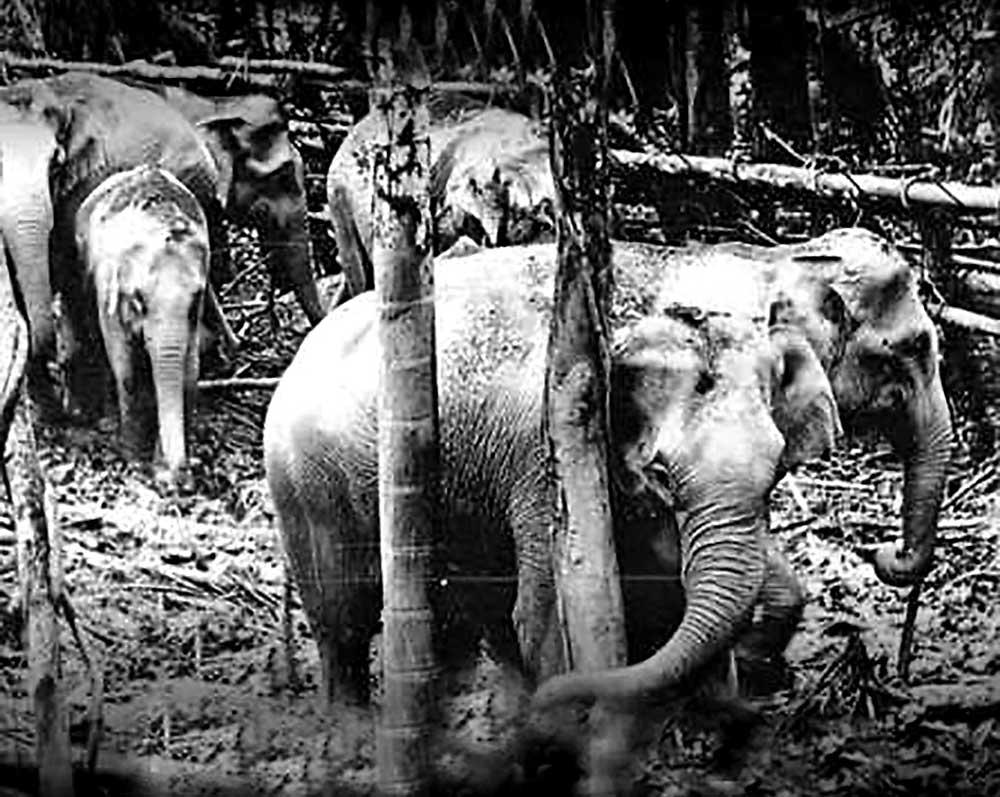
Elephant Kraals were banned in 1950
Source:Dailymirror

On 10th August 1950, a young wild bull at Panamure broke through one-inch wire ropes, and when the gate of the kraal was finally opened for him, he ran out towards the forest, stopped, and turned back to rejoin his herd. He could have escaped alone. He chose not to. Within hours he was dead, shot in front of several hundred people.
Few Sri Lankans today know his story. Yet in his time that single rifle shot echoed around the world. Seventy-five years later, the shooting of Tusker Kawantissa asks the same question the bull’s death once asked: what value do we place on the life of a wild elephant, and who answers when that life is taken?
A town Built for a Spectacle
The Panamure kraal was no small affair. It was organised on the Maduwanwela family lands in Kolonne Korale by Sir Francis Molamure, Speaker of the Parliament of Ceylon, who held the land in trust for a disabled female relative, the last in her line. More than 1,800 people toiled to build a stout stockade of jungle timber and cross beams, bound with vines and ropes, around a perennial spring where elephants came for water in the dry months of July and August.
Overnight a small town sprang up: A police post, a post office with a telegraph, a medical post, shops, markets and huts for the workers. There were raised galleries for the VVIPs and guests, for the kraal was called a “sport,” staged as entertainment and as a display of the power and wealth of its organisers, who also stood to profit from the auction of captured animals.
Scouts then located a herd and drove it relentlessly, with noise and fire, into the stockade. The gates closed. There were 17 elephants: Adults, young males and females, and several small babies still suckling.
The Rebellion
Once the herd was inside, the “sport” began: noosing the animals and tying them by their hind legs to trees. Perhaps this was the moment the captives understood that they were prisoners, condemned to a life of servitude far from the forests they loved. The attempt to noose the matriarch set off the rebellion. The herd’s leader, a huge young bull, charged anyone who entered the kraal, and all capture work stopped. Attempt after attempt to resume was driven back.
The organisers then sent in tame bulls with their mahouts, led by the great Mampitiya Tusker. At the wild bull’s furious charge, the Mampitiya Tusker turned and fled, and was chased and gored on his hindquarters. A second tame elephant refused to face him. Next, strong Gunaya was sent. Eyewitnesses recorded that the two met head-on, but the wild bull’s strength was such that Gunaya was knocked sideways, struck on the shoulder and thrown to the ground. The wild bull climbed onto him and attacked with his tusks, and Gunaya was rescued only with great difficulty and risk. The organiser, it is said, then decided to release the bull and chase him into the jungle so that normal operations could go on.
The gate was opened, and the bull went out in the direction of freedom. Then, suddenly, he turned and rushed back into the stockade to join the herd. It was the mark of a true leader: he would not abandon his herd for his own freedom. Another theory says he was trying to rescue his partner, a young female.
The Walking Stick of Madara Wood
By then several captives had been tethered, and their struggles to free themselves were pitiful. Dr. R. L. Spittel, who was present, warned the organisers that such stress and violent contortions could permanently damage the animals’ health and their usefulness as working elephants, and urged them to proceed with care.
Lord Soulbury, the Governor-General, wished to enter the kraal to inspect the captured elephants. Sir Francis Molamure reportedly assured him that his “charmed walking stick of rare Madara wood” would protect them from harm. The assurance proved less than convincing: both men escaped with minor scrapes, making a hasty, and decidedly undignified, retreat.
As the story is told, the episode has an almost comic quality. But nothing was amusing about it for the bull. He was defending his mate and resisting the captivity imposed upon them. The men who narrowly escaped his charge were, after all, among those who had arranged the ordeal in the first place. What appeared to be a humiliating encounter for the men was, for the elephant, a desperate struggle against human domination.
“Kill the Bull With One Shot”
The organisers decided to tie the bull down with a one-inch wire rope, which, given his struggles, would have cut to the bone. Two ropes were broken. The third was wrongly placed and wedged between the nails of one foot, which maddened him further.
Decision to kill
Molamure then summoned the Police Inspector and ordered him to kill the bull with a single shot. It is debatable whether the inadequacy of his .303 weapon or some other reason lay behind it, but the Inspector refused, and was summarily dismissed.
Into this scene came Sam J. C. Kadirgamar, one of the best shots in Ceylon, travelling on a jungle trip with two friends. Among his weapons was a .375 Magnum rifle, recently imported from a reputed British maker and well suited to large animals. Molamure asked for his help. Kadirgamar, apparently, agreed reluctantly.
Kadirgamar never forgot that day. In July 1980, he raised the subject himself with a man who later wrote down what he heard. Thirty years on, regret still coloured his voice. He said the bull seemed to know why he had come. Before facing the rifle, the animal went round the tethered members of his herd one by one, tossing dust and torn branches over them, like a farewell. Only then did he wheel round and come at Kadirgamar at full speed, trunk tucked in, ears beating, eyes blazing with defiance.
Witnesses agree on what followed. Kadirgamar dropped to one knee and fired from about twenty yards. The bullet passed through the middle of the head. The bull’s hind legs gave way first, then the front, and he toppled onto his left side. Death was most likely instant.
Silence fell over the several hundred people watching. Some wept, some cursed the organisers, and some could not believe what they had seen. Others behaved very differently. Favoured guests with access to the stockade crowded around the body for celebratory photographs, and before long they pulled out the tail hair to make charms and keepsakes. Kadirgamar was not among them. He left early and took nothing. The body itself bore the marks of the day: the bullet wound, two deep gashes from goads on the head, and the cut left by the wire rope between the nails of one foot.
The rest of the herd was tied up, and a day later the captives were auctioned. The babies were the saddest sight. Newspapers reported that one young woman among the guests begged her mother to buy a baby elephant that had been separated from its mother, to be “her dowry.”
A Nation Grieves
The bull was cremated where he fell. But the shot did not end there.
The news reached every corner of the island. The local papers put it on the front page under the headline “Preferred Death to Captivity,” with a photograph that caught the bull in the instant of his death, still defiant. In London, the Daily Graphic gave the story generous space, running a photograph of Lord Soulbury and a headline about his “run for dear life.” Parliament argued about the killing. So did people in learned circles, at street corners and tea kiosks, in the markets, and, in lowered and sorrowful voices, inside homes everywhere. The kavi kola karayas, street sellers of printed verse, offered laments for a few cents a copy, and the Rediffusion sets in every tea boutique and eating house carried songs praising the dead monarch’s courage.
The Speaker made matters worse. During the debate in Parliament he is reported to have said that what happened in his own backyard was nobody’s concern. Popular anger only deepened, and kraaling in Ceylon was banned. One account says the bull’s death did not go in vain for others of his kind. Another says the uproar left the state no choice but to pass a law in 1950 prohibiting kraals and the capture and killing of elephants. The sources differ on the date, but not on the outcome: Panamure was the last great kraal.
The Speaker’s Collapse
Then came the sequel that Sri Lankans have never quite let go. On 23 January 1951, while presiding over the House of Representatives, Sir Francis Molamure collapsed in the Speaker’s chair. He was rushed to the Central Hospital unconscious and died on the morning of 25 January, aged 68. It was barely six months after the kraal.
The Panamure bull, the “Ath Raja,” the elephant king, had struck a telling blow for the conservation of all wildlife, with deeds, action and unspoken words. The nation and the world heard it then. Have we forgotten?
Kawantissa
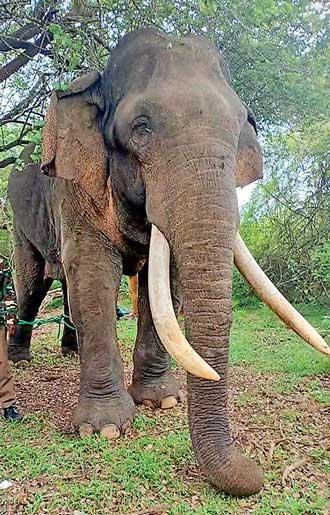
Kawantissa was a tusker whose life had value beyond his beauty. Elephants are intelligent, socially complex animals that shape forest ecosystems. A mature tusker is part of Sri Lanka’s natural heritage.
Reports described a gunshot injury to his right foreleg, followed by veterinary treatment and a decline in his condition. Reports that he refused food and suffered dehydration made his death especially distressing.
The public’s attention has already begun to move on. That is why Panamure matters. The outrage that ended kraaling was not automatic. It took sustained public pressure to turn one death into change, and it can fade just as easily into silence.
The precise circumstances and responsibility for the shooting must be established through a credible investigation. It would be wrong to convict any individual in the court of public opinion without evidence, and equally wrong to let the inquiry fade. Who shot Kawantissa, and under what circumstances? Was the shooting reported promptly? Did the authorities respond with the urgency such a case demands? If evidence identifies the person responsible, the law must take its course. A wild elephant is not a disposable object, and a gun does not place its holder above the law.
When Political Words Become Dangerous
At Panamure, the responsibility did not rest only with the man who fired the rifle. It rested also with a system of permission, with powerful people who had decided that capturing and killing wild elephants was an acceptable sport.
Something similar deserves scrutiny today. In a country struggling with human-elephant conflict, political leaders must choose their words carefully. Farmers face genuine hardship when elephants destroy crops and homes, and they deserve practical help. But acknowledging their suffering is not the same as granting permission to kill wildlife.
Public controversy followed remarks attributed to Agriculture Minister K. D. Lal Kantha in Parliament about action by farmers against wild animals damaging their crops. In July 2025, a separate controversy arose over a proposal to issue firearms to farmers to deal with crop damage and wild elephants, prompting objections from environmental advocates.
The wider concern is nonetheless clear. When a minister speaks loosely about taking action against wild animals, people may hear official approval of violence. When firearms are proposed without clear safeguards, the risk of misuse demands scrutiny. Intention is not the only measure of responsibility; officials must consider how their words will be understood in a village where a farmer has just watched a season’s harvest destroyed.
A public statement does not repeal wildlife law, and crop damage does not create a general licence to kill protected elephants. If ministers believe the law needs to change, they must say so openly, submit the changes to scrutiny, and build in safeguards. The public is entitled to ask: What will prevent illegal killings? Who will monitor firearms? What happens when an animal is wounded rather than killed? What non-lethal alternatives have been properly funded? These are questions of public responsibility, not hostility towards farmers.
The conflict is real, serious and complex. Farmers cannot survive on sympathy alone. They need timely warnings, effective barriers where appropriate, and fair compensation for verified losses. Government must invest in evidence-based land-use planning, suitable habitats and corridors, early-warning systems and faster responses when elephants enter settlements, developed with farmers and wildlife experts. Killing one elephant may remove one animal from one place, but it does not resolve the conditions that brought elephants and people into conflict.
What Panamure Demands
The bull of Panamure died more than seven decades ago, and his death did more than most laws could. It exposed a cruelty the powerful had accepted and forced a country to look at itself.
Kawantissa’s death deserves the same response. Investigate it openly. Publish what is found. Act under the law wherever the evidence points to wrongdoing. This is not a call to punish anyone without proof. It is a refusal to let rank, connections or political office put anyone beyond question.
To whoever fired the gun: the law will name those responsible, and the evidence will decide the outcome. To ministers: your words carry weight, so do not will erode further.
From Panamure to Kawantissa, the lesson has not changed. To the authorities: if you stay silent, delay, or let this inquiry fade away, public trust moral right to destroy it, and holding power over the public gives no right to speak carelessly about who lives and who dies.
At eLanka, we respect the rights of creators. If we have used an image you own and you’d like it removed, please email us at info@elanka.com.au and we’ll handle it promptly.
Thanks.
eLanka team
eLanka Disclaimer
Content published on eLanka may be created by the eLanka team, submitted by contributors or third parties, reproduced or adapted from other sources with appropriate source acknowledgement, or provided as promotional/advertising material by our clients. While eLanka takes reasonable care in preparing and publishing content, we do not warrant its completeness or accuracy. Views expressed are those of the respective authors or contributors and do not necessarily represent the views of eLanka. Third-party contributors, content providers and advertisers are responsible for the accuracy of material they supply and for ensuring they hold the necessary rights and permissions for its publication. Advertising and promotional content should not be regarded as an endorsement by eLanka of any product, service or claim.