Professor Ashley Halpe, the great humanitarian I knew – I-By Rohana R. Wasala
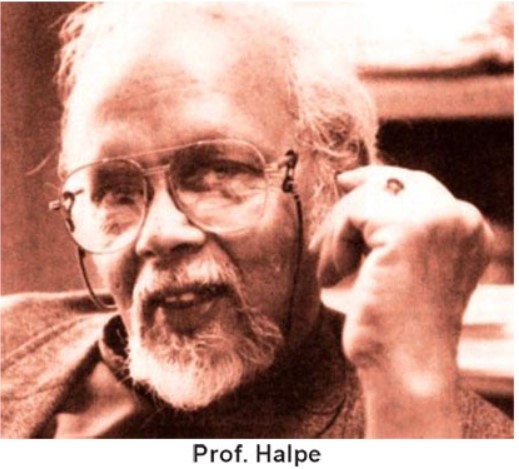
Source:Island
I do not know
the thin reek of blood, the stench
of seared flesh, the
cracked irreducible bone; I know
only the thinner reek of pity,
the harsh edge of self-contempt,
the ashy guilt of being too old,
salaried, safe, and comfortable.
I would know their reasons,
the rigour of their hot hate, their
terrifying faith. But
they have said everything
in dying, a communication
beyond all speech….
Ashley Halpe, ‘”April” 1971’
In the incantatory rhythm of the short meditative lyric contained in Professor Ashley Halpe’s collection of his poems entitled “Silent arbiters have camped in my skull” from which the above lines are quoted, we sense the ebb and flow of the self-assumed guilt (note the play on the word ‘ashy’ that echoes the sound of his first name) and the attendant self-contempt of a socially well ensconced and physically secure but conscience-stricken senior don; he imagined that he was so circumstanced as to be a helpless onlooker while the young students, for whose safety and wellbeing he held himself at least indirectly responsible, were getting slaughtered during the April 1971 JVP rebellion. The young people he empathised with were engaged in a violent struggle in the name of a cause that they fiercely believed in. Professor Halpe had the deepest concern for the education and wellbeing of the youth of the country. On its publication by the Tisara Prakasakayo, Dehiwala, in June 1976, Professor Halpe gifted me an autographed copy of the volume: He wrote “What about writing, too?” in the inner title page before signing it for me. I still have it with me.
He had great sympathy towards the young people who took part in the first JVP insurrection, that took place in April 1971; but he didn’t show any interest in the politics that drove their activism. He had a number of poems in that selection which were implicitly dedicated to the many young boys and girls, including university students, who had perished in that ill-prepared, ill-timed and ill-fated adventure, attempted though it was by a group of selflessly committed and genuinely patriotic young Marxists.
Tribute
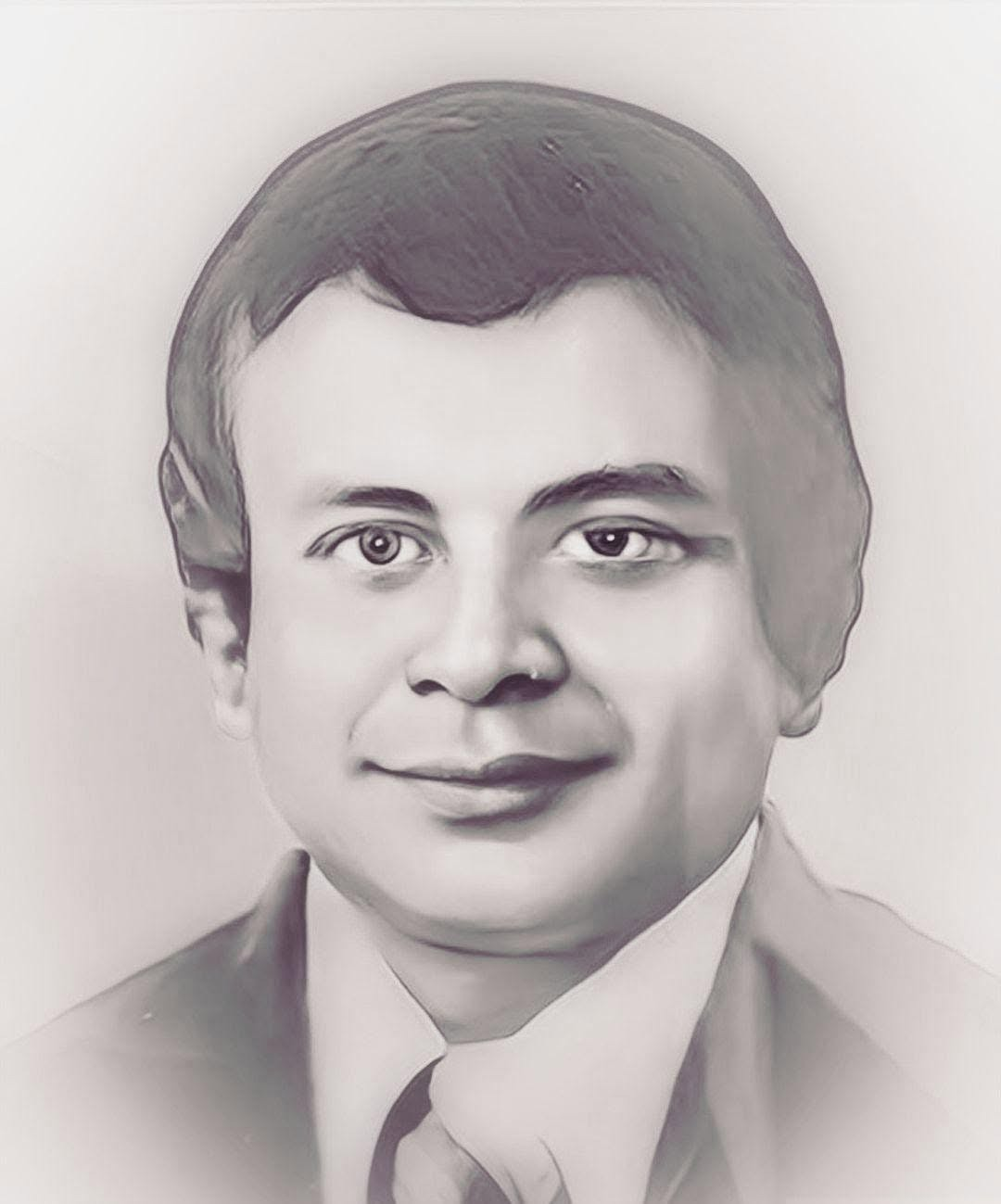
This present piece of mine, reluctantly autobiographical and discursive, is a memorial tribute to the late Professor Ashley Halpe of the University of Peradeniya, who breathed his last, aged 83, on May 15, 2016. It is five years overdue, though, (the reason for which is explained below). I was prompted to write it after reading three recent write-ups published in honour of the late professor: Tissa Jayatilake’s commemorative essay “Remembering Professor Ashley Halpe”, Aparna Halpe’s filial appreciation “Learning from My Father, Five Years after His Passing” (Aparna was no more than a little chatterbox of a toddler when I first saw her in her father’s light blue Datsun stationwagon, looking through the open shutters and commenting on the passing scenes on the way in her charming baby-prattle during a drive from the campus to Kandy) and George Braine’s “Shakespeare in a takarang shed”, befitting a pupil, published in The Island issues of May 17, 23 and 26, 2021, respectively. To date, Tissa Jayatilake has written quite a number of articles in appreciation of his beloved teacher and respected senior colleague in the academia over a long period of time. I still remember how Tissa, as a novice assistant lecturer, wrote a well-argued defence of Professor Halpe, the foremost Shakespearean scholar of the time in the country as he described him, countering an attack on the latter by some biased critic; it was published in a national newspaper, probably in the Daily News or the Sunday Observer. It was in the second half of the ‘70s decade. I find many laudatory assertions Tissa makes about Professor Halpe in his deeply felt latest eulogy (which is devoid of any hint of hagiography, nevertheless), that I can endorse through my own experience as one of the late professor’s close companions (at a particular time). The only reason for my inordinate delay in writing a commemoration article in honour of Professor Halpe was my own persistent diffidence and hesitation to do so caused by the feeling that the attempt might involve telling too much about myself in the process (instead of the person remembered) that would not be of any interest to my readers. However, I have now realized that that potential danger cannot be avoided by any of his grateful students in celebrating the memory of Professor Halpe simply because of his self- effacing humble nature. While alive he played a distinguished multifaceted role in the national educational and cultural sphere as the doyen of Sri Lanka’s English literature academics.
Opportunity
I enjoyed the opportunity to closely associate with Professor Ashley Halpe, the English scholar, poet, dramatist, translator, and painter, initially as my teacher and mentor, and eventually as ‘friend and colleague’ (as he had us identify him) during the 10 years from 1972 to 1982. He treated all his junior associates in the same unassuming manner. At times a rare vainglorious person among them would pretend to be extra pally with him by addressing him by his first name, something that our then colleague, the late Aubrey Kuruppu, well known cricket columnist, commentator, umpire, administrator, and coach – in fact, cricket filled his life – used to ridicule as trying to be ‘on Ashley terms’ with the professor! Professor Halpe was above all a great human being as Tissa Jayatilake has stated more than once in his writings about the late professor.
To me, Professor Halpe was an immensely knowledgeable teacher and a kindhearted guide with a philosophical bent, at a familiar personal level, rather than at a routine official level, due to the uniqueness of the circumstances on my side that caused me to seek his help at a time I had no direct connection or communication with him; but to him, in his own generous estimation, I was one of his ‘young colleagues’, an honour I let myself accept with a keen awareness of my own inadequacy beside him. The latter phase of our relationship (‘friends and colleagues’ stage) was during 1976-82 when I served as an English instructor in what was then known as the sub-department of English (which at a later time became the English Language Teaching Unit/ELTU), whose function was to teach English to the new entrants of all the faculties of the university who lacked the proficiency in the language that they needed to acquire in order to complete their academic studies at the high level of excellence that the university traditionally maintained.
Peradeniya
The Peradeniya University’s department of English, even then, more than two decades after its heyday, harked back to its classical fame under its legendary gurus, such brilliant English scholars of the ‘40s and ‘50s as professors EFC Ludowyk, HA Passe, and Doric de Souza. They together bequeathed to the later generations of students the likes of Professor Ashley Halpe and Associate Professor Thiru Kandiah {the latter later moved to the Department of English Language and Literature of the National University of Singapore}.) The Trotskyite English don Doric de Souza (a prominent member of the Lanka Sama Samaja Party) played a significant part in the formation of the sub-department and was responsible for the compilation of a prodigious amount of appropriately chosen practice materials which were designed to meet the advanced linguistic needs of the general mass of students who had little or no English on admission.
I believe I was lucky enough, under the volatile circumstances later reflected in this personal account, to have the chance to subject myself to something of the lasting influence of the first two stalwarts mentioned above, in my attitude to, and grasp of, English literature from and through Professor Halpe, while drawing similar inspiration from the astonishingly creative and productive ideas independently incubated by Doric de Souza about teaching English for academic purposes (which our work as instructors was all about) through Dr Thiru Kandiah. I didn’t personally know Dr Kandiah before my appointment as instructor in 1976, but from then on, my friendly as well as productive interactions with him became as close as those with Professor Halpe.
At this point I feel that a quick flashback to my senior secondary school days is necessary to put my relationship with Professor Halpe in perspective. (By the way, I’d like to alert my readers to the fact that the account given here is not going to be linear; it will have a number of duly indicated flashbacks and flash-forwards, which, I hope, you will not find to be too much of a disjunction in the narrative.) My particular family circumstances caused me to interrupt my GCE AL studies and find a job. While still attending school at Poramadulla Central, I appeared for a competitive examination for admission as a ‘non-teacher’ to the Government Teachers’ Training College at Maharagama, the country’s premier secondary teacher training institution of the day (The National Institute of Education stands at the same venue today) for following a secondary English teacher training course. In those days (the latter ‘60s), Maharagama specialist trained teachers (in any of the specialized fields of science, maths, English, etc) enjoyed special recognition and were paid on a higher salary scale than those from general teacher training colleges. This salary disparity was removed under the UF government of the ‘70s. Our English teacher at the GCE OL in the mid-60s was an alumnus of G.T.C Maharagama.
Ambition
It was at the G.T.C. that I started entertaining an English Honours degree ambition, thanks to two scholarly lecturers there: Mr A.M.G.Sumanapala Akmeemana who held a BA English Hons (London) degree, and was also a postgraduate TEFL (UK) diplomate, whose thought-provoking lectures delivered in flawless (but not stilted) English left a lasting impression on my young mind. It was from him that I learned what the ‘Socratic method’ of teaching was: for a considerable part of the lecture time, he didn’t ‘teach’; he asked questions and made us think. Tissa remembers the same stimulating approach used by Professor Halpe, and I agree with him. (Incidentally, the senior English lecturer at Vidyalankara University, Mr A.M.G. Sirimanne, that George Braine mentions in his piece was Mr Akmeemana’s older brother, but I never saw him; I had only heard about him as a first-class English scholar.) The other lecturer who similarly inspired me when I was training at Maharagama was the late Ms Chitra Fernando, linguist, academic and author, and eminent English fiction writer. She was a Peradeniya English Hons graduate, who had been tutored by Professor Passe and other stalwarts in the later ‘50s; she was perhaps a little junior to Professor Halpe at Peradeniya. On my first day at Maharagama, she called me to her after a lecture, and asked me from where I was and how old I was. I told her. When I said I was 19 plus, she said to me: “You are still too much of a kid. You should be in a university, not here. Don’t stop your studies after training”. Her words made a seminal impact on me. The training gave a foretaste of my Peradeniya experience, which I went through in unusual circumstances.
Before being enrolled as students of the Teachers’ College, the successful candidates were appointed as assistant teachers so they could be paid while in training.
They were made to sign a bond committing themselves to mandatory unbroken government service for a specified period after training, failing which they were required to pay back the cost of the training in full. On completion of the two year course, they were appointed to secondary schools. As luck would have it, I was appointed to a secondary school close to my home town, which suited me in view of my family responsibilities and my postponed university education prospects. This was a year or two before the first JVP rebellion of 1971.
Now, still in my early twenties, while teaching in that school, I successfully appeared for my delayed GCE AL exam as a private candidate offering English as one of the standard four subjects to be offered at the time in the arts stream instead of the science stream which I had followed at school, and qualified to apply for enrolment in a university. However, I couldn’t legally find admission to a university or leave the state school system which employed me without losing my job because of the training college bond that I had signed with the government. So I decided to achieve my ambition as an autodidact, and got enrolled for the external degree programme of the Peradeniya university as a special English trained teacher.
Following this, I wanted to make contact with an internal student in the English department. I did that through a former schoolmate of mine who was just finishing his studies in another department of the Peradeniya university. He said he had a friend doing English, who, he was sure, would gladly help me with his notes and other materials as he was a ‘kaddek’ with revolutionary leftist ideas in politics ‘like us’, and offered to take me to him. (The slang word ‘kaddaa’ in university parlance meant a (male) person who was already competent in English or was pursuing studies in the English medium; ‘kaddee’ would have been the feminine form, which I never heard, though.)
By the way, it may be said that the campus colloquialism ‘kaduwa’ for English (from which base the above forms were derived) originated among university students, about or just before the time covered in this narrative; they, having mostly come from the non-English speaking (or exclusively swabhasha speaking) rural peasant and generally subaltern sections of the society with negligible English, recognized the alien language (English) for what it had been in the past: a symbol of colonial power and privilege and an instrument of oppression and exploitation; a perception that they expressed by calling it ‘kaduwa’ (sword). I owe this analysis of ‘kaduwa’ to Dr Thiru Kandiah mentioned above, internationally known Sri Lankan linguist, who both spoke and wrote about it occasionally in his normal research related contexts. He drew upon his research experiences among Black and other non-white subjects from dispossessed backgrounds in America in this respect. I remember him describing “kaduwa” used in that sense as a remarkably expressive poetic construction. Being a senior lecturer in English, he happened to be the coordinator of the subsidiary division of the English department at the time I got appointed to the permanent cadre of instructors in1976 after facing a highly competitive recruitment test (By that time, I had completed my English Hons degree, while working in a government school as a teacher.)
To go back in my narrative again, the ‘kaddaa’ that my school friend took me to was none other than the same Tissa Jayatilake I mentioned at the beginning of this essay, then a student of both Halpe and Kandiah. This was around 1970 to early 1972, i.e., well before I came into any close contact with the latter two. Today he is well known as English academic, political analyst and director of the Fulbright Commission of Sri Lanka, among other things. When Tissa was appointed as the director of the American Center (called the American Corner at present?) in Kandy in those early days that I am talking about, he was given a big official vehicle by the embassy that employed him. I still remember (hope my memory is not erroneous) him telling us how embarrassed he felt to be driven about in that ‘limousine’ among the poverty stricken fellow citizens of the place. I also remember attending a public lecture on the prominent ‘metaphysical poet’ John Donne (of the late 16th- and early 17th century) that he delivered as a fresh lecturer (no doubt on being recommended by Professor Halpe) at the British Council library, then located in a building adjacent to where the current supergrade branch of the Bank of Ceylon in Kandy was built decades later. In passing, it must be remembered with gratitude, that the British Council and the American Center libraries in Kandy, which were well stocked with books, offered the local readers (mostly students) free library facilities, that I made the best use of as additional resources in my scholastic endeavours.
Going a few years further back from this point, the past scene of my first meeting with Tissa is clearly etched in my mind. This was in the early ‘70s, during the months that the April ‘71 insurgency was gradually fomented, got suddenly ignited and was quenched with considerable violence. The security situation in the country was still tense consequent to the JVP revolt, which I had survived miraculously unscathed. The untimely death of my father due to sudden illness a few years previously left my family without its anchor. The responsibilities that my father shouldered largely devolved on me. This left me neither the opportunity nor the inclination to take part in the revolutionary political movement, which had been initiated by the ‘Peking Wing’ (of the Communist Party) led by N. Shanmugathasan. The activities of the ‘Peking Wing’ led to the formation of Rohana Wijeweera’s Janatha Vimukti Peramuna.
We – my school friend and I – , to resume the episode of my first meeting with Tissa, called on him in his room in a hall of residence whose name has now slipped out of my memory. He was reclining in his bed against some pillows, chatting with some friends of his (from the adjoining rooms, as was obvious). He immediately sat up, and welcomed us with warmth, while his friends left, letting him talk with us. Tissa showed great empathy with my situation. He proceeded to give me some very useful hints. He named books that he thought I had to read in addition to the prescribed texts for the first year exam or the General Arts Qualifying (GAQ) examination, which he had already been through. Later, Tissa introduced me to an assistant lecturer named Wimal Weerakkody for help with Western Classics. The latter’s brilliance in spite of his visually handicapped situation was amazing, and he was very generous in helping me. This Wimal Weerakkody was none other than the late Prof Emeritus of Western Classical Languages D.P.M. Weerakkody (familiarly known as Wimal Weerakkody), then an assistant lecturer in that subject, who was residing in either Jayatilake or Arunachalam Hall of Residence – I can’t clearly remember which – close to the Arts Theatre and the central library of the university. Meanwhile, my schoolmate friend borrowed the books that I needed from the university library using his student library tickets.
Subsequently, I passed the GAQ examination, earning eligibility to read for a Special (or ‘Honours’ as it had been known until not long before that) degree in any of the three subjects that I had offered for the GAQ (namely, English, Western Classical Culture and Economics). I opted to major in English, which had been my lifelong dream. I chose Western Classical Culture as the subsidiary subject to go with my principal subject English. This happened about a year after the first Che Guevarist uprising (1971) of the JVP was brutally put down by the government security forces, as shown above.
I thought it appropriate to go and see Ms Chitra Fernando and Mr Akmeemana at Maharagama and express my gratitude to them for invigorating me with their kind advice and guidance. Unfortunately, the former was not there. But I was able to meet Mr Akmeemana. He seemed more pleased to see me alive than to hear about my exam success (not that he underrated the second). “My family circumstances and my passion for English saved me, sir”, I told him. Like Professor Halpe (whom I came to know a year or two later), Mr Akmeemana, it was evident, wept in his heart over the ‘tragic destruction of young lives’. “Those innocent boys and girls were on the threshold of life. But their idealism killed them”, he mused, “They were just waiting to be slaughtered in the jungle!”
(To be continued)