News & Community eLanka

eLanka

Sunday, 14 Jun 2026
  • Home
  • Read History
  • Articles
    • eLanka Journalists
  • Events
  • Useful links
    • Obituaries
    • Seeking to Contact
    • eLanka Newsletters
    • Weekly Events and Advertisements
    • eLanka Testimonials
    • Sri Lanka Newspapers
    • Sri Lanka TV LIVE
    • Sri Lanka Radio
    • eLanka Recepies
  • Gallery
  • Contact
Newsletter
Sri lankan news
  • eLanka Weddings
  • Property
  • eLanka Shop
  • Business Directory
eLankaeLanka
Font ResizerAa
Search
  • Home
  • Read History
  • Articles
    • eLanka Journalists
  • Events
  • Useful links
    • Obituaries
    • Seeking to Contact
    • eLanka Newsletters
    • Weekly Events and Advertisements
    • eLanka Testimonials
    • Sri Lanka Newspapers
    • Sri Lanka TV LIVE
    • Sri Lanka Radio
    • eLanka Recepies
  • Gallery
  • Contact
Follow US
© 2005 – 2026 eLanka Pty Ltd. All Rights Reserved.
Home » Goodnews Stories Srilankan Expats » Articles » John Clunies-Ross, ‘king’ of the Cocos Islands, was toppled by Canberra
Articles

John Clunies-Ross, ‘king’ of the Cocos Islands, was toppled by Canberra

eLanka admin
Last updated: October 13, 2021 6:45 am
By
eLanka admin
ByeLanka admin
Follow:
Share
9 Min Read
SHARE
Views: 17

John Clunies-Ross, ‘king’ of the Cocos Islands, was toppled by Canberra

Source:-smh.com.au

John Clunies-Ross, who has died aged 92, became the last “king” of the Cocos, a tiny (5.5 square miles) coral archipelago in the Indian Ocean, in 1944, but spent much of his “reign” fighting rearguard actions against hostile governments in Canberra, which assumed sovereignty in 1955.

The islands, roughly halfway between Sri Lanka and Australia, were discovered in 1609 by Captain William Keeling of the East India Company and named the Cocos-Keeling Islands by a British hydrographer in 1805. John Clunies-Ross’ great-great-grandfather and namesake, a sea captain from the Shetland Islands, visited in 1814 and returned with his family and eight “sailor-artisans” in 1825. They dug wells and established a coconut plantation for copra production, subsequently importing Malay labourers to work it.
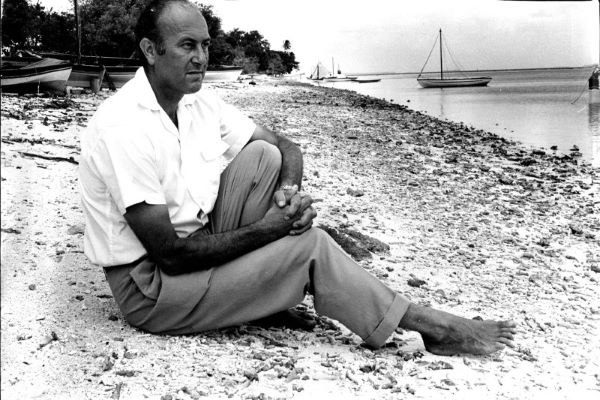
John Clunies-Ross, ‘king’ of the Cocos Islands, was toppled by Canberra
John Clunies-Ross on his paradise island in 1972. CREDIT:FAIRFAX

Another adventurer, Alexander Hare, an English merchant infamous for his polygamous lifestyle, had arrived shortly before Ross with a harem of 40 Malay women, whom he established on Direction Island to be as far as possible from the sanctions of civilisation. By 1830, however, the Clunies-Ross community on Home Island had a population of 175, most of whom were men.

The attractions of Home Island proved too great for Hare’s harem, who sought Clunies-Ross’ protection, and in 1831, after a period of high tension between the two would-be colonisers, Hare was driven out.
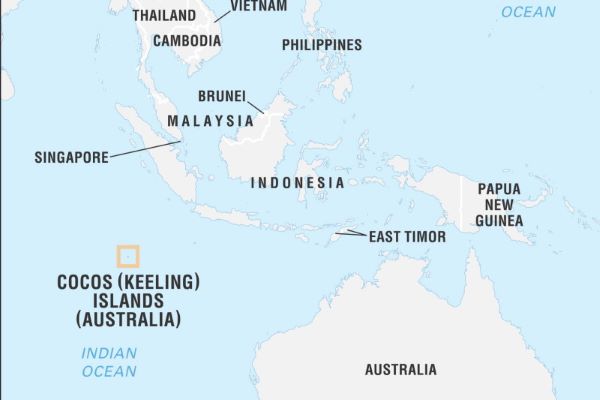
John Clunies-Ross, ‘king’ of the Cocos Islands, was toppled by Canberra
The Cocos Islands. CREDIT:GETTY

Clunies-Ross imported more Malay workers, built up his coconut plantations and prospered. In 1886, Queen Victoria gave the Cocos to the Clunies-Ross family in perpetuity, and they went on to develop what was widely regarded for many years as a benign, if eccentric, dictatorship.

They built themselves a mansion on a promontory on Home Island overlooking the main Cocos lagoon. Oceania House, with eight bedrooms, grand ballroom and central spiral staircase, was built between 1887 and 1904 employing local labour, using bricks from Glasgow and three tonnes of teak to line the walls.
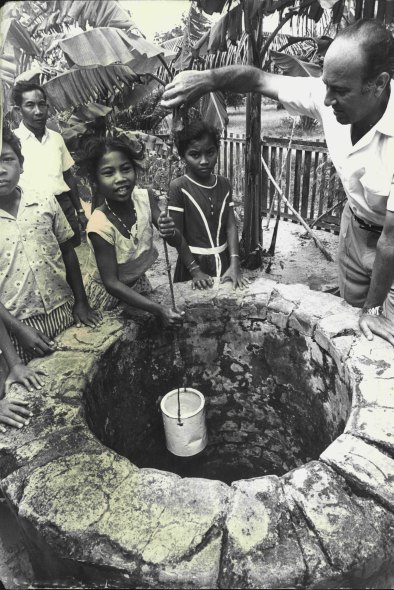
John Clunies-Ross, ‘king’ of the Cocos Islands, was toppled by Canberra
The Malayan village of Home Island with islanders and John Clunies-Ross (Photo by George Lipman/FairCREDIT:FAIRFAX

Under the Clunies-Ross regime, the Malays were paid in Cocos Island rupees, an invented currency (first paper, then plastic) which was redeemable only at the family store. Any islander who chose to leave was barred from returning. The family insisted on naming every child born on Cocos, giving them names such as Yes, Dollar, Champagne, Darling and Wedding.

The Cocos-Malays developed a unique identity, mixing Islamic culture with Scottish traditions; Muslim weddings were often accompanied by Caledonian reels.

Many saw the Cocos as a model community, one British traveller at the turn of the 20th century calling it a “species of Arcadia”. There were, he observed, “no police, no crimes, no trade unions, no strikes. Mr Ross [John’s grandfather, George] was king, doctor, parson, magistrate and merchant, all rolled into one … the friendliness, well-being and content of his subjects afforded a lesson to many a more enlightened kingdom.”

But the outside world could not be kept at bay forever, and during World War II, the Cocos became an important transit point for the Allies. After John’s father died of a heart attack during a Japanese bombing raid in August 1944, the British military took control of Home Island until young John returned to take up his inheritance in July 1946.

John Cecil Clunies-Ross was born on November 29, 1928, one of five children of John Sidney Clunies-Ross, the fourth “king” of the Cocos, and Rose (nee Nash). He spent most of his early years in Britain, taking a degree in sociology at the University of London and studying colonial administration at the University of Oxford.

Returning to the Cocos as “king”, or “Tuan Besar” (“Big Master” in Malay) after World War II, Clunies-Ross maintained the paternalistic traditions of his ancestors, overseeing a social welfare program, including optional retirement with pension at 60, along with free healthcare, housing and schooling.
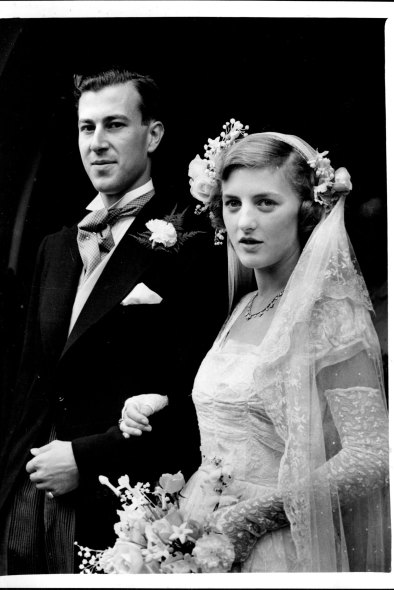
John Clunies-Ross, ‘king’ of the Cocos Islands, was toppled by Canberra
John Clunies-Ross and Daphne Holmes Parkinson married in London in 1951.CREDIT:UNKNOWN

In 1951, he married Daphne Parkinson, from Burnley in Lancashire, and in 1954, the couple received the newly crowned Queen Elizabeth and the Duke of Edinburgh, who were entertained by islanders dancing their own version of a Highland reel accompanied by Malaysian violins and gandongs (drums).

A year after the Queen’s visit, however, the British government transferred administrative control from Singapore to Australia, though as Clunies-Ross owned all the land, he felt able to declare that he did not regard himself as subject to Canberra. In 1951, Australia had bought land on West Island for an airfield; Clunies-Ross confined Australian officials to the island, forbade his subjects to talk to them and continued to rule, his authority symbolised by the long dagger he wore in his belt.
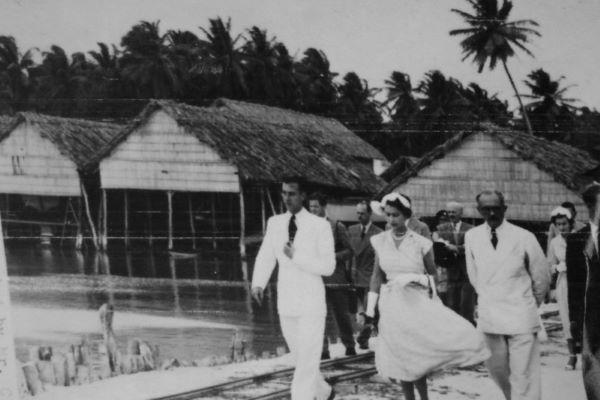
John Clunies-Ross, ‘king’ of the Cocos Islands, was toppled by Canberra
The Queen tours Cocos Island on her homeward voyage from Australia in 1954.CREDIT:GETTY

His feudal kingdom triggered columns of indignation from liberal-minded Australian journalists, and in 1974, Prime Minister Gough Whitlam galvanised a UN mission into visiting the islands. The mission duly condemned the “anachronistic and feudal” relationship between the Clunies-Ross family and the Malays and demanded democratic reform.

Though Clunies-Ross dismissed claims that he ran a feudal state as “nonsense”, the UN report prompted the Australian government to grant powers to its local island administrator to take charge of education, healthcare and sale of food, and to replace the Cocos rupee with the Australian dollar.

In 1978, Australia took full control and forced Clunies-Ross to sell his land, under threat of compulsory acquisition, except for Oceania House and a plot of two acres, for $6.25 million (Clunies-Ross had asked for $35 million, today worth about $188 million).

Clunies-Ross continued to wield significant influence on the islands and Australian politicians became increasingly convinced that he had to be made to leave if the Cocos people were to be aligned to Australian democratic norms.

In 1982, a home affairs minister in the government of Malcolm Fraser warned of “countervailing forces including the influence of Mr Clunies-Ross”, and in 1983, after a territories minister complained of a “master-servant” relationship between Clunies-Ross and locals that allowed the “king” to hold sway, the government of Bob Hawke attempted to force the sale of Oceania House, only to be forced to retreat when Clunies-Ross successfully challenged the proposed expropriation in Australia’s High Court.
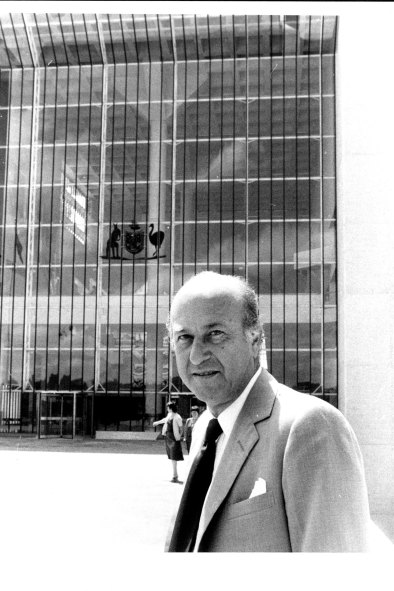
John Clunies-Ross, ‘king’ of the Cocos Islands, was toppled by Canberra
Clunies-Ross outside the high court in Canberra in 1983.CREDIT:FAIRFAX

The government then ordered that the Clunies-Ross family shipping company, which had been bought with proceeds from the original sale of their land, could not be awarded any government work, and in 1986 Clunies-Ross was declared bankrupt.

Two years before, in a UN-supervised referendum, the islanders had voted by 261 to 32 for full integration with Australia. Clunies-Ross, who had lobbied the islanders to vote for independence or free association, moved to a Perth suburb with his wife and in 1991 the Hawke government agreed to pay $1.55 million to buy Oceania House. In 1993, Clunies-Ross was reported to be working as a sales director for a clothing catalogue company.

In 2007, a newspaper observed: “Even after 30 years, the [Cocos] community argues over whether the Clunies-Ross were benevolent dictators or exploitative colonialists.”

John Clunies-Ross’s wife, Daphne, died in 2013. He is survived by three sons and two daughters.

The Telegraph, London
TAGGED:Bob HawkeCocos-Keeling IslandsJohn Cluniesking” of the CocosMr Clunies-RossOceania HouseTuan Besar
Share This Article
Facebook Whatsapp Whatsapp LinkedIn Email Copy Link Print
Previous Article Why not being able to travel stings me so much By Wendy Squires Why not being able to travel stings me so much By Wendy Squires
Next Article VINTAGE VIGNETTES – By Vinodh Wickremeratne
FacebookLike
YoutubeSubscribe
LinkedInFollow
eLanka Wedding
- Advertisement -
Ad image
Most Read
Agriculture Sri Lanka , Community News , Southwest Monsoon , Sri Lanka Weather

Nature’s Refresh: Heavy Rainfall Expected to Cool Down the Island

Israel Aerospace Industries , Katunayake Base , Kfir C12 , Sri Lanka Air Force

Taking Flight: Success for Sri Lanka Air Force’s Upgraded Kfir C12

Sri Lanka biodiversity, iNaturalist Sri Lanka, citizen science Sri Lanka, wildlife observations Sri Lanka, Sri Lankan wildlife, biodiversity conservation, nature photography Sri Lanka, environmental conservation Sri Lanka, Sri Lankan flora and fauna, endemic species Sri Lanka, wildlife research Sri Lanka, biodiversity database, nature lovers Sri Lanka, conservation technology, mobile apps for nature, citizen scientists, youth environmental movement, University of Sri Jayewardenepura, wildlife monitoring, species identification, BioBlitz Sri Lanka, environmental education, Sri Lankan ecosystems, rainforest biodiversity, wildlife documentation, conservation awareness, digital biodiversity records, Sri Lankan natural heritage, ecological conservation, global biodiversity platform, environmental journalism, Malaka Rodrigo, biodiversity mapping, wildlife enthusiasts Sri Lanka, sustainable conservation, nature exploration Sri Lanka, wildlife data collection, conservation science, endemic birds Sri Lanka, Sri Lankan leopard, environmental stewardship, biodiversity hotspot, nature clubs Sri Lanka, wildlife photography community, citizen engagement, biodiversity records, conservation initiatives, ecology Sri Lanka, technology and nature, environmental sustainability

Wild Success: Sri Lanka Hits 300,000 Wildlife Observations on iNaturalist

FIFA Sri Lanka, Negombo Football Stadium, Kadolkale Grounds Negombo, Sri Lanka Football Development, FIFA Forward Programme, International Football Stadium Sri Lanka, Negombo Sports Infrastructure, Sri Lanka Sports News, Football in Sri Lanka, FIFA World Cup 2026 Fan Zone, Vijitha Herath, Sri Lanka Football Federation, Sports Tourism Sri Lanka, Negombo Tourism, Sri Lankan Football, AFC Football Tournaments, World Cup Qualifiers Sri Lanka, FIFA Investment Sri Lanka, New Stadium Negombo, Sri Lanka Sports Development, Football Stadium Construction, Negombo Sports Hub, Sri Lanka International Sports Venue, Youth Football Development Sri Lanka, Sri Lankan National Football Team, BOI Sri Lanka, Sports Economy Sri Lanka, FIFA Backed Projects, Global Sri Lankan Community, Football Tourism Asia, Sri Lanka Infrastructure Projects, Kadolkale Stadium Project, Football Facilities Sri Lanka, International Sports Events Sri Lanka, Negombo Community Development, Sri Lanka Football Future, Sports Investment Sri Lanka, FIFA Partnership Sri Lanka, Football Academy Sri Lanka, Sri Lanka Sporting Nation

Goal! FIFA to Build New International Football Stadium in Negombo

SUNDAY CHOICE – WHAT A DAY THAT WILL BE - DEDICATED TO ALL OUR LOVED ONES - GONE TO BE WITH THE LORD  -  by Charles Schokman

SUNDAY CHOICE – “I know that my Redeemer lives” (Job 19:25) – by Charles Schokman

Related News
Sinigama Devalaya
Articles Kalani Prabodha

Sinigama Devalaya (Seenigama Devol Maha Devalaya) – A Sacred Shrine of Faith and Tradition in Sri Lanka-by Kalani-eLanka

Tillys Beach Hotel at Mount
Articles

Tilly’s Beach Hotel at Mount: Burnt-Out in July 1983

Why Sri Lanka is Becoming a Top Travel Destination in Asia - By Malsha - eLanka
Articles Malsha Madhuhansi

Why Sri Lanka is Becoming a Top Travel Destination in Asia – By Malsha – eLanka

Articles Michael Roberts

Reflections on Sansoni’s LAST STAND IN KANDY-by Michael Roberts

The Brad & Kiara Show
Articles The Brad and Kiara Show - Sydney

The Brad & Kiara Show

  • Quick Links:
  • Articles
  • DESMOND KELLY
  • Dr Harold Gunatillake
  • English Videos
  • Sri Lanka
  • Sinhala Videos
  • eLanka Newsletters
  • Obituaries
  • Sunil Thenabadu
  • Dr. Harold Gunatillake
  • Tamil Videos
  • Sinhala Movies
  • Trevine Rodrigo
  • eLanka Newsletter
  • Photos

eLanka

Your Trusted Source for News & Community Stories: Stay connected with reliable updates, inspiring features, and breaking news. From politics and technology to culture, lifestyle, and events, eLanka brings you stories that matter — keeping you informed, engaged, and connected 24/7.
Kerrie road, Oatlands , NSW 2117 , Australia.
Email : info@eLanka.com.au / rasangivjes@gmail.com.
WhatsApp : +61402905275 / +94775882546
  • About eLanka
  • Terms & Conditions

Disclaimer:
eLanka is committed to sharing positive and community-focused stories. We do not publish or endorse political, religious, or ethnic viewpoints. The content published on eLanka, including articles and newsletters, reflects the opinions and views of the respective authors and not those of eLanka. eLanka accepts no responsibility or liability for the accuracy, completeness, or consequences of any content provided by contributors.

(c) 2005 – 2025 eLanka Pty Ltd. All Rights Reserved.