Most Cerebral Palsy Care Stops at 18. This Activist Is Working to Change That
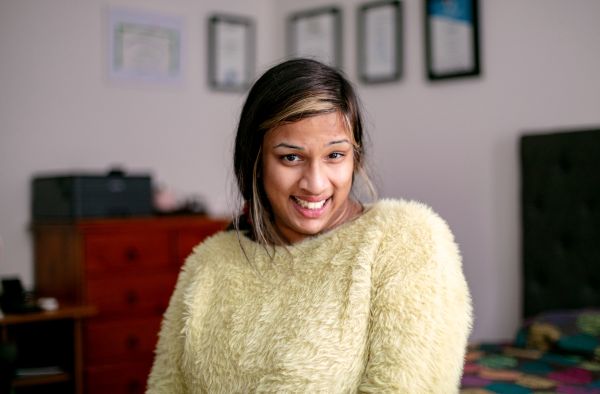
On her 18th birthday, Jerusha Mather didn’t feel like she was stepping into adulthood.
She felt like she had been pushed off a cliff.
Growing up with cerebral palsy (CP), Australia’s most common physical childhood disability, her care had always been structured. There were multidisciplinary teams, coordinated appointments and clinicians who understood the condition.
Then she turned eighteen.
“Suddenly I was told adult services were limited,” she says. “It felt like the system expected my development to just stop.”
Jerusha quickly realised her experience wasn’t unusual. Today, adults make up 58 per cent of Australians living with CP, yet much of the healthcare system remains designed around paediatric care. When young people age out of those services, many encounter fragmented support, long waitlists and a shortage of clinicians trained in managing CP in adulthood.
“Adulthood with CP is dynamic,” she says. “We’re pursuing higher education, careers and independence. The healthcare system should reflect that.”
Rather than accepting those gaps, Jerusha decided to study them.
Now a PhD researcher at Victoria University, she is investigating how strength training and non-invasive brain stimulation could improve independence and quality of life for people with CP. Her research is funded by Cerebral Palsy Alliance.
Her work, and her leadership, has already been widely recognised. Jerusha is a recipient of the Bridge Create Change Award and part of the L’Oréal-UNESCO For Women in Science Program mentoring program. The Australian Academy of Science has recognised her as a STEM changemaker, and her portrait hangs in Questacon – National Science and Technology Centre, celebrating female role models in medicine.
But Jerusha’s research is shaped by something many scientists don’t bring to the lab: lived experience.
“In research, participants can sometimes be treated like data points,” she says. “But they’re people managing work, study, fatigue and complex systems.”
In a field historically dominated by clinicians studying disability from the outside, Jerusha represents something different, disabled leadership within research itself.
The hidden “admin tax” of disability
Becoming a researcher didn’t exempt her from the same structural barriers she studies.
During postgraduate study, Jerusha found herself navigating the bureaucratic maze familiar to many disabled university students: separate departments for academic adjustments, disability services and funding support, each operating independently.
The administrative burden of coordinating them all nearly pushed her to burnout.
“There were moments where the fragmentation felt overwhelming,” she says.
What helped was finding a clearer starting point. Through the Disability Gateway, an Australian Government initiative designed to act as a central point for information, services, and practical support for people with disability, their families and carers, Jerusha was able to access consolidated information about available supports, rather than navigating multiple disconnected systems.
“It didn’t remove every barrier,” she says. “But it reduced the overwhelm and gave me direction.”
A life the system didn’t plan for
With that support, Jerusha has carved out space for something the healthcare system rarely anticipates for disabled people: a full, multidimensional adult life.
Outside the lab, she trains at the gym to manage her CP, writes poetry and stays closely connected to her faith. She is also a fashion model signed with inclusive modelling agency Zebedee Talent.
Her poetry collection, Burnt Bones and Beautiful Butterflies, explores identity, resilience and disability.
“For me, modelling isn’t just about imagery,” she says. “It’s about representation and expanding the narrative of what strength and beauty look like.”
Jerusha has also become a vocal advocate for accessibility, including campaigning for more accessible packaging. Her petition calling for change attracted more than 13,000 signatures, highlighting how everyday design often excludes people with disabilities.
But her long-term goal remains firmly focused on healthcare and helping create a system that grows alongside the people it serves.
People with disabilities and their carers can access information about support services available by visiting https://www.disabilitygateway.gov.au/ or calling 1800 643 787
END