



As the calendar transitions through the mid-2020s, the global Sri Lankan community pauses to commemorate a decade since one of the most superlative achievements in the annals of island cricket. The year 2016 marked a watershed moment for the national side, as they hosted a formidable Australian outfit for a multi-format series that would eventually redefine the competitive hierarchy of the sport in the subcontinent. This retrospective serves as a celebratory homage to the “Warne-Muralitharan Trophy” triumph, a series where the grit of the underdog overcame the established dominance of the then-number-one ranked Test nation in the world.
The 2016 Australia tour of Sri Lanka was a comprehensive expedition, featuring a three-match Test series, five One Day Internationals (ODIs), and two Twenty20 Internationals (T20Is). While the limited-overs segments provided their own share of spectacle, it was the red-ball cricket that etched itself into the collective memory of Sri Lankans worldwide. Following a period of transition and institutional recalibration, the Sri Lankan team, captained with strategic acumen, demonstrated a level of resilience and technical proficiency that left the visiting Australians searching for answers on the dust-laden tracks of Pallekele, Galle, and Colombo.
The Pallekele Miracle: A Star is Born
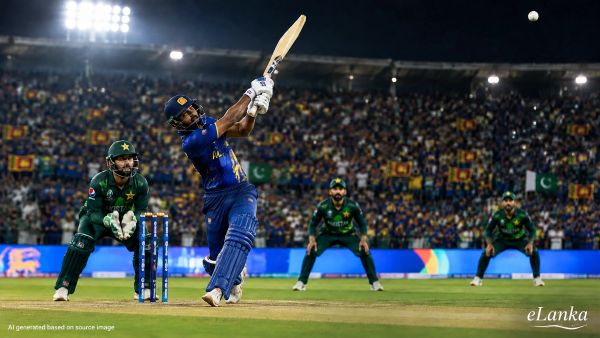
The tour commenced on 26 July 2016, at the Pallekele International Cricket Stadium. The atmosphere was fraught with anticipation, yet the early exchanges suggested a familiar narrative of struggle for the hosts, who were dismissed for a meagre 117 in their opening venture. However, it was during the second innings that the cricketing world witnessed the emergence of a prodigious talent in Kusal Mendis. At just 21 years of age, Mendis played a counter-attacking innings of 176 runs, a performance replete with sophisticated stroke play and instrumental in setting a target that would eventually prove insurmountable for the Australian batsmen.

Under the relentless Sri Lankan sun, the Australian team, clad in their iconic gold uniforms, found themselves grappling with the intricacies of spin bowling. The fourth innings of the Pallekele Test became a masterclass in controlled aggression from the Sri Lankan slow bowlers. Rangana Herath, the venerable left-arm maestro, alongside the debutant Lakshan Sandakan and the versatile Dilruwan Perera, dismantled the Australian lineup, securing a historic 106-run victory. This initial success was not merely a singular win; it was the antithesis of the expected outcome and the catalyst for a series of events that would leave the cricketing world in awe.
Dominance at the Galle International Stadium
The momentum shifted to the southern coast for the second Test at the historic Galle International Stadium, a venue renowned for its proximity to the turquoise Indian Ocean and its traditional assistance to spin. It was here that Rangana Herath’s name was firmly etched into the record books. In a breathtaking display of accuracy and guile, Herath claimed a hat-trick, dismissing Adam Voges, Peter Nevill, and Mitchell Starc in successive deliveries. The feat sent the local supporters into a frenzy and effectively broke the back of the Australian resistance.
Sri Lanka’s total of 281 in the first innings, bolstered by another significant contribution of 86 from Kusal Mendis, proved more than sufficient as Australia was skittled out for 106 and 183. The 229-run victory at Galle ensured that Sri Lanka had secured the Warne-Muralitharan Trophy with a match to spare, marking their first series win against Australia in 17 years. The achievement was particularly poignant for the Sri Lankan diaspora, who viewed the victory as a testament to the nation’s enduring spirit and sporting excellence.
The SSC Clean Sweep and Global Pride
The final Test at the Singhalese Sports Club (SSC) in Colombo served as the coronation of a new era. Despite a spirited first-innings effort from the Australians, who posted 379, the Sri Lankan team remained undeterred. A century from Dhananjaya de Silva and a resilient middle-order performance allowed the hosts to set a challenging target of 324. What followed was a defensive collapse that highlighted the absolute mastery of Rangana Herath, who finished the match with figures of 13 for 145, including a devastating 7 for 64 in the final innings.

The 163-run victory at the SSC completed an unprecedented 3-0 whitewash, an achievement that remains one of the proudest moments for Sri Lankans living in Australia, the United Kingdom, Canada, and beyond. The image of the Sri Lankan players celebrating under the bright lights of Colombo, their white uniforms stained with the red dust of the pitch, became an enduring symbol of national triumph. The series concluded with Australia losing their world number one ranking, while Sri Lanka ascended in prestige, proving that tactical innovation and local knowledge are formidable weapons on the international stage.
White-Ball Transition and the Enduring Legacy
Following the Test sweep, the tour transitioned into the shorter formats, with five ODIs and two T20Is scheduled across various venues. While the Australians managed to find their footing in the limited-overs matches, the narrative of the tour had already been written in the Test arenas. The series provided an opportunity for younger players to gain invaluable experience, ensuring that the pipeline of talent remained robust for future international engagements.
The 2016 tour is remembered not just for the scores on the board, but for the sense of unity it fostered among the global community. Whether through live broadcasts in the early hours of the morning in London or community screenings in Melbourne, the successes of Herath, Mendis, and the entire squad provided a shared source of joy and pride. It served as a reminder of the cultural significance of cricket as a bridge connecting those abroad with their heritage.
As we reflect on the glory of 2016, we invite you to continue sharing your stories and successes with us. Together, we celebrate the past and build a prosperous future for Sri Lankans everywhere.
Source: https://www.espncricinfo.com/sl/content/series/995431.html?template=fixtures
This article was written based on the source https://www.espncricinfo.com/sl/content/series/995431.html?template=fixtures, kindly email us at info@eLanka.com.au if any information needs to be corrected.
At eLanka, we respect the rights of creators. If we have used an image you own and you’d like it removed, please email us at info@elanka.com.au and we’ll handle it promptly.