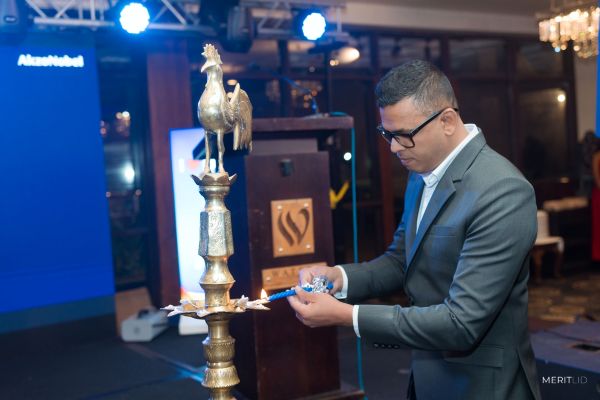
‘Sri Lanka Blooms’: Festival of Flowers 2026 Raises Funds for Ragama’s Thalassemia Unit
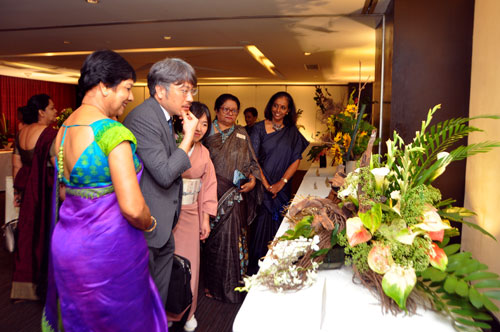
His Excellency Akio Isomata, Ambassador of Japan to Sri Lanka, views the floral artistry presented at Festival of Flowers 2026. Credit: Sunday Times (TimesOnline).
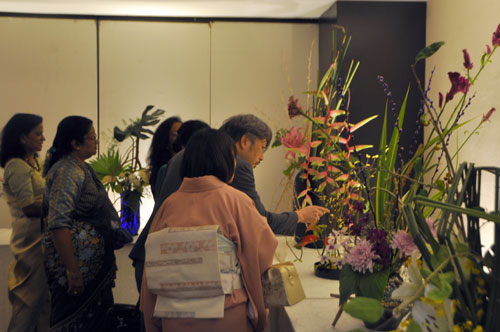
Visitors examine the carefully composed arrangements displayed during the two-day exhibition. Credit: Sunday Times (TimesOnline).
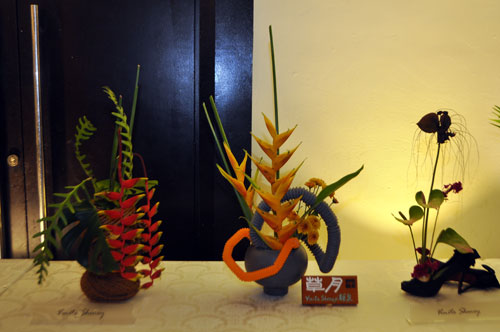
An assortment of Ikebana arrangements demonstrating balance, line, colour and restrained natural beauty. Credit: Sunday Times (TimesOnline).
The annual Festival of Flowers 2026 – “Sri Lanka Blooms” brought Japanese floral artistry, Sri Lankan creativity and charitable purpose together at Colombo’s Cinnamon Grand Hotel on 19 and 20 September, creating an occasion in which flowers were presented not merely as decorative objects, but as carefully considered expressions of harmony, discipline and human generosity.
Organised by the Shi-en Ikebana & Floral Art Society of Sri Lanka, the exhibition was held at the Ivy Room of the Cinnamon Grand Hotel and attracted visitors over two days. His Excellency Akio Isomata, Ambassador of Japan to Sri Lanka, attended as Chief Guest, adding diplomatic and cultural significance to an event that reflects the continuing friendship between Sri Lanka and Japan.
The exhibition’s central theme, “Sri Lanka Blooms”, was particularly appropriate because it suggested both the visual richness of the displays and the way in which a Japanese artistic tradition has taken root within Sri Lanka’s cultural landscape. Through Ikebana, natural materials are arranged with an emphasis on proportion, space, movement and seasonal character, allowing each branch, leaf and flower to contribute to a composition that is often notable for its quiet elegance rather than sheer abundance.
Where flowers become considered art
Ikebana differs from conventional arrangements in which volume and colour may dominate the presentation. Its artistic language is based upon structure and intention, with stems and branches often positioned to establish height, direction and rhythm, while carefully selected flowers provide emphasis rather than overwhelming the composition.
The arrangements displayed at “Sri Lanka Blooms” demonstrated how this form of art can accommodate both simplicity and visual drama. Some compositions relied upon a limited number of botanical elements, allowing the shape of each stem and the character of each flower to remain visible. Others used contrasting colours, unusual angles and distinctive foliage to create a more expressive appearance, while retaining the sense of balance associated with Japanese floral design.
This approach requires patience and close observation. A flower is not treated as an isolated ornament; instead, it forms part of a larger relationship between line, space, texture and the surrounding environment. The result is an art form in which restraint becomes as important as decoration, and in which the natural imperfections of plant material are incorporated into the final design.
For visitors, the exhibition therefore offered more than a collection of attractive displays. It provided an opportunity to observe how a familiar element of the natural world can be reinterpreted through a disciplined artistic method, with each arrangement carrying a distinct visual identity.

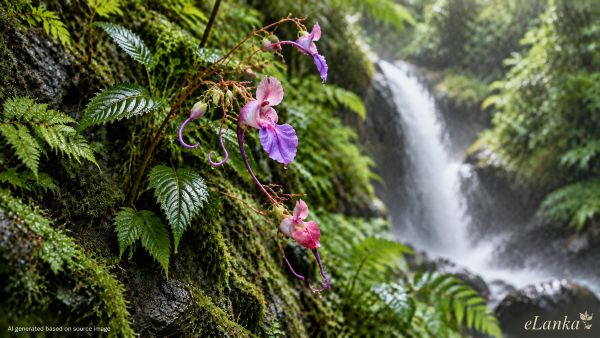
An AI-generated visual inspired by the floral exhibition atmosphere. AI generated based on source image. This illustrative image is not a photograph of the event.
A cultural friendship expressed through creativity
The presence of Japan’s Ambassador as Chief Guest also underlined the broader cultural relationship represented by the exhibition. Sri Lanka and Japan have maintained a long-standing friendship that has been expressed through education, cultural exchange, religious connections, development cooperation and public diplomacy.
Within that relationship, artistic traditions such as Ikebana provide a particularly graceful means of communication. The practice does not depend upon a shared spoken language to convey its principles; balance, asymmetry, proportion and respect for natural materials can be understood across cultural boundaries. When such a tradition is taught, practised and exhibited in Sri Lanka, it becomes part of an ongoing exchange in which Japanese heritage is appreciated through a distinctly Sri Lankan setting.
The event also demonstrated the value of cultural societies in sustaining meaningful connections between countries. Such organisations provide instruction, preserve artistic knowledge and create opportunities for the public to encounter traditions that may otherwise remain confined to specialist circles. By presenting a public exhibition at a leading Colombo hotel, the Shi-en Ikebana & Floral Art Society helped make this artistic discipline accessible to a wider audience.
The arrangements, meanwhile, showed that cultural preservation need not be static. Ikebana can retain its historical principles while responding to local flowers, tropical foliage, Sri Lankan craftsmanship and the individual sensibilities of its practitioners. This balance between continuity and adaptation is one of the reasons why traditional arts remain relevant in modern settings.
Creativity placed in the service of compassion
The Festival of Flowers 2026 carried an important charitable purpose, with part proceeds from the exhibition to be donated to the Thalassemia Unit at the Teaching Hospital, Ragama. The contribution will support the treatment and care of patients affected by thalassaemia, a condition that requires continuing medical attention and specialist support.
This charitable element gave the exhibition a significance extending beyond the hotel ballroom. Every ticket, visit and act of support became connected to a practical contribution towards patient care. The initiative was especially meaningful for children and families living with thalassaemia, for whom access to reliable treatment and a properly supported clinical service remains essential.
The decision by the society and its members to direct part of the exhibition’s proceeds towards a medical unit also reflected an admirable understanding of community responsibility. Artistic organisations are often associated with education, performance and cultural enrichment; however, “Sri Lanka Blooms” demonstrated that creativity can also be used to strengthen social welfare.
The arrangement of flowers and the provision of medical care may appear to belong to separate spheres, yet both depend upon patience, skill and sustained attention. In one setting, practitioners nurture natural materials into compositions of balance and beauty; in the other, healthcare professionals provide ongoing treatment and support to patients whose needs can extend across many years. The exhibition’s charitable purpose established a thoughtful connection between these forms of care.
The continuing value of community-led arts
The success of Festival of Flowers 2026 also illustrates the importance of community-led cultural initiatives in Sri Lanka. Such events create platforms for artistic practitioners, encourage public participation and provide a setting in which established traditions can be introduced to new audiences.
For the Shi-en Ikebana & Floral Art Society of Sri Lanka, the annual exhibition served as both a celebration of floral artistry and an expression of institutional commitment. The society’s work demonstrates how a focused group of practitioners can contribute to cultural life through regular exhibitions, knowledge-sharing and charitable action.
The event’s structure also allowed the public to encounter floral art in a setting that was formal yet welcoming. Visitors could observe the arrangements at close range, appreciate the technical care involved and consider the different ways in which flowers can represent movement, tranquillity and renewal. Such experiences are valuable because they encourage attention to detail at a time when much of modern visual culture is designed for speed and immediate impact.
“Sri Lanka Blooms” therefore stood as a celebration with several complementary dimensions: it honoured Japanese artistic principles, showcased Sri Lankan talent, strengthened cultural friendship and generated support for patients at the Thalassemia Unit of the Teaching Hospital, Ragama.
In doing so, the exhibition showed that beauty and compassion need not be separated. When artistic skill is combined with social consciousness, a floral exhibition can become an instrument of cultural understanding and practical assistance, leaving an impression that reaches well beyond the final arrangement.
Source: https://sundaytimes.lk/online/features/Ikebana-artistry-on-show/5-1152326
This article was written based on the source https://sundaytimes.lk/online/features/Ikebana-artistry-on-show/5-1152326, kindly email us at info@eLanka.com.au if any information needs to be corrected.
At eLanka, we respect the rights of creators. If we have used an image you own and you’d like it removed, please email us at info@elanka.com.au and we’ll handle it promptly.