The Economy During the Anuradhapura Epoch – By Dr Tilak S Fernando
Source : tilaksblog
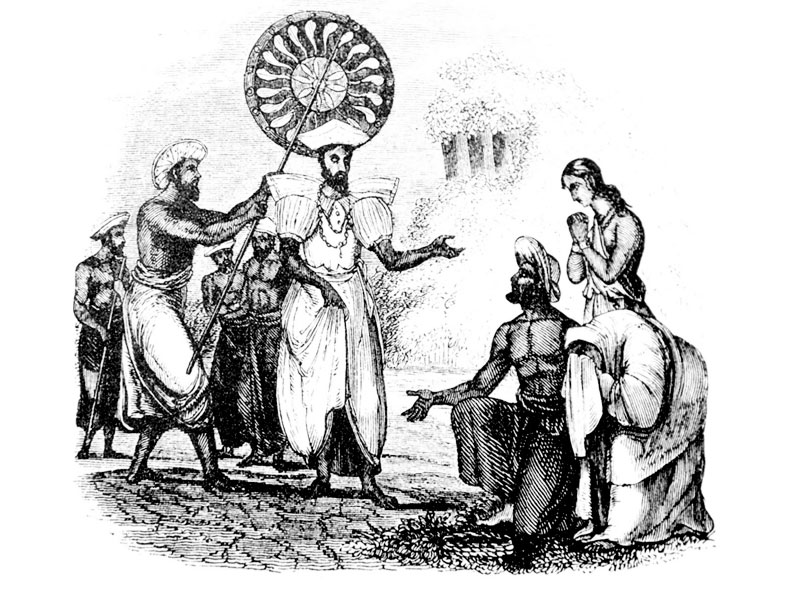
 Every part of the central city of Anuradhapura belonged to the King during the Anuradhapura epoch. There was a standard procedure for kings to follow, known (in Sinhala) as Dasaraja Dharmaya – meaning Charitability, Generosity, Straightforwardness, Humility, Innocence, Peacefulness, Anger, Calmness and Independence. The King was also known as the mahapathy.
Once a king was crowned, the new King had to continue with the previous king’s (undertakings, such as repairs to industries and lakes, lochs etc.) It was a standard gesture for the King to maintain peace and tranquillity in the society. The etiquette laid down the Royal family’s rights, which meant that if a king died (without children), the crown was entitled to the dead king’s paternal side. The throne went to his young brothers.
During the crowning, the King was made to sit on a throne made out of ‘Udumbara’ wood. Then a virgin would sprinkle water out of a conch, stating thus:” O! Lord King! This Coronation will protect your health and security. So will protect your family. May you be a pleasant and caring king. May you be blessed on every occasion.”
Welfare, social work.
After the coronation, welfare and social work were burdened on the new King. During the 5th century, King Datusena built many halls for sick and disabled people. In the tenth century, Kassapa, the 5th, built a hospital in Anuradhapura and donated an entire village income to cover the hospital’s daily expenses. During this period, the King’s duty was to improve agriculture. The King provided land and supplied necessities by constructing lakes and barriers to achieve this. The King’s responsibility was also focused on the people due to unexpected national disasters.
It was assumed that the King had much money, other than pearls and gems, to meet such expenses. During this period king’s income was only from the land tax. Another payment came to the King with a water tax called Kegaptha or Dakabatha. It was challenging to get the real meaning of Kegaptha or Dakabatha, but records reveal it was some form of tax during this period. There were two sides to the Kegaptha or Dakabatha tax. One would assume it relates to the amount the King receives out of the yield from paddy fields – i.e., one acre of paddy!
From the beginning of the year until 429 a.c., Indian kings did not try to invade Ceylon. During this period, the construction of massive irrigation work was done. In 473 a.c, King Datusena removed Tamil Kingdoms across the whole country. It was when Kala weva was constructed, equivalent to 6380 acres, by King Datusena. He also built across the Mahaweli river and drainage channels to supply water to all the cultivation and paddy fields. It was a period when the King’s leadership entirely concentrated on agricultculture where Kala Weva, Kanthale Weva, Minneri Weva, Nachachaduwa Weva, Nuwara Weva (Kandy Lake), Iranamadu Weva, Ridigama Weva and Nagam Weva were built.
King’s obligations
Kings were grateful for the commitment of their subjects. For example, King Dutugamunu picked the bravest ‘Danuddra Thusaappa’ among his goliaths. King buried’ Danuddra’s bow and arrow in the sand till the feathers of the hands touched the ground and poured gold coins onto it. Apart from such royal gifts, King Dutugamunu conducted the proper poojas to various gods. Even before the prince, Dutugamunu became ruler of Ceylon; the country was affluent economically and religiously.
History
History records that many kings spent an enormous amount of money on various projects in the country, but they were not declared bankrupt; meantime, kings suffered from enemy attacks. When King Dutugamunu knew his subjects could not contribute towards the construction of ‘Ruwanweli Maha Saya’, he ordered that not a single worker should work free of charge; instead, he disbursed money to all workers. King Dutugamunu constructed hundreds of Buddhist viharas for the clergy. The King built hundreds of abodes for Buddhist Monks, including Mirisavatiyta and Lowamahapaya. In the 4th Century B.C. King Pandukabaya entrusted his uncle Abaya to control at nighttime. King Pandukabaya distributed part of the land tax to his subjects. It on recorded in Ceylon history how King Buddhadasa contributed 10 acres of the yield towards Ayurvedic doctors’ wages.
During the 10th Century, paddy farming was done systematically. As much as agriculture was concerned, it was similar to any other industry. When certain produce was in short supply, farmers did not excessively create grains but produced what was required for peoples’ requirements without any wastage.
Industries and technology in Ceylon.
During the Anuradhapura era, two primary associated industries existed: the construction of stupas (dagabas) and paddy cultivation. No one would understand the secret behind the water industry, which astonished foreign engineers many centuries later. It was possible during the Anuradhapura era to produce many varieties of earthenware out of thick, red and solid earth. It must be remembered how spiritual the Ceylonese were during this period, as most embraced Buddhism, leading to a peaceful society.
Geography
The dry zone occupied approximately seventy per cent of the land; rivers, hills and valleys occupied the rest. However, agribusinesses blended in the dry zone. Towards the sea level, the earth became flat land, creating mile-long lakes. Historical records reveal how the ancient Ceylonese constructed lakes and lochs and improved the irrigation system because our ancestors were very devout spiritual beings closely attached to the Buddhist temples.
According to the Mahawamsa, a Prince named Anuruddha built the first weva (lake). Later, during the 2nd Century, Kings Wasabi made 12 lakes, and Bathika Tissa built additional two lakes. The most essential of Bathika Tissa’s reign marked significant religious and historical developments and the crucial political history of the island among the Sinhalese people. The Anuradhapura era marked the introduction of Buddhism to the island, and with it came the formal establishment of kingship and monarchy. However, it saw productive advances in economics, technology and culture during the early Anuradhapura period (137 BC – 684 AD).
Kings Dathopatissa and Sirisangabo recorded the country’s scarcity of grains during the Anuradhapura era. It was recorded that everything got destroyed during the kingdom of King Dathopatissa. However, Sinhala kings who were intelligent managed to cope with such situations. Moggalana is 1st used security outlet along the sea beach.
Later, King Datusena managed to expel all Tamil Kings and ruled the country for twenty years. Later, those who were sincere to the King were treated generously, but those in favour of Tamil kings were dealt with and punished severely. During the Datusena era, Ceylon adorned a new image. The number of lakes King Datusena constructed amounted to eighteen, from Kalawe weva, about 3,680 acres long and supplied water, to about 7,000 areas.
Throughout the Anuradhapura epoch, the freedom of worshipping one’s religion existed, but Buddhism was brought to Ceylon during this period. Many kings during this era committed to their kingdoms and absorbed Buddhism. It enabled the formation of a just society. There was no room for the lazy type of men because a king commanded every person to participate in the construction of lakes, stupas and lochs. It also helped the folk cultivate earnestness because the country felt inconveniences due to enemy tribulations. The kings did not take the chance to starve their subjects during this period.
King Dutugamunu was on record how he made various stores with food supplies before he went to war with the Tamil King Elara. During the 2nd Century B.C., King Elara defeated King Asela and reigned Anuradhapura for over 25 years.
The following list of positions under the kings enabled the country to progress:
Ministers: It was mentioned during Kings Upatissa and Datusena.
Senadipathy: Were officers identified as Army officials who issued instructions.
Jatthagahaka & Asikgagahaka: There were opportunities where these officials had become kings.
Adipathy: King Seelakala introduced this position to govern the country.
Anda (blind) Senapathy: An exceptional name of honour during King Seelakala.
Rohana Kammika: A post created to collect tax in the Rohana area by the King
Ratiyayawa: Provincial Officer concerning the administration
Dwara Nayaka: It was believed that the post was in force during King Moggalana 1st.
Vinishyakaruwo (Judges): Included in the description of Kosmos description
Regu Niladariyo: (Officers attached to Customs & Excise – Included in the report of Kosmos.
Courtesy: Wilhelm Gaiger, M.B.Ariyapala, Amaradasa Liyanage, Ranaweera Gunawardena, Dharma Bandu Amarasekera, Ratnakara Book Publishers, G.H.Perera, & Sirimal Ranawella.
Pictura Credit: Book on Economy during B.C. 543 – A.C 1832 by late Prasath Milinda Siriwardena