The Import Of Sri Lankan Muslim Names
Source:Groundviews
My name is Mohamed Qadri Ismail. Mohamed Qadri Ismail is not my name.
The statements may prompt a wtf. (The acronym, btw, of the World Taekwondo Federation.) Surely one cannot affirm a position and its contradiction. Yet I do. The second sentence doesn’t necessarily negate the first.
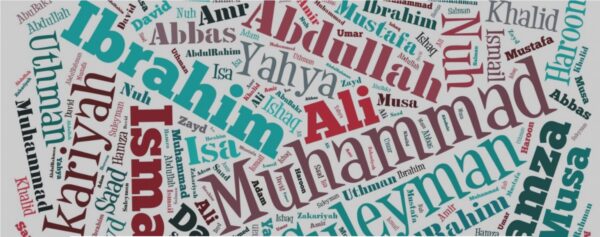
Mohamed Qadri Ismail, an impeccably Sri Lankan Muslim male nomination. Mohamed: the name of the prophet; Qadri: a Pakistani pir authorized it; Ismail: my father’s surname, his father’s before that, of Abraham/Ibrahim’s son well before that. (According to the Bible, Abraham, who lived for 175 years, begat Ishmael at 86.)
I may not share my name with anyone else, but innumerable individuals bear my names. (Some 150 million in the case of Mohamed/Muhammad.) It identifies without binding, inescapably networks me globally. Roots and uproots. Makes me both Sri Lankan and not, not entirely.
Put differently, several heterogeneous, enmeshed strands constitute my identity or, better, subjectivity: a patriarchal, Arab/Islamic, Pakistani, biblical, Sri Lankan, even a European.
I think of myself as a Sri Lankan Muslim. But these other scripts inescapably, dissymetrically impress my subjectivity, are inside and outside me. My identity is not one. (Just as much as WTF inevitably recalls wtf.) One is always more than one.
Indeed, I have two first names: Mohamed, literally, which orients, introduces me but nobody uses, and Qadri, which everyone does. This makes my second name my first (“given,” primary), another apparent contradiction.
*
Soon after I was born, or so the story goes, my father rushed from Durdans to see the pir, then visiting Ceylon. (Given the record of its nomination, including Serendib, Sri Lanka/Ilankai is not one, either, isn’t identical to itself, carries the trace of these other headings.) “Your Holiness,” he said, “my wife has had a baby boy.” The pir decreed: “His name is Qadri.”
A higher authority, a religious figure, superseded my parents. And gave me that uncommon thing that I cherish, a name beginning with q.
*
Mrs Bassett taught us the edict in grade two: every word that begins with a q must be followed by a u. During the interval that day several classmates surrounded me, confused word and name, insisted the latter was misspelled. It had to be Quadri. It was.
Despite my protests, I had no choice. Anglicized for the rest of my time at St Thomas’, they called me kwodry. Khaadri everywhere else.
A higher authority, the teacher, with the force of Europe behind her, superseded the pir. And I lamented my name beginning with q.
*
We may like to think of ourselves as agential entities authoring, creating our identity; our subjectivity gets imposed upon us. The school story instantiates the work of eurocentrism, a more fitting term for force of Europe. In stating that rule, undoubtedly with a ruler at hand for enforcement, Mrs Bassett, interpellated by eurocentrism, interpellated us in turn.
But eurocentrism doesn’t operate in Sri Lanka, or anywhere else, only by obviously identifiable modes, exclusively through elite institutions like Christian missionary schools. It frames our everyday, even sets our clocks: the prime meridian passes through London, fixes Sri Lanka five and a half hours ahead. We iterate, reinforce eurocentrism every time we check the time.
Numerous Sri Lankans – female, male and of any other gender, Tamil, Muslim and Sinhala – iterate eurocentrism every time we sign, state, speak something as personal, affective, intimate as our “own” name. For the concept surname/family name – usually that of the father or some originary patriarch – is an import. It arrived from Europe, forced itself, without our quite knowing it, upon us.
Take as example, exemplary, nomination in three generations of a famous family (from records available online).
*
Grandfather: Arasi Marikar Wapchi Marikar (1829-1925), recognizably Sri Lankan Muslim but sans Arab/Islamic names. According to a biographer he built, most notably in Colombo, the General Post Office, Museum, Customs, Old Town Hall. (Wapchi Marikar, of course, did none of the actual construction himself, that task undertaken by subaltern workers whose labor he exploited. It’s like saying Parakramabahu assembled that tank named after him. Or Gotabhaya Rajapaksa beautified elite parts of Colombo when he bullied poor employees of Abans.) In 1892, Wapchi Marikar “at his own cost, erected a building” for Zahira College, Maradana, and managed the Muslim boys school from its inauguration till 1907.
Upon his retirement, the Colombo Muslim Educational Society, “on behalf of the Muhammadan community of Colombo,” presented him an “address.” The statement from the appreciation signifies that this particular social group, or at least its male elite, conceived its subjectivity metonymically, as seamlessly continuous with the “community,” as both Muslim and Muhammadan.
The latter term follows eurocentric taxonomy. That system of regulation, taking its cue from Christian, recast those who might actually consider themselves Muslim, followers of Islam, a religion, as devotees of an individual. Such imposition of subjectivity, like Greenwich Mean Time, flattens heterogeneity with reference to a European center of ordering, an interpellation the devotees accepted, acknowledged. They had no choice.
*
Wapchi Marikar married Ameena Binthu or, if you prefer, she married him. They had a son, Wapchi Marikar Abdul Rahman (1868-1933) and a daughter, Mariambu Nachar. While this particular biographer does not feel obliged to state the dates of the women’s birth and death, the entry in rootsweb suggests the daughter, like the mother, did not bear a patronym. The father effectively fails to claim the daughter – destined, within this heteronormative frame, to another man. Significantly enough, from our perspective, Abdul Rahman’s patronym precedes his given name. His first name, as it were, comes second. He, too, has two first names. And, like his father, no family name.
*
The appointed Muhammadan member to the Legislative Council from 1900-1911, Abdul Rahman begat two girls and a boy with his wife, Hajara Umma. Rootsweb identifies the daughters in patriarchal terms, with reference to their husbands, as Mrs Razeena Mohideen and Mrs Rakeeba Fuard. Another website calls them Ummu Razeena and Ummu Rakeeba. They are not one. In contrast the son, Abdul Rahman Abdul Razik (1893-1984), has only recognizably Arab names, another import. Once again: patronym present, family name absent for the male; neither for the females. At this point, it appears, the nomination of Sri Lankan Muslim women and men, if only in this clan, followed quite different logics.
After being knighted, transformed, elevated by the force of eurocentrism, the son renamed himself: doffed patronym, placed given name first, redressed the lack, took a family name. Or, perhaps, Sirname. We know him as Sir Razik Fareed.
Why Fareed? One cannot affirm with certainty, but rootsweb claims this clan traces its routes to an Arab called Sheikh Fareed who, or so the story goes, settled in the country in 1016.
*
Fareed founded, as its website proudly proclaims, Muslim Ladies’ College (1941). Its very name iterates that of another, prior Ladies’ College instituted by the Church Missionary Society (1900); the school’s motto, “Knowledge is power,” hails from Francis Bacon. Ubiquitous in its reach, eurocentrism creeps into the most unexpected spaces.
Like the Moors’ Islamic Cultural Home that Fareed, its first president, helped form in 1944. (Symptomatically enough, Moors Sports Club started decades before, in 1908.) A term with a long itinerary, a complicated etymology, Moor was deployed in Europe, apparently from the fourteenth century (OED), to describe inhabitants of North Africa/present day Mauretania. (You can learn a lot from reading the dictionary.) The British in particular, despite Othello, used the term to designate a “race” of Sri Lankans now known as Muslims. A nomination, categorization, again, that the Muslim elite accepted, acknowledged; including its women – witness the Ceylon Moor Ladies’ Union.
Till 1981 the census followed colonial taxonomy, categorized us as racially Moor. That of 2001 retained Moor but displaced race, without explanation, with ethnicity.
*
However, though universal in ambition, eurocentrism doesn’t contour all Sri Lankan Muslim names. Abdul Rahman Anjan Umma, of the JVP, then FFM, now UNP comes to mind.
But another, almost certainly unknown to most readers, demands our attention: Ahamathu Lebbe Katheeja Umma, of Ashrafnagar, Amparai district. The residents of her village fled their homes during the “grease yaka” attacks in 2011. Using the opportunity, perhaps even causing it, the army moved in, established what they initially called a temporary camp, one that quickly turned permanent. Fearful, many villagers abandoned their decades-old lands, now inside a military base. Katheeja Umma and a few neighbors refused, despite systematic harassment including the nightly blaring of bana at their homes through loudspeakers. On one occasion a soldier exposed his genitalia to her. Maithripala Sirisena, if you need reminding, honors troops with the Rajapaksa coinage, ranaviru.
For the last four years Katheeja Umma has courageously resisted military attempts to compel eviction. She cannot cultivate her land, now farmed by the military. Has to draw water from a well some distance away. Must register exits and entries to and from the camp. Is prohibited from entertaining family at home. Yet she refuses to succumb.
The Sri Lanka Muslim Congress barely acknowledges her plight. Her fundamental rights petition, languishing before the Supreme Court since 2012, is supported, pro bono, by J. C. Weliamuna, the same lawyer bullied by that sometimes odious website, Colombo Telegraph, for overcharging the state.
*
The questions arise: what does it mean, what interest does it serve to claim identity, community between subaltern and elite, one based upon the import of the name? Or to assert identity within the elite? For that matter, between generations, genders of the same family, whether named similarly or differently? Is the notion that two, or more persons could be identical tenable?
Heterogeneity marks our subjectivity. Advocates of identity politics, the ground of multiculturalism, emphasize similarity, uniformity, conformity – at the cost of internal difference. But the other, like the self, isn’t just a discrete entity out there. The other, including Europe, is inside us too, rooted in ourselves.
Sri Lankan Muslims are not one. Not entirely.
Veteran scribe Qadri Ismail is no more-Mohammed Rasooldeen
Source:Dailynews
The sudden death of Sri Lankan journalist, Professor Qadri Ismail in the United States,came as a great shock to the media world.
According to his friends in Minnesota,Ismail had told them that he would come for an evening cup of tea on Monday and never turned up. Later, when they tried to call him, there was no answer and subsequently they found him dead in his apartment.
Back home, Ismail, who was a well-known journalist had served at most of the media houses in the island. People’s attention were drawn towards Ismail for his independent reporting and also for his style of writing with his English Honours degree at the Peradeniya University. He also covered the ethnic war in Sri Lanka before he moved to the USA.
He was the son of late Proctor Shakir Ismail and Fazeera Ismail, he had also authored the new Galle Fort Cookery book
Ismail was associate professor of English at the University of Minnesota, USA, and has also been a journalist in Sri Lanka. His areas of specialty include cultural studies, postcolonial literature, literary theory, gender/sexuality, historiography, democracy, human rights, the enlightenment, the British 19th century and cricket.
He was an old boy of S. Thomas College, Mt.Lavinia.