The important role of indigenous women-by Promod de Silva
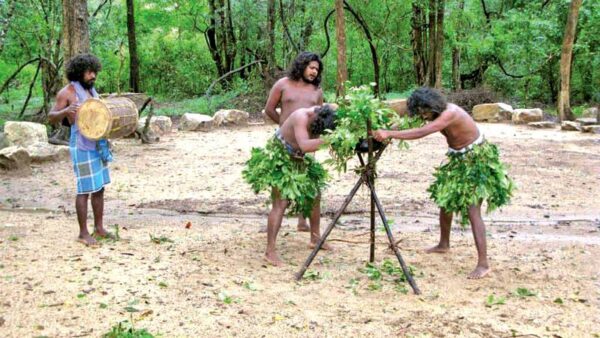
Source:Sundayobserver

They were the First People. They had usually been in a certain region for centuries, or even thousands of years, before the ‘Others’ arrived. However, all over the world, the ‘Others’ trampled on their rights, their lands and even their very lives. And some of them do face extinction in just a few decades, if not years. This is the story of the world’s 370 million indigenous people living across 90 countries (sometimes literally so, as they go in and out of porous borders between some countries). They speak an overwhelming majority of the world’s estimated 7,000 languages and represent 5,000 different cultures.
Challenges
From the Inuits in Canada to the Aborigines in Australia, indigenous communities face challenging times and issues. Indigenous peoples have sought recognition of their identities, way of life and their right to traditional lands, territories and natural resources for years, yet throughout history their rights have always been violated. Indigenous peoples today are arguably among the most disadvantaged and vulnerable groups of people in the world.
The plight of indigenous people has received worldwide attention. Here in Sri Lanka, we are familiar with the tribulations of our own ‘Wanniyela Aththo’, who are struggling to maintain their identity and traditional way of life amidst a rapidly developing, commercialised society. It is vital to look at their problems and strive to preserve their values, languages and traditions. Once an indigenous community becomes extinct, humanity as a whole loses a part of its soul.
It is with this aim in mind that the United Nations proclaimed the International Day of the World’s Indigenous People to be celebrated on August 9 every year. It was first proclaimed by the UN General Assembly in December 1994, to be celebrated every year during the first International Decade of the World’s Indigenous People (1995 – 2004).
Since the event is marked according to a defined theme every year, the focus of this year’s International Day is “the Role of Indigenous Women in the Preservation and Transmission of Traditional Knowledge”. Indigenous women are the backbone of indigenous peoples’ communities and play a crucial role in the preservation and transmission of traditional ancestral knowledge. They have an integral collective and community role as carers of natural resources and keepers of scientific knowledge. Many indigenous women are also taking the lead in the defence of lands and territories and advocating for indigenous peoples’ collective rights worldwide.
The significance of indigenous peoples’ traditional knowledge is widely acknowledged. Long before the development of modern science, which is quite young, indigenous peoplehave developed their ways of knowing how to survive and also of ideas about meanings, purposes and values. As noted by the Special Rapporteur on Indigenous Peoples, the term “scientific knowledge” is also used to underscore that traditional knowledge is contemporary and dynamic, and of equal value to other kinds of knowledge.
Traditional knowledge
International consultations jointly facilitated by UNESCO and the Internal Council of Science (ICSU) states that “Traditional knowledge is a cumulative body of knowledge, know-how, practices and representations maintained and developed by peoples with extended histories of interaction with the natural environment. These sophisticated sets of understanding, interpretations and meanings are part and parcel of a cultural complex that encompasses language, naming and classification systems, resource use practices, ritual, spirituality and worldviews.”
However, despite the crucial role that indigenous women play in their communities as breadwinners, caretakers, knowledge keepers, leaders and human rights defenders, they often suffer from discrimination on the basis of gender, class, ethnicity and socioeconomic status. Their right to self-determination, self-governance and control of resources and ancestral lands have been violated over centuries.
Small but significant progress has been made by indigenous women in decision-making processes in some communities. They are leaders at local and national levels, and stand at the frontlines of defending their lands, their cultures, and their communities. The reality, however, remains that indigenous women are widely under-represented, disproportionately negatively affected by decisions made on their behalf, and are too frequently the victims of multiple expressions of discrimination and violence.
The Pope recently apologised on behalf of the Church for the violence perpetrated against indigenous women and children in Canada.
The Committee of the Convention on the Elimination of all Forms of Discrimination Against Women (CEDAW) highlighted some of the major issues encountered by indigenous women, particularly noting the high levels of poverty; low levels of education and illiteracy; limitations in access to health, basic sanitation, credit and employment; limited participation in political life; and the prevalence of domestic and sexual violence.
Focus
Many indigenous peoples are being pushed out of their territories as industries, settlements and roads encroach on their traditional lands and in some cases, hunting grounds. Many governments force indigenous communities to ‘integrate’ with the rest of the society, which essentially means giving up on their traditional way of life.
 There is also defection from within – some of the younger indigenous persons opt for integration. This can, over the years, have a detrimental effect on the community concerned, with men and women of child-bearing age leaving in search of a more modern lifestyle.
There still are a few ‘uncontacted’ tribes around the world, especially in dense jungles. Although various attempts are made to ‘contact’ these tribes, the greatest danger is that they can be wiped out even if they get a flu attack.
They have no immunity to many diseases which we take for granted and should they come into contact with an infected person from the so-called ‘civilised world’ they could be in great danger. At the same time, we need to study their lifestyles and customs. Thus, it is a tightrope walk.
Contacted or uncontacted, many indigenous communities face extinction, which, of course, means that their languages would be lost forever. Some languages are spoken by just two or three people.
They will also take to the grave a vast treasure trove of knowledge about everything from native cures to native art. This is the common heritage of mankind.
Another valuable lesson that we can learn from indigenous communities is their commitment to Nature. They are close to Nature – it is from such communities that we have derived the concept of a “Mother Earth”. As far as I know they live a plastic free existence and most indigenous communities are car-free as well. They consume less and waste less and although they may not even know the word, they practice recycling all the time. They hunt just enough to get by and respect all plants and animals.
Resilience in the face of adversity is another lesson to be learnt from indigenous communities. They live in some of the most hostile environments on Earth, from the Arctic Circle to the most arid deserts often with limited resources. The one thing that helps them to face such adversity is the very strong bond that exists among the community. It is a close-knit community where everyone knows everyone else and comes to the help of each other in difficult times.
We have virtually given up on such bonds partly due to our money-centric lifestyle. Some isolated tribal communities have little or no idea what money is, but they seem to be happy with what they have got.
That is perhaps the biggest lesson that indigenous communities teach us as most of the world’s problems are due to our greed for money and material things. Tribal communities have always been in tune with this ancient wisdom, which has helped them survive very turbulent times. Only time will tell whether they can thrive in the centuries hence.