Tsunami ” a short story from “Rainbows in Braille” – A collection of short stories – By Elmo Jayawardena
 The children were all gathered in the village school premises. Some were standing near the entrance whilst some were seated on the steps. A few loitered around the yard and others stood near the gate. Almost all the girls had come in their white-pleated uniforms, the boys were in their blue school-shorts and white shirts, perhaps the best they owned. A few elders too were present, village types in sarongs and shirts and mostly barefooted. Betel chewing mouths spat jets of red spit from time to time discolouring small patches on the ground.
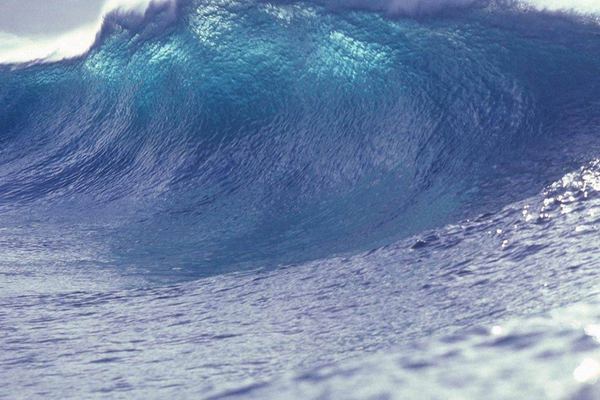
I was part of a team that had come to this remote southern corner of the country, to a beach-hamlet known as Kalamatiya, a few miles away from the well known town of Tangalle. Kalamatiya had once been a place of beauty with the sea spread around it in a sheet of cobalt blue as far as the eye could see. The beach was wide and sandy; the colour a mixture of sulpher yellow and old gold and it embraced the sea in a concave that defined a shallow bay. People from distant lands would pay a lot to be in this place, if they knew of it.
This was the June of 2005; six months after the tragedy ravaged the serenity of Kalamatiya. Roofless houses silhouetted the beach-front now, their broken walls and door-less frames looked like skeleton sketches of an artist who had drawn in a hurry and forgotten to paint and complete. Fallen coconut trees with rotted leaves still blocked the paths. No one had cared to remove them; no one had a reason to walk among the ruins.
Many had died here in Kalamatiya, it was the market day and the vendors had come from surrounding villagers to sell their ware and take back what ever provisions they could afford to buy. That’s when the wave came in. The chillie-seller and the lime-buyer had no time to run, neither did the vegetable-hawker who had stacked her kankun and mukunuvanna miti in neatly tied bright green bundles. They all got washed away by the wave, bashed and broken, cursed by their very Gods themselves.
People died here, people got ravaged and rubbled. Lives got lacerated in a manner that it could never be the same again. Such was the cataclysm that crushed the people and what they had painstakingly built through the years to call their own.
Now it was June, the sea was still cobalt-blue and the sands were yellowish gold, the waves came and receded, gentle and in rhythm, like a reformed sinner after confession, forgiven and accepted back to the fold..
The lists of names had been carefully prepared and the evaluators were setting up tables to speak with the children, one by one, to note details and seek information about their present status of life. These were the survivors of the merciless tsunami, the ones who had lost a parent or the ones who were left orphaned; left alone to face whatever limited kindness the world had to offer.
Some children had come with fathers and some with mothers but none with both. A lot had come with none.
There was a little boy, perhaps eight. He had two younger siblings tugging at his over-sized shirt, a little Pied Piper without a flute. His father had been a three-wheel driver who had brought someone to the market in Kalamatiya on that fateful December morning. That’s how he died, his vehicle was found on top of the bus-station, crushed pulped into a grotesque shape, the waves had done that. The boy’s mother lost her mind when she heard the news. She was now roaming the village muttering meaningless words to herself. The little boy was facing the world alone and his little brother and little sister were clinging to him.
He said all this to the evaluators; he had come with an uncle who was sheltering the family. The uncle worked in a small shop that sold dried-fish. The karawala seller himself was barely scraping a living.
The stories were the same, tragically woven together in a tapestry of ravaged lives. The innocent and the helpless victims made vain attempts to come to terms with their new lot in life. The magnitude of the tragedy was difficult to comprehend. It was not of houses that had no roofs and stood dilapidated with broken walls. It was about broken people.
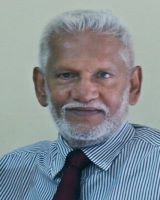
The old man stood in a corner by himself. I spoke to him. He said his name was Siripala and that he was from an inland village a few miles off Kalamatiya, a place called Delvita. He had been a carpenter in his better days and said he was now too old to work. Said his arms ached terribly at the joints when he tried to use them. He didn’t know why.
“I just looked after the two children and helped around the house Sir,” he said in a sad tone.
“That’s all I did, my daughter married a good man, and they looked after me. I went to live with them when my wife died. That was years ago.”
His words were sad, his voice was sad and his face was sad. Brittle, dirty-white unkempt scratches of beard covered his bony cheeks and chin and he had made no attempt to comb his hair. Everything about him was shabbily sad. Siripala certainly was a sad man.
“They went that morning to the market in Kalamatiya to sell eggs and vegetables,” he mumbled to me.
“They never came back.”
“Now I am left with these two children.”
“How old are they?”
“The boy is going to be nine Sir; the little one I think is four.”
“People in the village give us food,” he mumbles again.
“They know I’m too old to work now.”
“How are the two children adjusting to all this?” I asked the usual stupid question of the evaluator. Notes had to be made and answers recorded with remarks in the allocated columns. That was the job of an interrogator.
“I don’t know Sir,”
“Are they alright now?” The list was long and had to be completed.
“I don’t know Sir.”
“How are they doing in school?”
“They go and come back, I take the little one myself, her mother used to do that,” he says in a voice that changed its tone, a softer tone.
“I do not know to read or write Sir, so I don’t know what they do in school.”
There are many items in the list, I tick some without bothering him. Life had bothered him enough.
“How do you manage Siripala, it must be difficult?”
He looks down and his slipper-less big toe digs the ground, he draws a stub of a line and pauses while I wait. When he looked up I saw it all, it was a face I would never forget.
“Sir,” he said in a voice that came from somewhere deep within; from some place where sad sentiments are hidden. The eyes almost squinted to stop the tears and the cheeks sagged with brittle-beard lines as the words slowly spilled out in tormented tatters. The expression of sorrow that shadowed his face is indescribable.
“When the sun goes down Sir, the little one misses her mother and she begins to cry,” he mumbled. “When the little one cries, the boy cries too.”
“When they both cry, I cannot take it anymore Sir, and then I also cry.”
He sighed and looked at me, the eyes were misty and the voice went silent.
The waves were slapping rhythmically on the golden sand and the cobalt-blue sea was calm. Kalamatiya was at peace. The sea had been forgiven for what she did; the world had forgotten what happened. It is now mainly questions and answers and records noted in sheets of paper.
Mini glossary
Kankun and mukunuvanna miti – bundles of vegetables
Karawala – dried fish