Vijayabahu, Gajabahu, and meanings of names-By Uditha Devapriya
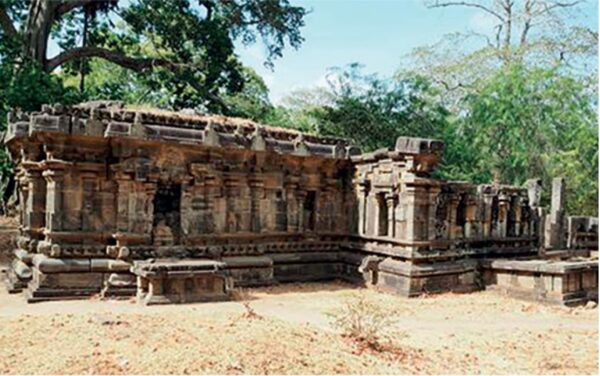
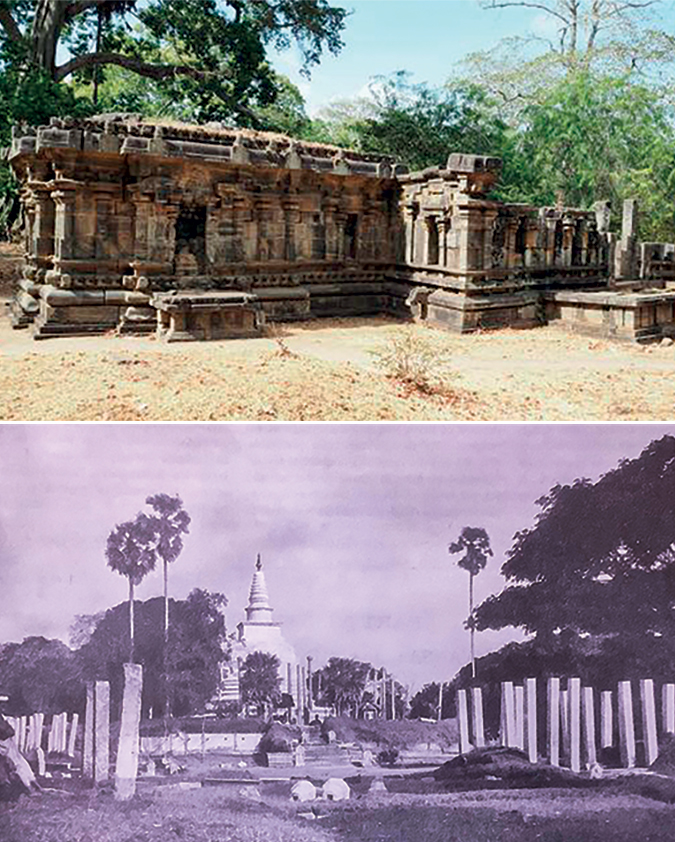
Source:Island

The Sri Lanka Navy recently commissioned Vijayabahu, a former US Coastguard Cutter. The ship joins two other US origin vessels in the Navy. For some reason, the name seems to have caused consternation among certain circles. Alan Keenan of the International Crisis Group, for instance, has noted on Twitter that it is “loaded with social and political meaning” and that “it’s hardly an advertisement for the multi-ethnic, multicultural #SriLanka western govts say they want to promote.” He cites two other names, Gajabahu and Samudura.
The Pali and Sinhalese Chronicles depict both Gajabahu and Vijayabahu as national heroes: Gajabahu (113-136 AD) for having led a campaign to rescue 12,000 Sinhala captives in the Chola (or Soli) kingdom, and Vijayabahu (1055-1110 AD) for having driven Chola invaders from Polonnaruwa and laid the foundation for the unification of the polity by one of his successors, Parakramabahu (1123–1186 AD). Alan Keenan’s reference to the “social” and “political” meanings of these names is doubtless based on how Sinhalese Buddhists imagine these kings today, and how military regiments have appropriated them.
There is no denying that nationalist historiography has reduced these personages into mythical heroes today. It’s not just the military. Even popular writers prefer to see history through a particular prism. Their interpretation of the past places these kings as saviours of the race (jatiya) and unifiers of the polity (rata). This presents an interesting problem. In praising these monarchs for having brought the country together, nationalist writers tend to impute contemporary terms, like sovereignty, on what was essentially a non-unitary State. This is historical anachronism at its best (or worst?), and it is from there that these writers extract the contemporary meanings of these kings and their names.
I have implied in many of my essays that by viewing history through these prisms, Sinhala nationalists have done a disservice to their own history. In other words, they have not been fair to their past. We must be careful not to commit the same mistake when criticising these writers. While pointing out the errors of their methodology, it would be prudent not to use the same categories and binaries they deploy. To that end, it would be more constructive, instead of pointing out the “contemporary” meanings of Sinhala kings and their names, to highlight their historical and non-mythical meanings. Once we do that, we will be able to reconstruct a past more in keeping with the multi-ethnic, multi-caste character of Sri Lankan history, particularly in the Anuradhapura and Polonnaruwa periods.
Vijayabahu, for instance, was the product of a period that saw deep and close interaction between Sri Lankan (Sinhala) monarchs and their South Indian contemporaries. In his book Rewriting Buddhism: Pali Literature and Monastic Reform in Sri Lanka, 1157-1270, Alastair Gornall notes three “interrelated” changes in the 10th and 11th centuries that profoundly shaped Sri Lankan history: the invasions of two Cola kings (Raja Raja and Rajendra I), the “fragmentation” of the ruling family, and “changing attitudes” to Sanskrit literature, which influenced Sinhala and Pali literary works. The early Chola invasions laid the foundation for Kalinga Magha’s conquests in the 13th century AD and the later shift from Anuradhapura to Polonnaruwa. In other words, there were linkages between an ostensibly “Sinhala Buddhist” polity and a “Hindu” South Indian dynasty that makes the use of binaries like Sinhala/Tamil, Buddhist/Hindu, and Sri Lanka/Soli redundant, if not anachronistic.
Indeed, the kings of these times actively involved themselves in the politics of South India. During the first millennium AD, Gornall writes, conflicts within the State were “contained.” What this means is that they never threatened the social and political patterns of the country. Once we pass this period, though, the Anuradhapura State becomes embroiled in the politics of its neighbouring states. As Professor Raj Somadeva has argued, between the reigns of Sena I (833-853 AD), Dappula IV (924-935 AD), and Mahinda V (982-1029 AD), Sinhala kings sided with one or the other contending dynasties in South India, thus exposing themselves to “the threat of outside invasion.” These interventions eventually lead to the humiliating deposal of Mahinda V, the last ruler of Anuradhapura.
Vijayabahu is celebrated in nationalist reconstructions of history as a just and able ruler who put an end to these humiliations, recaptured the State from the Chola invaders, and fortified the State. However, his hold was considerably tenuous. In seeking to unify the State, he had to account for and accommodate certain realities: he therefore entrusted the tooth relic of the Buddha to Velaikkara mercenaries. Gornall suggests that the Chola invaders harboured very little cultural ambitions in Sri Lanka: it was the South Indian social and mercantile elites who patronised and built Hindu temples in Polonnaruwa. Yet they did exert an influence on the political, social, and literary landscape of the post-Anuradhapura State.
In his book Foreign relations of Sri Lanka, from earliest times to 1965, Vernon Mendis argues that history has not been fair to this ruler: he is castigated for having capitulated to South Indian overlords and mercenaries. Nevertheless, to borrow an oft-quoted phrase, there was little that he could do. Vijayabahu’s response to these geopolitical realities was pragmatic, if not inevitable: in the interests of the State, he put up with a South Indian presence, to the extent that an inscription eulogising him was carved in literary Tamil, and married a Kalinga princess, Tiloka Sundari, to ensure “the longevity of his own lineage.” Not surprisingly, it is in this ruler’s reign that ties with South India become complex.
What nationalist interpretations of Vijayabahu’s achievements and failures thus omit is that the times he lived in were simply too complex to accommodate the binaries that popular writers impute to their reading of history. Long before Vijayabahu, before even the collapse of Anuradhapura, Sinhala kings had begun a tradition of claiming descent from the Kalinga line. This was, at one level, to add respectability to their office. It was also a creative way of accommodating the rise of South Indian power and the decline of Sinhalese power, both of which can be dated between the fourth and 14th centuries AD.
Following these cycles of decline and revival, we come across literary works, predominantly Sinhalese, that legitimise certain colonisation and nationalist myths. While the authors of the early Chronicles, especially the Mahavamsa, sought to validate specific religious sects, the authors of the later Chronicles, especially the Rajavaliya, sought to romanticise if not mythologise these cycles of decline and revival and to valorise the supposedly “enduring” character of Sinhala society. Hence the Rajavaliya eulogises Gajabahu for having rescued 12,000 captives from the clutches of a Chola king, though as Obeyesekere has pointed out there is little historical evidence for this. It also depicts him as settling Tamil communities in and around Kandy, though the rather anachronistic inclusion of Kandy indicates that this episode would have been the basis for a colonisation myth.
The polity and State presented in these stories are, to be sure, Sinhalese and Buddhist, and they admittedly legitimise the hero/villain distinctions that popular writers deploy in their re-imaginings of the past. Yet embedded with these same stories are important clues and signs of a vibrant, diverse, even multi-ethnic society. Gajabahu is presented as a Sinhalese hero, but there are narratives that depict him as the patron of the Pattini cult in Sri Lanka. Obeyesekere questions these myths and posits that they are “worthless.” Yet the inclusion of this king in a major Tamil literary work, the Silppadikaram, and the invocation of him in a ritual associated with the Pattini cult, the gammaduwa, tells us that the society of his time was more multifaceted that what the Chronicles would have us believe.
The Pattini cult itself shows clear linkages between Sinhalese and Tamil communities that have survived the many fratricidal conflicts we have seen since independence. Gananath Obeyesekere’s advice, in that sense, is probably the most important: when reading these myths, it is essential that we do not literalise them, since a literalist reading can pave the way for conflict and tension. That is why Alan Keenan’s point about the social and political meanings of names is highly relevant. However, it is important to not only highlight those meanings, but also look at possible alternative meanings. This admittedly requires historical and anthropological research of a sort we simply do not have here. It is only through such research and scholarship that we can prevent the country from sliding down into the murky waters of ethno-supremacism. For that, we need to return to our past.
The writer is an international relations analyst, researcher, and columnist who can be reached at udakdev1@gmail.com