News & Community eLanka

eLanka

Saturday, 13 Jun 2026
  • Home
  • Read History
  • Articles
    • eLanka Journalists
  • Events
  • Useful links
    • Obituaries
    • Seeking to Contact
    • eLanka Newsletters
    • Weekly Events and Advertisements
    • eLanka Testimonials
    • Sri Lanka Newspapers
    • Sri Lanka TV LIVE
    • Sri Lanka Radio
    • eLanka Recepies
  • Gallery
  • Contact
Newsletter
Sri lankan news
  • eLanka Weddings
  • Property
  • eLanka Shop
  • Business Directory
eLankaeLanka
Font ResizerAa
Search
  • Home
  • Read History
  • Articles
    • eLanka Journalists
  • Events
  • Useful links
    • Obituaries
    • Seeking to Contact
    • eLanka Newsletters
    • Weekly Events and Advertisements
    • eLanka Testimonials
    • Sri Lanka Newspapers
    • Sri Lanka TV LIVE
    • Sri Lanka Radio
    • eLanka Recepies
  • Gallery
  • Contact
Follow US
© 2005 – 2026 eLanka Pty Ltd. All Rights Reserved.
Home » Goodnews Stories Srilankan Expats » Articles » Kumana Village: A Hidden Story – By Bhanuka – eLanka
ArticlesBhanuka Nuwan

Kumana Village: A Hidden Story – By Bhanuka – eLanka

eLanka admin
Last updated: July 15, 2025 3:28 am
By
eLanka admin
ByeLanka admin
Follow:
Share
6 Min Read
SHARE
Views: 40

Kumana Village: A Hidden Story – By Bhanuka – eLanka

Deep in the southeastern corner of Sri Lanka’s Kumana National Park, where the wilderness whispers its secrets through rustling trees and bird calls, lies the haunting remains of a once-inhabited settlement—Kumana Village. Overgrown with jungle, hidden behind canopies of ancient trees and winding dirt paths, this forgotten village raises a question that echoes through time: what really happened to the people who once lived here?

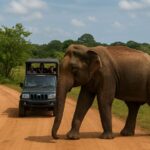
Today, most visitors know Kumana for its majestic birds, wild elephants, and leopard sightings. The park is a birder’s paradise, teeming with painted storks, black-necked storks, pelicans, spoonbills, and hundreds of migratory species. But nestled quietly near the Kumbukkan Oya river—far from the popular bird-watching zones—is a story largely overlooked by the outside world. Only fragments remain: stone ruins, the skeletal frames of huts, weatherworn wells, and trails that lead to nowhere.

Locals and forest guides sometimes refer to this as the ghost village of Kumana. Older generations in the surrounding areas recall stories told to them by their parents or grandparents—stories of a self-sustaining rural community that lived off the land, fished the rivers, and cultivated small plots of paddy among the dense greenery. The villagers were once known for their harmony with nature. There were no roads, no electricity, just simple living woven into the rhythms of the forest.

But over time, things began to change. The once-safe forest became less predictable. Wild elephants, growing more aggressive with shrinking territory, began trampling crops and entering homes. Water sources became unreliable during harsh dry seasons. Malaria and other tropical diseases spread easily without access to modern healthcare. And perhaps most significant of all, the Sri Lankan civil war brought uncertainty and danger to remote corners like this.

It is believed that sometime during the early 1980s, the last families left the village for good. Some migrated to safer parts of Ampara and Monaragala, while others moved to coastal towns in search of work and education. There was no mass exodus, no dramatic final day—just a slow and quiet departure, one family at a time, leaving behind their homes, their fields, and their memories. Over decades, the jungle took back what once belonged to it.

Despite its silence today, Kumana Village remains etched in the landscape. If you follow the old tracks during the dry season, you can still find fallen clay roof tiles beneath the leaves, broken grinding stones, and makeshift altars where villagers once prayed. You may even find the remains of an ancient stupa, evidence that the area held spiritual significance long before the modern village existed.

Some forest officers believe that the area may have once been connected to an ancient trade route that passed through the region during the Ruhuna Kingdom era. The presence of water bodies like the Kumana Villu and access to the coastline would have made it a strategic stopover. This theory adds another layer of mystery to the village’s story—suggesting that its roots may stretch back even further than local memory allows.

Modern travelers rarely see this side of Kumana. Most stick to the designated safari routes and bird observation decks. But for those adventurous enough to ask the right guide, and patient enough to trek through uneven trails and thick forest, Kumana Village reveals itself slowly, like a fading dream.

There’s something poetic about walking among the ruins of a place where laughter once echoed, where children played barefoot on sun-warmed earth, and where generations once lived under the same trees that now provide shade to wild boars and peacocks. Nature has not erased the village completely—it has absorbed it.

There have been whispers over the years about plans to restore or memorialize the site, but conservationists remain cautious. Reopening access could disturb wildlife or lead to unregulated human activity in a sensitive ecological zone. For now, the ruins stay untouched, shielded by time and tangled vines, watched over only by the creatures of the forest and the occasional ranger.

To some, Kumana Village is simply an abandoned spot on a map. But for those who have visited, who have stood silently among the ruins, it is something more—a reminder of impermanence, of how civilizations rise and fade, and of how nature, in the end, reclaims all.

Sri Lanka is filled with sacred sites, historical monuments, and cultural marvels. Yet, stories like Kumana’s are no less significant. They offer a different kind of heritage—one not carved in stone, but written in the soil, trees, and memories of the land itself.

Kumana Village may be hidden, but it is not forgotten. Its story lives on, whispered by the wind, echoed in birdsong, and carried in the footsteps of those who still walk its forgotten paths.
Click here to receive your free copy of the eLanka Newsletter twice a week delivered directly to your inbox!

Share This Article
Facebook Whatsapp Whatsapp LinkedIn Email Copy Link Print
Previous Article Endemic Birds of Sri Lanka 20 Endemic Birds of Sri Lanka – By Malsha – eLanka
Next Article safari Sri Lanka Wildlife Safari Vlog: Wilpattu, Sinharaja, and Udawalawe – By Nadeeka – eLanka
FacebookLike
YoutubeSubscribe
LinkedInFollow
eLanka Wedding
- Advertisement -
Ad image
Most Read
Sinigama Devalaya

Sinigama Devalaya (Seenigama Devol Maha Devalaya) – A Sacred Shrine of Faith and Tradition in Sri Lanka-by Kalani-eLanka

Tillys Beach Hotel at Mount

Tilly’s Beach Hotel at Mount: Burnt-Out in July 1983

Why Sri Lanka is Becoming a Top Travel Destination in Asia - By Malsha - eLanka

Why Sri Lanka is Becoming a Top Travel Destination in Asia – By Malsha – eLanka

Reflections on Sansoni’s LAST STAND IN KANDY-by Michael Roberts

The Brad & Kiara Show

The Brad & Kiara Show

Related News
Longest irrigation tunnel in South Asia providing new life for the dry zone - By Arundathie Abeysinghe
Articles Arundathie Abeysinghe

Longest irrigation tunnel in South Asia providing new life for the dry zone – By Arundathie Abeysinghe

Philip Sansoni’s “Last Stand in Kandy” Reaches the World
Articles

Philip Sansoni’s “Last Stand in Kandy” Reaches the World

Aus Goverment
Articles

Department of Home Affairs – Community Engagement Newsletter: 12 June 2026 [SEC=OFFICIAL]

SriLankan Airlines, UL606, SriLankan Airlines Sydney flight, lightning strike aircraft, flight UL606, Bandaranaike International Airport, BIA Sri Lanka, Sydney bound flight, aviation safety, aircraft lightning strike, Airbus A330, Sri Lanka aviation news, airline safety procedures, emergency return flight, Sydney airport, Sri Lankan community Australia, aviation incident Sri Lanka, flight safety protocols, commercial aircraft lightning strike, Sri Lankan expatriates Australia, airline passenger safety, Civil Aviation Authority Sri Lanka, Daminda Rambukwella, long haul flight safety, Colombo to Sydney flight, airline emergency landing, aircraft maintenance inspection, aviation engineering, Sri Lanka travel news, airline operations, flight disruption management, passenger safety first, international flights Sri Lanka, Sydney travel update, aviation excellence, modern aircraft technology, airline crisis management, Sri Lankan diaspora news, eLanka news, aviation safety standards
Articles

Safety First! UL 606 Sydney Flight Returns Safely After ‘Electric’ Encounter

SLIIT, Team Akura, Akura App, Sri Lankan AI Innovation, OneEarth AI Tool Building Challenge 2026, Goldsmiths University London, AI for Education, Sinhala Language Learning App, Artificial Intelligence Sri Lanka, Sri Lankan Students Achievement, Global AI Competition, Educational Technology, AI Learning Platform, Sinhala Education, Early Childhood Education, AI-Powered Learning, Sri Lankan Tech Talent, Computing Students Sri Lanka, AI in Education, Digital Learning Tools, Handwriting Recognition AI, Voice Recognition Learning, Emotion-Aware AI, Personalized Learning, Mobile Learning App, Inclusive Education, Quality Education, Sri Lanka Institute of Information Technology, SLIIT Computing Faculty, Sri Lankan Innovation, Youth Innovation Sri Lanka, AI Champions 2026, Sinhala Language Preservation, Diaspora Education, Sri Lankan Community Abroad, Educational App Development, Future of Learning, EdTech Innovation, Machine Learning Education, AI Research Sri Lanka, Global Sri Lankan Success Stories, Technology Leadership, Student Innovation, Sri Lankan Excellence, AI Competition Winners, Ethical AI Development, Educational Technology Solutions, Sri Lankan Youth Achievement, eLanka News
Articles

SLIIT Student Team ‘Akura’ Triumphs in Global AI Challenge

  • Quick Links:
  • Articles
  • DESMOND KELLY
  • Dr Harold Gunatillake
  • English Videos
  • Sri Lanka
  • Sinhala Videos
  • eLanka Newsletters
  • Obituaries
  • Sunil Thenabadu
  • Dr. Harold Gunatillake
  • Tamil Videos
  • Sinhala Movies
  • Trevine Rodrigo
  • eLanka Newsletter
  • Photos

eLanka

Your Trusted Source for News & Community Stories: Stay connected with reliable updates, inspiring features, and breaking news. From politics and technology to culture, lifestyle, and events, eLanka brings you stories that matter — keeping you informed, engaged, and connected 24/7.
Kerrie road, Oatlands , NSW 2117 , Australia.
Email : info@eLanka.com.au / rasangivjes@gmail.com.
WhatsApp : +61402905275 / +94775882546
  • About eLanka
  • Terms & Conditions

Disclaimer:
eLanka is committed to sharing positive and community-focused stories. We do not publish or endorse political, religious, or ethnic viewpoints. The content published on eLanka, including articles and newsletters, reflects the opinions and views of the respective authors and not those of eLanka. eLanka accepts no responsibility or liability for the accuracy, completeness, or consequences of any content provided by contributors.

(c) 2005 – 2025 eLanka Pty Ltd. All Rights Reserved.