Cricket in Jaffna: Past, Present, Future and the Debate Over a New International Stadium-by Gamini Goonetilleke


Cricket occupies a unique and powerful space in Sri Lanka’s national identity. No other sport evokes the same passion or collective pride. The 1996 Cricket World Cup victory transformed cricket from a popular pastime into a unifying national obsession—an emblem of hope, joy, resilience, and belonging. For decades since, Sri Lankans have believed that cricket transcends geography, ethnicity, class, and political boundaries. From the urban centres of Colombo, Galle and Kandy to the rural heartlands of the North and East, cricket has been the one game capable of gathering entire communities around a shared dream.
Within this broader national landscape, cricket in Jaffna occupies a fascinating, often overlooked, and sometimes tragic trajectory. Rich in history, interrupted by conflict, revived through perseverance, and now thrust into the spotlight by ambitious development proposals, cricket in Jaffna tells a larger story—of resilience, identity, inequity, and aspiration. Today, with plans underway to build an international cricket stadium on an island off the Jaffna coast, a deeper examination of cricket’s past and present in the peninsula becomes crucial. What has Jaffna cricket been? What is it now? And what should it become?
The Origins of Cricket in Jaffna is a tradition rooted in education and community. Cricket’s earliest foundations in the Jaffna peninsula were laid through the school system during the late 19th and early 20th centuries, when missionary and government-run educational institutions introduced the game. A highly literate society with a strong academic ethos, Jaffna embraced cricket quickly. Schools became the nurseries of talent, community pride, and sporting discipline.
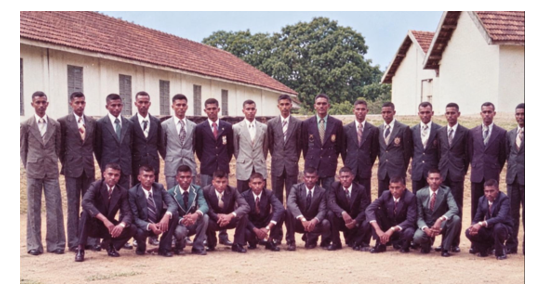
Two of the earliest centres of cricket were Jaffna Central College (founded 1816) and St. John’s College (founded 1823). Their legendary annual encounter, played since 1904, stands as the second-oldest continuously played school cricket match in Sri Lanka—exceeded in age only by Colombo’s famed Royal–Thomian encounter. This “Big Match” in Jaffna functioned as a celebration of identity and youth, drawing families, alumni, and local communities to its festive atmosphere. Even in its early years, it showed how deeply the sport had become integrated into Jaffna’s cultural fabric.
By the mid-20th century, several other peninsula schools including St. Patrick’s College, Hindu College, Hartley College, and Vaddukoddai’s Methodist Boys’ High School were fielding competitive cricket sides. Jaffna’s cricket environment was vibrant, disciplined, and technically strong. Colombo schools regularly travelled to the peninsula for matches, fostering a healthy exchange of talent and competition.
Although football enjoyed a larger following among some communities, cricket maintained a steady and respected presence. Jaffna cricket produced well-coached schoolboys, tactically knowledgeable players, and teams known for their discipline and sportsmanship.
The civil war that engulfed the Northern and Eastern provinces from the early 1980s had a devastating impact on every aspect of life—education, livelihoods, mobility, and recreation. Cricket was no exception.
Sports grounds were damaged, schools were used as centres for displaced people, and travel restrictions made inter-school competitions nearly impossible. A generation of children grew up without the simple joy of playing or watching cricket. Many schools could not maintain proper teams; others saw their training disrupted year after year by violence, curfews, and displacement.
Yet remarkably, cricket still survived.
Even during the darkest years, young boys found ways to play cricket in schoolyards, refugee camps, village streets, or open patches of dusty ground. Improvised bats, taped tennis balls, and bare, uneven pitches became their tools. Cricket turned into a symbol of normal life, a healing activity, and an assertion of identity in the face of turmoil.
The tragic story of Kandeepan, one of the peninsula’s most gifted young cricketers, encapsulates the heartbreak of that era. Recognised for his extraordinary talent and with a real chance of national representation, he repeatedly sought permission to travel to Colombo to pursue professional cricket. Yet on 15 separate occasions, the LTTE prevented him from leaving the peninsula. His dreams were cut short not by lack of ability, but by the brutal restrictions of war. Stories like his remind us that the war not only destroyed infrastructure and opportunity—it erased individual futures that can never be reclaimed.
This loss of an entire generation of cricketing potential continues to shape cricket in Jaffna today. Following the end of the conflict in 2009, there has been renewed interest in rebuilding sports in the North as a bridge towards normalisation, youth development, and national unity. Cricket, with its universal appeal, has naturally been central to this revival.
Two major bodies support cricket in the peninsula. The Jaffna Schools Cricket Association (JSCA) functioning under the Ministry of Education is funded by the government. It also receives intermittent support from Sri Lanka Cricket (SLC) in the form of cricketing gear and organizes school tournaments, coaching camps and competitions. Coaching and tournaments for schoolboys in under 13 and 15 age groups have also begun in the interest of long term development of cricket in the district. The Jaffna Schools under 13 and under 15 age group teams and the Jaffna Combined Schools Cricket team play matches with teams in other Districts, a sure way of cricket promotion in the District.
The Jaffna District Cricket Association (JDCA) accredited to Sri Lanka Cricket aims to develop district-level cricket, organises club cricket, inter-district tournaments, and supports pathway development in women’s cricket as well.
Despite these structures, systemic challenges remain. Infrastructure is still limited, quality turf wickets are few, and many schools lack full-time coaches or modern facilities. The mismatch between national-level expectations and local resources is stark.
Crucially, no Jaffna-born cricketer has yet represented Sri Lanka at the international level. This is not due to lack of talent; it reflects the absence of a complete developmental pipeline—from school cricket to district cricket to competitive club cricket in major towns.
In reality, Sri Lanka’s cricketing structure remains Colombo-centric. No matter how talented a player from Jaffna, Hambantota, Anuradhapura, or Polonnaruwa may be, he must eventually join a Colombo-based club to enter the national selection radar. Even regions that boast international stadiums—Dambulla, Hambantota, Kandy (Pallekele) —do not field clubs strong enough to produce national-level players consistently.
This structural imbalance raises critical questions regarding priorities in cricket development.
Reintroducing major cricket events to the North is seen as both a sporting opportunity and a chance to build trust after years of conflict. It reconnects the region to national sporting life, brings jobs, and offers young players a path into higher levels of the game. Mandaitivu, a small island only three kilometres south of Jaffna city, has been chosen as the site for the proposed Jaffna International Cricket Stadium and a wider sports complex. The project has already generated national interest: architects and Sri Lanka Cricket have prepared a masterplan, and the foundation stone was laid on 1st September 2025 by His Excellency the President. The vision includes a large stadium seating about 40,000 people, along with practice grounds, an academy and facilities for other sports- in fact a sports city.
This is an exciting idea. A modern stadium in the North could boost sports development, attract visitors and stimulate local economic growth. But whether Mandaitivu is the right location depends on carefully understanding its practical challenges: the narrow causeway linking it to the mainland, limited public services on the island, its soil and water conditions, environmental sensitivity and the unresolved issues that remain from the years of conflict, including the possibility of unmarked graves. A project of this scale cannot depend only on emotional appeal or political enthusiasm; it must be realistic, well-planned and ethically sound.
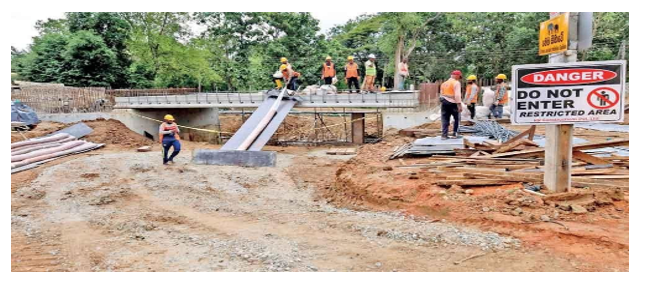
Mandaitivu’s closeness to Jaffna is a strong advantage. It is near enough to the city for spectators and teams to travel easily, while still offering open space for a stadium. But access is the biggest concern. The island is connected to the mainland by a single, narrow causeway with limited internal roads. This is not enough for crowds of tens of thousands. Match-day traffic, emergency vehicles, team buses, media operations and service vehicles all require safe, reliable access. Even normal tidal flooding could disrupt movement. Any serious development plan must therefore include widening and strengthening the causeway, making it flood-resistant, and improving internal roads. Public transport links, parking areas and pedestrian routes must also be planned from the start.
The island’s small population—historically around 1,500 residents—creates another challenge. Mandaitivu does not have the accommodation, medical facilities, sanitation or policing needed for large sporting events. Support would have to come mainly from Jaffna city. This is possible, but only with detailed planning. Temporary but good-quality toilets, first-aid centres and emergency services will be required. Importantly, local residents must feel included, not pushed aside. Job opportunities, fair land use agreements and access to improved community facilities should all be part of the project.
The island’s soil and water conditions also need careful study. The Jaffna region has sandy ground and a high water table, which can make large construction projects difficult. Strong, deep foundations and good drainage systems will be essential. Water supply is another concern: the peninsula’s groundwater is limited and prone to salt contamination. A mix of protected water sources, rainwater harvesting and possibly small-scale desalination may be needed. Electricity supply must also be upgraded, ideally with solar power to reduce long-term costs.
Environmental and social safeguards are equally important. Mandaitivu’s coastal ecosystem supports mangroves, fisheries and sensitive marine habitats. Poorly managed construction could accelerate erosion, disrupt fishing livelihoods or damage biodiversity. A comprehensive Environmental Impact Assessment, strict erosion control, habitat protection, stormwater management and fair compensation for fisheries are essential. Socially, the project can contribute to reconciliation only if local communities benefit visibly—through employment, training, sport-for-development programmes and genuine access to facilities beyond headline events.
Finally, the legacy of conflict cannot be ignored. The Northern Province still grapples with unresolved cases of missing persons, unmarked graves, and wartime ammunition dumps. Only weeks after the foundation stone for the proposed stadium was laid, a buried cache of ammunition was unearthed under police and judicial supervision (Tamil Guardian, September 2025). This discovery reinforces long-standing concerns: Tamil politicians in Parliament, former LTTE cadres, and ex–child soldiers now living abroad (including writer Shoba Shakthi in France) have repeatedly referred to suspected unmarked graves on this island linked to incidents in 1990. In this context, any large-scale earthworks must begin with transparent archaeological and forensic surveys, carried out with local authorities, humanitarian agencies, and affected families. If culturally or historically sensitive sites are identified, construction must pause to allow proper procedures. Ethical handling of these issues is not optional; it is essential for building public trust.
Mandaitivu offers both promise and complexity. Its location, symbolic value and open landscape make it an appealing site for an international cricket stadium, and political commitment has already propelled the project forward. But the island’s constraints—access, soil conditions, utilities, environmental fragility and the weight of history—mean that its suitability depends entirely on rigorous planning, responsible engineering and meaningful community engagement. If planners invest in resilient infrastructure, sustainable utilities, environmental protections and transparent social processes, the Mandaitivu stadium could become a powerful asset for Jaffna’s sporting future and broader recovery. If not, the very factors that make the island appealing could turn the project into an expensive and contentious endeavour with long-term consequences
Sri Lanka’s past offers important lessons. Over the last two decades, successive governments have built multiple international stadiums at Hambantota (Mahinda Rajapaksa Stadium), Dambulla (Rangiri Dambulla Stadium), Kandy (Pallekele International Stadium) and Colombo (R. Premadasa redevelopments). A plan to build an international cricket stadium at Hingurakgoda, Polonnaruwa has been abandoned half way.
Yet, despite these costly constructions, the number of competitive clubs producing national players has not expanded. Instead, elite cricket remains dominated by a handful of Colombo-based clubs. The stadiums themselves have struggled with sustainability, under-utilisation, and maintenance costs.
If Jaffna follows the same path, an international stadium may become a monument without meaning—impressive, but disconnected from the community and irrelevant to player development.
The future of cricket in Jaffna cannot be secured through grand, symbolic projects alone. What the region needs is not a monumental structure rising from an isolated island, but a thoughtful, layered strategy that nurtures talent from the ground upward. Cricket in the peninsula has always thrived when rooted in community, schools, and local passion. If Jaffna is to reclaim its place in Sri Lanka’s cricketing landscape, the focus must shift from spectacle to substance—from construction to cultivation.
The most urgent priority is the strengthening of school cricket. Schools have traditionally been the heart of Jaffna’s cricket culture, producing skilled players even during the most difficult years of conflict. Yet many institutions still lack the basic infrastructure required to develop young talent. Qualified coaches are few, equipment is limited or outdated, and most school grounds remain far from regulation standards. The establishment of turf wickets in major schools alone would dramatically improve the quality of play, offering young cricketers the opportunity to train on surfaces that mirror those used in competitive cricket across the country. Enhancing inter-school competitions, improving scheduling, and ensuring equitable access to resources would collectively create the strong foundation on which the region’s cricketing revival must be built.
Beyond schools, a robust club structure is essential. Without competitive clubs, no region—regardless of potential—can produce players capable of advancing to the national level. Jaffna currently lacks clubs with the facilities, financial backing, and administrative depth required to consistently compete in Sri Lanka’s domestic circuit. Establishing three to five well-equipped clubs that can aspire to Tier B or even Tier A status would offer aspiring cricketers the continuity needed once they leave school. Clubs serve as the bridge between youthful promise and professional readiness; without them, even the most gifted players are left stranded in a developmental gap.
A crucial issue in Jaffna’s cricketing future lies in creating humane, structured pathways to Colombo. For decades, talented northern players were compelled to migrate south—often abruptly, often alone—in pursuit of better exposure. Many faced emotional hardship, cultural displacement, and financial strain. The story of Kandeepan, and others like him, highlights the trauma of being uprooted in the name of opportunity. A reimagined system would rely instead on scholarships, host-family programs, partnerships between northern schools and Colombo institutions, and academic-sports collaboration. Talent should move through support, not sacrifice.
Cricketing ecosystems flourish when every component—not just the players—is strengthened. Jaffna needs a committed pool of licensed coaches who understand modern training methodologies, umpires with professional experience, transparent administrators who prioritize development over politics, and analysts who can bring data-driven insights to the game. These elements form the invisible backbone of successful cricketing regions.
Perhaps the most transformative investment would be the creation of regional cricket academies rather than massive stadiums. In this respect the opening of Jaffna Stallions Cricket Academy in 2023 is in the correct direction and could signal the beginning of a new era in cricket development. A high-performance centre in Jaffna—equipped with indoor nets, strength and conditioning units, modern rehabilitation facilities, and sports science infrastructure—would elevate training standards to match those in Colombo or Kandy. Such a centre would serve hundreds of young players annually, offering consistent development opportunities regardless of weather, transport limitations, or school-based constraints. Unlike a 40,000-seat stadium that remains empty for most of the year, an academy would be used daily, reshaping the region’s sporting culture through continuous engagement. Investing in human resources is often less glamorous than erecting a massive stadium, but far more impactful.
Re-imagining cricket in Jaffna requires looking beyond monumental projects and focusing on what truly nurtures progress. The peninsula does not need symbolic architecture; it needs pathways, people, and purpose. If investments are directed toward strengthening schools, empowering clubs, supporting talent mobility without displacement, enhancing the ecosystem of coaches and officials, and building high-performance hubs that serve everyday needs, Jaffna can re-establish itself as a vibrant cricketing centre.
In doing so, the region will not only reclaim its past glory but also build a future where every young cricketer—regardless of background—has the opportunity to dream, develop, and rise
Cricket has been part of Jaffna’s identity for more than a century. It has survived colonialism, political upheavals, economic strain, and decades of brutal conflict. Today, the peninsula stands at a crossroads. The desire to build an international stadium reflects national ambition and symbolic recognition for the North. But symbolism alone is not enough.
The real challenge is to ensure that cricket in Jaffna does not repeat the patterns seen elsewhere in Sri Lanka—international stadiums rising from the ground while grassroots structures remain weak, players remain invisible, and regions stay disconnected from the mainstream cricketing pathway.
The future of Jaffna cricket must therefore rest on sound judgment, people-centred planning, and genuine commitment to nurturing talent. If development focuses on strengthening schools, empowering clubs, upgrading training facilities, and giving young players viable pathways to elite cricket, then Jaffna can not only revive its lost cricketing legacy but also produce the first Jaffna-born Sri Lankan player—a symbolic milestone the entire nation could celebrate.
Only then will cricket truly fulfil its promise of uniting people beyond boundaries.
The foundation stone for the proposed Jaffna cricket stadium was ceremonially laid on 1st September 2025 by His Excellency The President of Sri Lanka. During the inauguration, The President, in his address, publicly asked the President of Sri Lanka Cricket, seated in the front row, when the first match could be played at the venue. The confident reply was December 2025. When asked about hosting the first international match, the answer was December 2026.
December 2025 has now come and gone. Not only has no visible construction commenced, but the very land identified for the stadium lay submerged under floodwaters following the heavy seasonal rains in Jaffna. The contrast between public assurances and ground realities is stark and troubling.
One is compelled to ask: Was this announcement driven by genuine planning, or by political spectacle? Without transparent feasibility studies, hydrological assessments, or a realistic construction timeline, the project risks becoming yet another white elephant—grand in promise, hollow in execution.
At the end of the day, who is misleading whom—and at whose cost?
Gamini Goonetilleke