


Changing practices of the Catholic Church in Sri Lanka. Is it negative progress? – By Aubrey Joachim
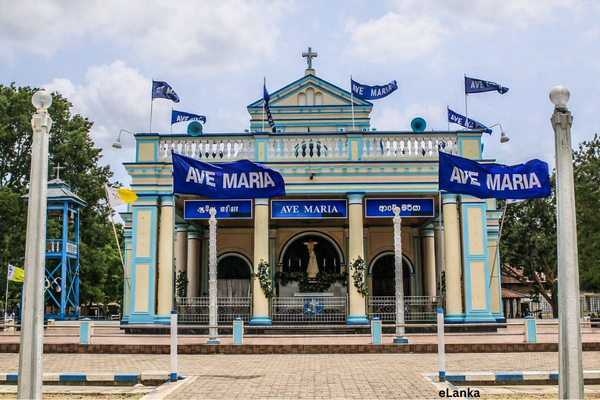
 Over the last few years the Catholic Church in Sri Lanka seems to be taking a new direction – and not for the better.
I am touring the north western and north central parts of Sri Lanka with a group of my school mates from many countries on a reunion tour.
Two days ago, we stopped by the famed Shrine of Our Lady of Madhu. To our surprise we were stopped by Church Security and the Police and some of our group were not allowed entry into the church precinct because they were wearing short trousers. None were in tight fitting ‘rugby shorts’.
As a Catholic born in Sri Lanka and a reasonably devout one at that, I have visited the same shrine many times during my childhood and youth. Never once was I confronted for being in shorts.
A notice outside informs visitors that they should be ‘decently attired’. From when ere shorts deemed to be indecent?
I inquired from one of the priests in the office near the gate and he advised me that it was the rule and that the security would provide us with sarongs to cover our legs.
Now, females are allowed to wear skirts or dresses – although admittedly not very revealing attire. So how is it okay for a female to expose knee to ankle while males cannot? I fail to see the logic.
So is it that the security at the gate is allowed to decide on the standard of ‘decency’?
A few days previously we visited the Muneswaram Hindu Kovil in Mannar and those in short trousers were not prevented entry. Many westerners were also present.
The next change I notice is that footwear is not allowed inside the Church. From when did this practice come in and who introduced it? I have visited holy Catholic places in a number of parts of the world but never had to adhere to this practice. Not even in St. Peter’s in Rome.
Such practices were never a part of Christianity which is a western/ middle eastern religion.
Walking barefoot in very public places is a health risk. For one thing the floors are unclean. Also one could be exposed to skin diseases spread by others. This practice certainly dissuades some from entering such a precinct. As a practicing Catholic during my 27 years in Sri Lanka never had I had to attend Church services barefoot. Even one in our group who currently lives in Sri Lanka and is a daily Church goer remarked that he had not come across this practice.
The above instances begs the question… How have these practices found their way into the Catholic Church in Sri Lanka? It appears that these are moves to emulate Buddhist and Hindu practices that have been embedded into these religions since inception and had to do with the culture and living standards of the time. It was never the case with Christianity.
Does the wearing of some attire or being barefoot influence one’s spirituality, reverence or devotion in any way?
Will these changes see the introduction of other practices such as lighting of oil lamps and beating of drums in Catholic Churches?
It is time for the Catholic hierarchy in Sri Lanka to seriously look at the subtle changes taking place and ensure that Catholicism maintains its westernised differentiation. After all many in the past from St. Joseph Vaz to the Martyrs of Mannar have sacrificed their lives for the spread of Catholicism in Sri Lanka. Let not their sacrifices come to nothing. The Catholic Church in Sri Lanka is still under the original Papal jurisdiction unlike some of the Eastern Right Churches. Let it retain its standing.
Perhaps my above observations should be taken up by the Bishops Conference of Sri Lanka.
The author is an Australian citizen of Sri Lankan Catholic origin.