THE DAY THE CEASEFIRE DIED-by Harold Gunatillake

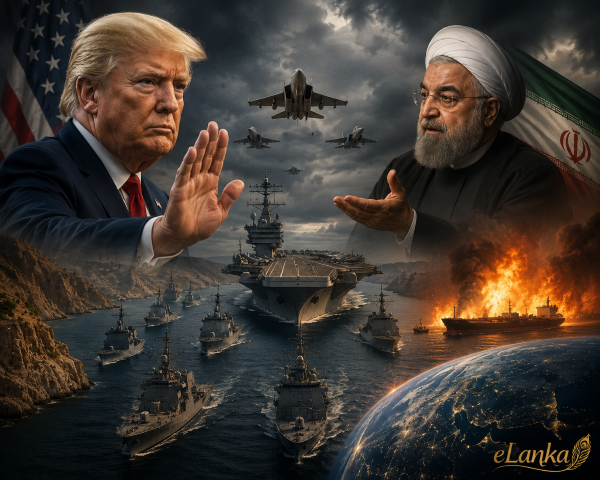
How the US–Iran Breakdown Is Sending Oil Prices Soaring and Putting Sri Lanka’s Fragile Recovery at Risk
President Donald Trump has dismissed Iran’s latest peace proposal, mentioning that Tehran is asking for terms he feels he cannot agree to. He also cautioned that if negotiations break down, the US is ready to take all necessary measures, including resuming full-scale military operations.
Trump has also warned that Iran will face severe consequences, saying it will be “blown off the face of the Earth” if it targets US vessels escorting commercial ships through the Strait of Hormuz.
The ceasefire was meant to bring a moment of peace—allowing time to soothe tensions and give the world a chance to breathe. Unfortunately, it fell apart dramatically. In Tehran, Abbas Araghchi issued a stark warning: Iran “will take revenge” if pushed too far.
Meanwhile, in Washington, President Donald Trump responded firmly, cautioning that the United States would react with overwhelming force if any American warship were harmed. In the Strait of Hormuz—the crucial waterway through which one-fifth of the world’s oil passes—ships continue to navigate amid threats of missiles, drones, and rising political tensions. For the world, this marks a significant crisis. But for Sri Lanka, it hits even closer to home: affecting the country’s fuel costs, electricity bills, shipping routes, and overall economic stability.
A Ceasefire in Name Only
The two-week truce between the US and Iran was delicate from the very beginning. Negotiators in Islamabad came close to a breakthrough, but mutual mistrust clouded the talks. Iran felt the US was changing its demands, while the US believed Iran wouldn’t commit to never developing nuclear weapons.
Once the talks fell apart, tensions quickly escalated.
- Iran stated there would be “no compromise” on its main
- The US argued Iran was demanding the impossible.
- Regional militias loyal to Tehran resumed
- Clashes renewed in the Strait of
The ceasefire was effectively over—long before anyone officially declared it so.
Why Sri Lanka Feels the Shock First
Sri Lanka is thousands of kilometres away from the Gulf, yet few countries are as vulnerable to instability in the Strait of Hormuz.
- 100% of Sri Lanka’s crude oil imports pass through Hormuz
Every barrel from the UAE, Saudi Arabia, Kuwait, and Oman travels through the very waters now under threat.
- Rising global oil prices have quickly impacted Sri
Even a USD 5–10 increase per barrel can push:
- Petrol and diesel prices up
- Electricity tariffs are higher
- Transport costs across the island
- Food prices through the supply chain
For a nation still recovering from economic crisis, this is a dangerous squeeze.
- Shipping insurance premiums are already rising
When the Gulf turns into a war zone, insurers see it as a “high-risk maritime corridor.” This means:
- Higher freight charges
- Higher insurance premiums
- Delays as ships reroute or slow down
- Increased costs for every imported item—from fuel to medicine to wheat
Sri Lanka, heavily import-dependent, cannot escape the ripple effect.
Colombo Port serves as a quiet yet strong indicator of worldwide tensions. Shipping agents have noticed some subtle but telling signs, such as longer transit times for Gulf-bound ships, higher bunker fuel costs, more careful routing by major carriers, and a rise in freight rates for Middle Eastern cargo. For a bustling hub that depends on transhipment and global links, the unrest in Hormuz isn’t just politics—it’s a direct commercial challenge.
Electricity Costs: The Next Domino
Sri Lanka’s power grid relies heavily on thermal generation. When oil prices go up:
- Ceylon Electricity Board (CEB) has to pay more to produce power
- Electricity tariffs will likely need to be revised
- Industries might find it harder to stay competitive
- Household bills could start to rise
A long-lasting US–Iran confrontation might lead Sri Lanka into another round of energy price hikes.
The Human Impact: From Jaffna to Galle
The crisis isn’t just a general idea; it hits close to home for many. Imagine the fisherman in Jaffna who relies on diesel for his boat, or the three-wheeler driver in Kandy, feeling the impact of every increase in fuel prices. The garment factory in Katunayake is working hard to cope with rising electricity bills, while families in Galle are paying more for gas, vegetables, and transportation.
When Hormuz burns, Sri Lanka’s daily life feels the heat too.
The Global Stakes: A Chokepoint Under Siege
The Strait of Hormuz is only 39 kilometres wide at its narrowest point. Yet it carries:
- 20% of global oil
- A third of LNG shipments
- The economic lifeline of Asia
Any disruption—whether from missile strikes, naval clashes, or political brinkmanship—sends shockwaves across the world. For Sri Lanka, the stakes are existential.
What Happens Next?
Diplomats warn that the situation could deteriorate rapidly:
- Iran may tighten control over Hormuz
- The US may increase naval escorts
- Regional militias may escalate attacks
- Oil markets may react violently
- Shipping lines may reroute away from the Gulf Each of these outcomes carries a price tag for Sri
Sri Lanka’s Strategic Dilemma
Colombo has always strived to keep good relations with both Washington and Tehran. As the conflict continues to grow, Sri Lanka is now facing some tough but important decisions:
- How to ensure stable fuel supplies
- How to handle rising import costs
- How to safeguard its shipping interests
- How to stay neutral without risking valuable partnerships
To move forward, the government will need to act thoughtfully—by diversifying suppliers, negotiating long-term contracts, and strengthening maritime cooperation in the Indian Ocean. These steps can help Sri Lanka navigate these challenging times with resilience and care.
A Crisis Far Away, Yet Uncomfortably Close
The collapse of the US–Iran ceasefire is not just another headline. It is a reminder that Sri Lanka’s economic health is tied to global stability in ways most citizens never see.
Whenever missiles pass over Hormuz, they send shockwaves that travel across oceans, through busy shipping lanes, reaching Colombo Port, and eventually impacting the everyday lives and wallets of ordinary Sri Lankans.
The world might be focused on a major geopolitical story, and Sri Lanka is feeling the impact.
End