Sri Lanka’s architectural identity continues to attract international attention through the work of the Geoffrey Bawa Trust, which has steadily expanded the conversation surrounding the island’s built environment, landscape traditions and creative heritage.
As reported by the Daily FT on 8 August 2026, the Trust’s continuing programme of lectures, exhibitions, tours and design discussions has strengthened Sri Lanka’s presence within international architectural circles, while ensuring that Geoffrey Bawa’s ideas remain relevant to a new generation of architects, designers, students and cultural researchers.
The initiative is significant because Bawa’s influence extends well beyond the buildings he designed. His work established an approach to architecture that was deeply attentive to climate, landscape, materials, movement and the cultural character of place. Through its public programmes and carefully maintained properties, the Trust has preserved not only physical structures, but also the intellectual framework through which Sri Lankan architecture can be understood and further developed.
A legacy preserved through active engagement
The Geoffrey Bawa Trust was established in 1982 with the objective of furthering architecture, the fine arts, and ecological and environmental studies. Following Bawa’s passing in 2003, the Trust assumed responsibility for preserving his archives and collections, while also maintaining a public programme that connects his work with contemporary design concerns.
The Trust operates alongside the Lunuganga Trust, established in 1993 to manage and preserve Bawa’s celebrated estate in Bentota. Together, the organisations care for four historic properties: Number 11, Bawa’s Colombo residence; Lunuganga, his country estate and garden; the Ena de Silva House, which was relocated from Colombo to Bentota; and the de Saram House in Colombo.
This stewardship has enabled the properties to function as living cultural resources rather than static monuments. Guided visits, exhibitions, educational activities and curated events allow architecture to be encountered through physical experience, historical interpretation and informed discussion.

Number 11 demonstrates Geoffrey Bawa’s careful treatment of space, light and movement.
Architecture as a conversation between inside and outside
Geoffrey Bawa’s design philosophy is often associated with tropical modernism, although the description does not fully capture the breadth of his practice. His architecture was not merely a stylistic response to a warm climate; it represented a broader attempt to reconcile modern construction with Sri Lanka’s geography, traditions and patterns of life.
At Number 11, a former row of four houses gradually became a complex domestic environment through a series of acquisitions, alterations and extensions. The result reflects Bawa’s belief that architecture could evolve organically, responding to the circumstances of a site and the needs of its occupants rather than being imposed through a rigid formula.
The residence is organised through a sequence of compression and expansion. Narrow passages open into larger living spaces, while courtyards, terraces and carefully framed views create a continuous relationship between interior rooms and the surrounding environment. Light is treated as an architectural material, entering through openings, courtyards and elevated spaces to shape the character of each room.
This approach remains influential because it places experience at the centre of design. The building is not understood solely through its elevations or floor plans; it is encountered through movement, changing perspectives, sound, shade, vegetation and the gradual revelation of space.

The interiors of Number 11 combine architecture, art and collected objects in a unified composition.
Lunuganga and the importance of landscape
Lunuganga offers an equally important expression of Bawa’s thinking. Acquired in 1948 as a former rubber and cinnamon plantation, the property was gradually transformed into a garden estate that responds to topography, water, vegetation and distant views.
The estate is frequently described as a “garden within a larger garden”, a phrase that reflects its relationship with the surrounding landscape. Rather than treating the garden as a decorative setting for buildings, Bawa developed Lunuganga as a sequence of outdoor rooms, pathways, terraces, pavilions and carefully composed vistas.
Its significance lies in the way architecture and landscape are made inseparable. Buildings are positioned in relation to trees, lakes, slopes and open skies, while the garden itself becomes an evolving design project. The result is neither a conventional formal garden nor an untouched natural environment, but a carefully balanced synthesis of human intervention and ecological character.
The Lunuganga Trust continues to preserve this relationship through conservation, public access, guided tours and ecological work. The estate therefore offers a valuable model for contemporary discussions about climate-responsive design, environmental responsibility and the cultural value of landscape.
For Sri Lankan and international visitors, Lunuganga provides a direct encounter with an architectural philosophy that cannot be fully communicated through photographs or written descriptions. Its shaded pathways, changing horizons and understated structures demonstrate how place can be shaped without erasing its original identity.

Lunuganga presents architecture as an evolving relationship between buildings, gardens and the wider environment.
From memorial lectures to international dialogue
The Trust’s contribution to global design discussion has been strengthened through its annual Geoffrey Bawa Memorial Lecture and other public programmes. According to the Trust’s official information, the Memorial Lecture has reached its twentieth cycle, with past speakers including Kengo Kuma, Tatiana Bilbao, Sumayya Vally, Marina Tabassum, Cecil Balmond, Bijoy Jain and Abha Lambah.
The range of speakers demonstrates the breadth of the conversation being cultivated. The programme is not limited to historical reflection or celebration of a single architect. Instead, it brings together differing perspectives on architecture, urbanism, materials, technology, social responsibility and the relationship between design and the environment.
This is an instrumental aspect of the Trust’s work. Bawa’s legacy is kept relevant not by presenting his buildings as untouchable examples from the past, but by placing them in dialogue with present-day questions. How can architecture respond to tropical climates? How can design remain culturally grounded while engaging with international practice? How can landscape be protected while communities continue to develop?
These questions carry particular importance for Sri Lanka, where rapid urban growth, environmental pressures and changing patterns of living are creating new demands for thoughtful design. Bawa’s work does not provide a single answer to these challenges, but it offers a compelling method of inquiry: observe the place carefully, understand its climate and culture, and allow design to emerge from that knowledge.
New opportunities for Sri Lankan design
The Trust’s contemporary programmes also indicate that its role is expanding beyond the preservation of Bawa’s own work. Its public exhibitions, archives, scholarships, residencies, awards and educational activities create opportunities for wider engagement with Sri Lankan creativity.
The official Trust website currently highlights Akurugraphy, an exhibition examining Sinhala, Tamil and English letterforms through typography, archival research, software development and script standardisation. The exhibition demonstrates how the Bawa Space can support conversations that connect architecture with graphic design, language, technology and cultural memory.
The Geoffrey Bawa Moonamal Award similarly signals a broadening of the design agenda. Named after the indigenous Moonamal tree at Lunuganga, the award focuses on ecological coexistence and projects that encourage interdisciplinary responses to environmental degradation. This direction reflects an important development in the interpretation of Bawa’s legacy, particularly because his work consistently treated buildings and landscapes as interconnected systems.
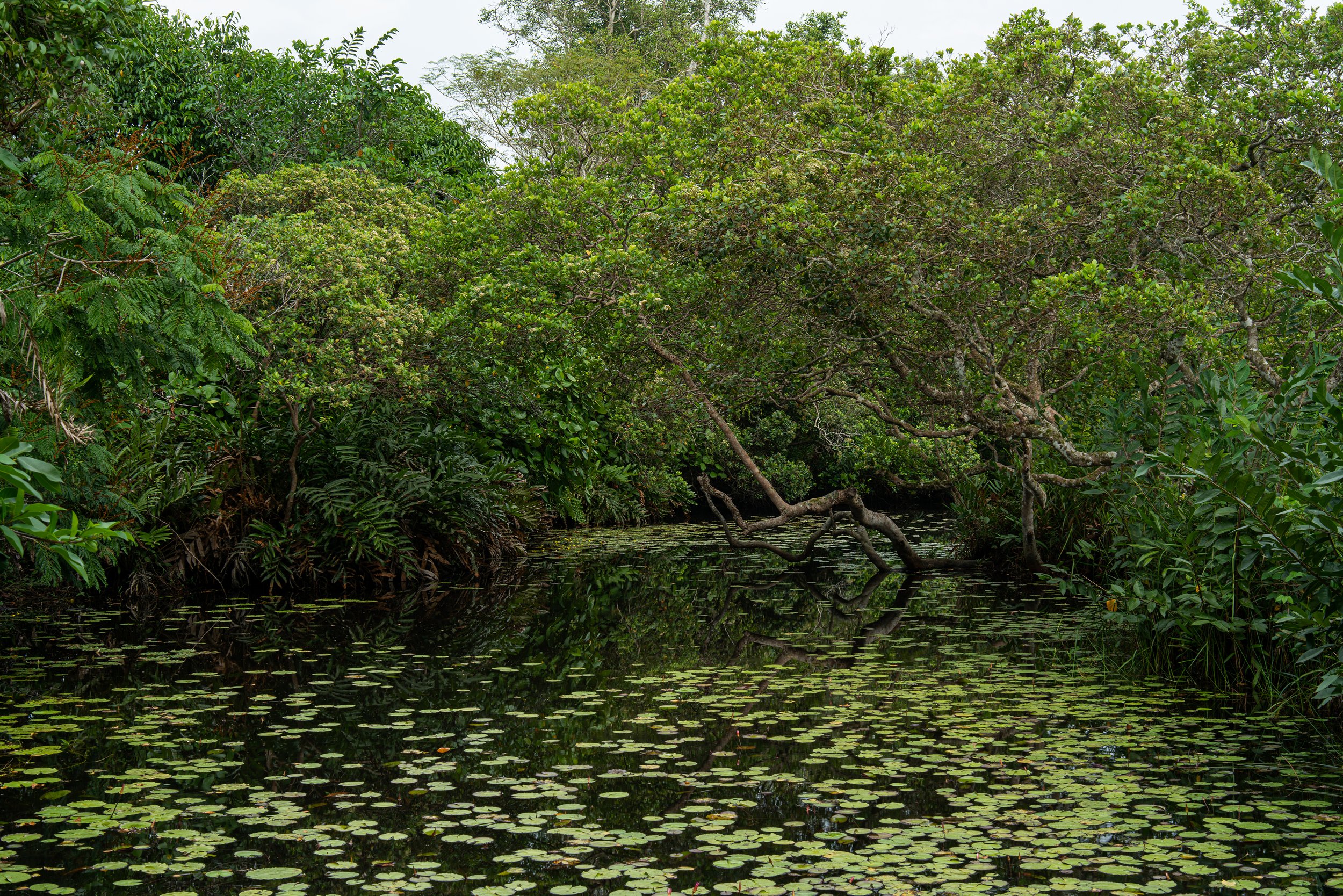
The Trust’s current work connects Bawa’s architectural legacy with wider questions of ecology and cultural preservation.
A shared cultural resource for Sri Lankans worldwide
The Geoffrey Bawa Trust’s work is particularly valuable to Sri Lankans living outside the country, many of whom encounter Bawa’s architecture through international design publications, cultural institutions, travel and academic study. His buildings provide a distinctive point of connection with Sri Lanka, combining modern architectural ideas with the island’s landscapes, materials and cultural sensibilities.
For the global Sri Lankan community, the Trust’s programmes also demonstrate the importance of preserving creative achievements that possess both local meaning and international relevance. Bawa’s work belongs to Sri Lanka, but the questions it raises are shared across borders.
Through its archives, properties and public events, the Trust continues to ensure that Sri Lankan design is not treated as a peripheral subject within international architecture. Instead, it is presented as a source of original ideas, careful observation and practical knowledge.
The continuing expansion of this design conversation is a positive development for Sri Lanka’s cultural profile. It also creates an opportunity for architects, educators, institutions and communities to engage more actively with the country’s architectural heritage, while encouraging new work that is environmentally sensitive, culturally grounded and confidently connected to the wider world.
For further coverage of Sri Lankan heritage, culture and community achievements, readers can visit eLanka, a long-standing digital platform connecting Sri Lankans in Australia and around the world.
Source: https://www.ft.lk , This article was written based on the source https://www.ft.lk, kindly email us at info@eLanka.com.au if any information needs to be corrected.
At eLanka, we respect the rights of creators. If we have used an image you own and you’d like it removed, please email us at info@elanka.com.au and we’ll handle it promptly.