



Will El Niño directly impact Sri Lanka?by Harold Gunatillake

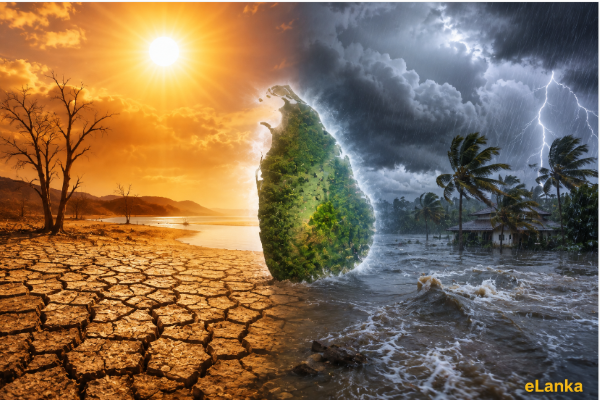
The BBC News briefing indicates that El Niño is approaching an unprecedented level.
Overview: There are warnings that the climate phenomenon El Niño is gearing up to be an “unprecedented event”
El Niño is expected to have a profound impact on Sri Lanka, with effects already manifesting throughout the island. The present phenomenon is among the most intense in decades, prompting Sri Lankan authorities to issue warnings of an imminent severe drought, subsequently followed by periods of heavy rainfall and potential flooding later in the year.
Sri Lanka could face significant weather changes in the coming months as the El Niño climate phenomenon continues to intensify, with its peak expected to arrive earlier than previously
anticipated, according to Minister of Environment Dr Dammika Patabendi.
Speaking at a special media briefing currently being held at the Department of Government Information on the possible impact of El Niño on Sri Lanka, the environment minister said the phenomenon is expected to reach its peak around November.
Sri Lanka is currently experiencing unusually dry conditions due to the El Niño phenomenon, which redirects warm waters toward the Pacific Ocean.
This shift results in reduced sea surface temperatures surrounding Sri Lanka and a consequent decrease in rainfall.
The impacts have been significant, including:
- Severe drought conditions across multiple districts
- Water shortages impacting over 80,000 individuals
- Crop failures, dried water tanks, and a decline in coconut production
- Implementation of emergency water distribution through bowsers and increased daily water allocations
The most affected districts comprise Monaragala, Ampara, Batticaloa, Polonnaruwa, Badulla, Hambantota, Ratnapura, as well as parts of the North Central and Eastern Provinces.
What’s Coming Next
Meteorological agencies predict a significant meteorological transition:
- From October to December: Elevated levels of precipitation are anticipated, particularly associated with the Northeast
- There exists a notable risk of flooding and mudslides, especially within mountainous
- From January to April 2027: A sustained and severe drought is
This pattern of a ‘dry period followed by heavy rains’ is characteristic of robust El Niño phenomena. However, this year’s cycle is anticipated to be among the most intense observed in the past 75 years.
Impact on Agriculture and Food Security
El Niño is significantly influencing the agricultural calendar of Sri Lanka:
- Maha season (September–November): Experience of heavier-than-usual
- Yala season (next year): Anticipated to be considerably drier, thereby posing a threat to
Farmers are recommended to:
- Initiate Maha cultivation two weeks in
- Construct small ponds and implement soil moisture conservation
- Transition to short-duration or drought-resistant
The global impacts of El Niño are also expected to elevate the cost of imported food by approximately 20–25%, thereby increasing financial pressure on Sri Lankan households.
National Preparedness
The government has implemented the following measures: A ministerial panel dedicated to the El Niño response, Regulations governing emergency water supplies, and guidelines for drought relief at the district level.
Hydropower reservoirs presently operate at 56–57% of their capacity; however, an extended drought may exert additional pressure on electricity generation.
More detailed action by the government:
The government of the National People’s Power (NPP) has undertaken substantial emergency and structural measures to mitigate the impacts of the ongoing El Niño disaster.
However, some members of the public and political observers question whether long-term preparedness is progressing at an adequate pace.
As El Niño conditions are developing earlier than anticipated, disrupting monsoon patterns and reducing the capacities of small reservoirs by nearly 10%, the administration has implemented a comprehensive, multi-sectoral emergency response plan.
Key Government Actions: –
Emergency Funding & Water Delivery: An allocation of Rs. 4.48 billion (~$14 million USD) has been designated specifically for water distribution.
Mobile water bowsers supply approximately 75 litres of water every two to three days to nearly 72,000 individuals across seven drought-affected districts.
Legal and Executive Intervention:
On August 6, 2026, the Ministry of Defence issued a special circular amending existing regulations to facilitate expedited and less bureaucratic local responses to water shortages.
President Anura Kumara Dissanayake also convened a Special Cabinet Sub-Committee to ensure an uninterrupted supply of essential resources. –
Agricultural Relief:
Agriculture Minister K. D. Lalkantha ordered the Agricultural and Agrarian Insurance Board to accelerate compensation payments to farmers suffering significant damage to paddy and other crops.
Previously, the administration successfully advanced the Yala cultivation season by 1. 5 months to pre-empt early dry spells. –
Energy Management: In light of El Niño threatening hydropower reserves, the Ministry of Energy is scaling up solar battery storage systems to ensure grid stability and prevent blackouts.
Environmental Support:
The government is utilising solar-powered pumping systems to supply water to major wildlife reserves, such as Yala National Park, thereby helping preserve local biodiversity by preventing water bodies from drying up.
El Niño is projected to significantly impact Sri Lanka, initially causing a drought, followed by periods of heavy rainfall, and
subsequently leading to another drought. This cyclical pattern jeopardises water security, agriculture, food prices, and rural livelihoods throughout the island.