News & Community eLanka

eLanka

Thursday, 15 Oct 2026
  • Home
  • Read History
  • Articles
    • eLanka Journalists
  • Events
  • Useful links
    • Obituaries
    • Seeking to Contact
    • eLanka Newsletters
    • Weekly Events and Advertisements
    • eLanka Testimonials
    • Sri Lanka Newspapers
    • Sri Lanka TV LIVE
    • Sri Lanka Radio
    • eLanka Recepies
  • Gallery
  • Contact
Newsletter
Sri lankan news
  • eLanka Weddings
  • Property
  • eLanka Shop
  • Business Directory
eLankaeLanka
Font ResizerAa
Search
  • Home
  • Read History
  • Articles
    • eLanka Journalists
  • Events
  • Useful links
    • Obituaries
    • Seeking to Contact
    • eLanka Newsletters
    • Weekly Events and Advertisements
    • eLanka Testimonials
    • Sri Lanka Newspapers
    • Sri Lanka TV LIVE
    • Sri Lanka Radio
    • eLanka Recepies
  • Gallery
  • Contact
Follow US
© 2005 – 2026 eLanka Pty Ltd. All Rights Reserved.
Home » Goodnews Stories Srilankan Expats » Articles » The transitional 1990s and beyond (JVP-III)-by Rajan Philips
Articles

The transitional 1990s and beyond (JVP-III)-by Rajan Philips

eLanka admin
Last updated: May 14, 2021 4:52 pm
By
eLanka admin
ByeLanka admin
Follow:
Share
17 Min Read
SHARE
Views: 87

The transitional 1990s and beyond (JVP-III)-by Rajan Philips

Source:Island

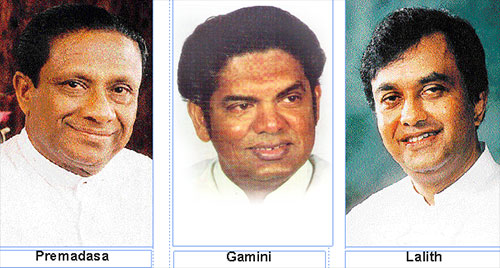
If the 1980s were tumultuous, the 1990s were more transitional, even if not less tumultuous. In this ‘potted’ history, it is not necessary to recount all the details of the 1990s and the first decade of the new 21st century. Suffice it to focus on developments that have had a continuing influence on current events and the farce of 2021. The UNP and the JVP, which more or less came together in 1977, were gone by 1994, after seventeen years of assorted achievements. The UNP would never return to the same pinnacle of power that it seized in 1977. The JVP with a new generation of leaders transformed itself into a democratic political party with mixed results. The first half the decade saw the disintegration of the UNP under the weight of the presidential ambitions of three rival contenders – President Premadasa and his two younger challengers, Lalith Athulathmudali and Gamini Dissanayake. The LTTE took out every one of them in 1993 and 1994.

LTTE violence took off in the 1990s after the JVP had been finished off in the late 1980s. In a telling commentary on that period, Wikipedia lists the names of political leaders, parliamentarians, professionals and political activists who were killed by the JVP, the LTTE, other Tamil groups and the armed forces over three decades of violence. The 1990s began with the assassination of Prime Minister Rajiv Gandhi in 1991 and ended with the killing of TULF MP and Legal Academic Neelan Tiruchelvam in 1999. The old leadership of the TULF, with the exception of M. Sivasithamparam, had been wiped out in the late 1980s. That included TULF leader A. Amirthalingam, a consummate politician and parliamentarian, who started off as a fiery federalist and turned himself into a mellowed separatist.

As the 90s wore on, the LTTE asserted itself as the sole representative of the Tamils. It waged war against the state and its forces but not to capture the state of Sri Lanka but to establish a new state of Tamil Eelam. The JVP’s mission was different, but its ultimate objectives were never clear. Lacking the LTTE’s military prowess, it never seemed plausible that the JVP was serious about capturing state power through violent means. Politically, the JVP swung from its ultra-left attacks on a manifestly leftist government in 1971, to undertaking ultra-right attacks against the most rightwing government in Sri Lanka’s modern history. The left-right cleavage was not part of the LTTE vocabulary.

On the other hand, although it railed against the Indo-Sri Lanka Accord and the presence of Indian armed forces in Sri Lanka, the JVP scrupulously avoided taking potshots at the Indian Army. The LTTE, in contrast, cut its military teeth fighting the Indian army and found common cause with the Sri Lankan government under President Premadasa to fight a common enemy. There was even grudging admiration among sections of the Sinhalese for the LTTE’s choosing to take on the Indian Army. For the record, the Indian Army came to Sri Lanka on the invitation of one Sri Lankan President and left Sri Lanka at the request of the succeeding Sri Lankan President. Hardly the modality for an occupying force. War or peace, Sri Lanka was again left to its own devices.

Illusions of Peace

The second half of the 1990s and the first half of the next belonged to Chandrika Kumaratunga. Her presidency began with a bang of charismatic inspiration but petered through for want of a clear focus and purposeful efforts. Perhaps her singular failure was not single-mindedly moving to abolish the executive presidency as she was universally expected to do. She was also the first and, until Gotabaya Rajapaksa arrived on the scene 25 years later out of nowhere, the only person to become President without previously being a Member of Parliament. Her parliamentary inexperience, untrammeled access to presidential power, not to mention her political ego, all combined to vitiate the promise with which she had led the People’s Alliance to power.

With the benefit of hindsight, we might say that parliament started becoming inexorably poorer from thereon. It is far worse now, in 2021, and for many new reasons. And it has taken a JVP MP, in Dr. Harini Amarasuriya, to take a spirited stand in defense of parliament and parliamentary democracy in Sri Lanka – against presidential authority and media hypocrisy. The ironies of history, you might say, but more on it later.

Chandrika Bandaranaike Kumaratunga (CBK) deserves full marks for starting the peace process during her presidency, but she showed inexplicable naivete in choosing to rely on people from her social circles to take the lead in serious peace mediation. The LTTE was going to be a difficult peace-dance partner anyway, and it required much more than social brokering to make any headway. In the end, the LTTE almost succeeded in assassinating her during her election campaign for a second term in office in 1999.

The main irony of that period was the nasty competition between Chandrika Kumaratunga (leading the SLFP) and Ranil Wickremesinghe (leading the UNP) for leadership in the peace process. It was a total about-turn from previous decades when the two main Sinhalese parties fought one another over who was giving more concessions to the Tamil Federal Party, even though what was on offer was way less than what would be included much later in the 13th Amendment. In any event, the CBK-RW competition over peace turned out to be counter productive both to the peace process and to their respective political calculations.

It may not be wholly accurate to say that presidential politics was the main driver of the peace rivalry, but it is impossible to view the rivalry in isolation from presidential ambitions. All the constitutional changes proposed by the CBK government included provisions to protect her powers, which made it even easier for RW and the UNP to reject the proposals out of hand and even, in one instance, make a bonfire of them right in the well of parliament. As for Ranil Wickremesinghe, his obsession with becoming a President, or at least a presidential candidate one more time (after two attempts in 1999 and 2005), became quite obvious when he deliberately subordinated every initiative of the yahapalanaya government (2015-2019) to that single obsession.

Back during his rivalry with CBK over peace initiatives, Ranil Wickremesinghe stunningly turned to the LTTE to strike a counter peace partnership to CBK’s peace partnership with the TULF. I am not aware of any public recounting of the mediation that brought RW and the LTTE together in a peace initiative. But objectively, it fair to surmise that Ranil Wickremesinghe reached out to the LTTE as a counter to CBK’s peace alliance with the TULF. What was fairly well known throughout the JRJ presidency was that President Jayewardene cunningly kept not only the TULF but also the JVP from joining forces with the SLFP/Left opposition at that time. In the end, there was no ultimate benefit to anyone from JRJ’s Machiavellian politics. The presidential house he built so adroitly would be eventually lost to the UNP. Now it seems it is lost forever. And it will be for other more upstart aspirants as well.

As JRJ’s successor, President Premadasa took a different tack, reaching out to the LTTE to get the Indians out. We know how that tack or track ended. The TULF that was left hanging, or what was left of its depleted leadership, broke with the UNP and turned to Chandrika Kumaratunga and the People’s Alliance for a new kick at what had become the proverbial viable solution, while Ranil Wickremesinghe modified the Premadasa approach to re-engage the LTTE with Norwegian insurance. To their credit, Chandrika Kumaratunga and Ranil Wickremesinghe ‘fought’ over how to make better peace with Tamils, rather than about waging a more brutal war with the LTTE. They both admitted that the Sri Lankan state had failed in the building of its nation and were committed to creating a plural and inclusive polity. While their political spirits were willing their presidential flesh led them astray.

And their peace-fight was nasty. They could not work together even when they were forced to cohabit as President and Prime Minister between 2001 and 2004. Ranil Wickremesinghe, as Prime Minister, dashed everyone’s expectations of peace dividends by giving, not for the last time, free rein to corruption in government. For her part, and in what she would later admit to being among her more grievous mistakes, President Kumaratunga dismissed the Wickremesinghe government in 2004 (which she had the power to do under the pre-19A Constitution, unlike Maithripala Sirisena who flouted his own 19th Amendment in October 2018), dissolved parliament and won the parliamentary election in April 2004 with provisional support from the JVP.

The results of the April 2004 parliamentary election gave false hopes to President Kumaratunga and the JVP (that won 39 out of 105 UPFA seats in parliament, its highest on record), relegated Ranil Wickremesinghe to the opposition backwaters for the next ten years, and signaled the emergence of Mahinda Rajapaksa as the next presidential candidate from the true south. The country went through the tsunami devastation in December 2004, but that did not help the political leaders getting any wiser about working together. The Supreme Court abandoned President Kumaratunga when it rejected her bid to extend her second term by one year. Ranil Wickremesinghe even thought that Chief Justice Sarath Silva was helping him for not impeaching him earlier!

Those who had serenaded CBK during her rise lost no time in leaving as she declined. Mahinda Rajapaksa became the SLFP-UPFA candidate by acclamation. He reached a new agreement with the JVP. The unkindest cut of all was delivered by the LTTE to Ranil Wickremesinghe who thought that it would be a no contest. Mahinda Rajapaksa won the November 2005 presidential election by the squeakiest of margins, while Tamil voters in the north were ordered to stay home. Basil Rajapaksa’s familial prophesy that there will be a President from the south was finally fulfilled. But there were other dynamics at play.

Illusions of Restoration

In my last installment published two weeks ago (April 25), I alluded to Mahinda Rajapaksa becoming the presidential beneficiary of a new strand of Sinhala Buddhist nationalism fueled by the Jathika Chinthanaya school of thought. The school of thinking that JC advocated has not universally been accepted in Sinhalese political society. At one level, the electoral victories of Chandrika Kumaratunga (PA) and the partial successes of Ranil Wickremesinghe were moments of political pushbacks to the creeping influence of JC thinking. At another level, both the SLFP and the UNP were forced to come to terms with ‘JC forces’ and include them in their political alliances often on their (JC’s) terms.

The presidential system and proportional representation in parliamentary elections facilitated the emergence of alliance politics. The era of programmatic united fronts of political parties was gone. Serious political programs gave way to lawyerly Memorandums of Understanding. Multiple parties with bilateral/multilateral MOUs could come together under an umbrella alliance for contesting elections. The April 2004 parliamentary elections were the breakthrough election for the new Sinhala Buddhist nationalist organizations.

The Jathika Hela Urumaya (JHU), the most electorally successful offshoot from the JC school, won nine seats in the election, all won by Buddhist Monks. The JVP which had been courting JC ideologues and followers from the 1980s, was part of Chandrika Kumaratunga’s alliance (UPFA) and won 39 seats. It was the JHU that successfully challenged President Kumaratunga’s attempt to extend her second term limit in the Supreme Court in August 2005. JC’s political consummation came within months, with the victory of Mahinda Rajapaksa in the November presidential election. That it came with support from the not so hidden hand of the LTTE did not dampen the significance of the moment. Mahinda Rajapaksa was recognized as the most authentic Sinhala Buddhist political leader since independence.

In terms of political analysis, the victory of Mahinda Rajapaksa has been described as the restoration of the linkage between the Sri Lankan state establishment and the political hegemony of Sinhala Buddhist nationalism. The linkage had apparently been ruptured since July 1987 when JR Jayewardene and Rajiv Gandhi signed the Indo-Sri Lanka Accord. Looked at in another way, the state of Sri Lanka which has traditionally been accused of alienating the Tamil and Muslim minorities, would seemed to have found a way to alienate even the Sinhalese majority.

And the restoration that was apparently achieved with the victory of Mahinda Rajapaksa in 2005, has not turned out to be as consequential as anticipated. To wit, the Indo-Sri Lanka Accord and the Thirteenth Amendment that it created have survived two terms of Mahinda Rajapaksa presidency and may yet survive the first term of the Gotabaya Rajapaksa presidency. At the same time, a full restoration of the linkages between the state of Sri Lanka and all its ‘peoples’ will require a more sensitive and nuanced understanding as well as appreciation of the nationalist compulsions of the Sinhalese, Tamils and the Muslims. Anything less can be nothing more than a farce. (Next week: The farce of 2021).


TAGGED:Jathika Hela UrumayaLALITH ATHULATHMUDALIRanil Wickremesinghe
Share This Article
Facebook Whatsapp Whatsapp LinkedIn Email Copy Link Print
Previous Article Splendor of Ranmasu Uyana-TEXT & PIX BY MAHIL WIJESINGHE
Next Article A COMPREHENSIVE ACCOUNT OF A NATIONAL TRAGEDY-by Professor Ravindra Fernando
FacebookLike
YoutubeSubscribe
LinkedInFollow
- Advertisement -
eLankaproperty - sell property in Sri Lanka, Sri Lanka property for sale, Sri Lanka real estate, Sri Lanka property listings, property marketplace Sri Lanka, land for sale Sri Lanka, houses for sale Sri Lanka, apartments for sale Sri Lanka, commercial property Sri Lanka, luxury villas Sri Lanka, Sri Lankan property investment, buy property in Sri Lanka, Colombo property for sale, beachfront property Sri Lanka, development land Sri Lanka, investment property Sri Lanka, property advertising Sri Lanka, real estate agents Sri Lanka, property brokers Sri Lanka, overseas Sri Lankan property buyers, Sri Lanka property website, list property online Sri Lanka, affordable property listings Sri Lanka, Sri Lanka homes for sale, Sri Lanka land investment, property developers Sri Lanka, real estate marketplace Sri Lanka, Sri Lanka commercial real estate, sell land in Sri Lanka, sell house in Sri Lanka, Sri Lanka property portal, global property marketplace Sri Lanka, Sri Lankan real estate investment, property management Sri Lanka, buy land Sri Lanka, residential property Sri Lanka, holiday homes Sri Lanka, Sri Lanka investment opportunities, real estate advertising Sri Lanka, eLankaProperty
- Advertisement -
ALTAIR
- Advertisement -
Ad image
eLanka Wedding
Most Read
Liverpool city Council

Liverpool faces $1.8 million funding cut as city grows

What Everyone with Diabetes Should Know-eLanka

What Everyone with Diabetes Should Know: The Truth-by Harold Gunatillake

Ashoka Colombage

Ashoka Colombage-by Gamini Kariyawasam

Digampathana-The Day the Navy Was Shattered – Sri Lanka Guardian

Digampathana: The Day the Navy Was Shattered – Sri Lanka Guardian-by Ravindra C Wijegunaratne

Shemara Wikramanayake: Sri Lankan Roots to Macquarie CEO

Shemara Wikramanayake: From Sri Lankan Beginnings to Leading Macquarie Group on the Global Stage

Related News
Navi Pillay Honoured
Articles

Navi Pillay Honoured: A Legacy of Peace, Justice and Human Rights

Sandika Hemakumari
Articles

Sandika Hemakumari to Captain Sri Lanka’s Women’s Sevens Squad at the Colombo Leg of the Asia Rugby Sevens Series

Sri Lankan junior tennis players
Articles

Three Sri Lankan Girls Reach the ATF Under-16 Quarter-Finals in Colombo

Otherland Galle Opens on Sri Lanka’s Southern Coast With a Locally Built Approach to Hospitality AI-generated illustration based on source material. No authentic photograph of the Otherland Galle property is embedded in this article. Otherland Hotels opened its first property, Otherland Galle, on 12 October 2026, introducing a 66-key lifestyle hotel that brings together accommodation, dining, music and locally curated experiences on Sri Lanka’s southern coast. The opening adds a new hospitality concept to a region known for its beaches, historic Galle Fort and established surf culture, with the hotel’s programme designed to encourage visitors to engage with the wider destination as well as the property. Located on Matara Road, Otherland Galle is approximately 400 metres from Dewata Beach and 2.8 kilometres from Galle Fort, the UNESCO World Heritage Site. The hotel draws on the area’s culinary traditions, creative communities and coastal way of life, positioning local experiences as a central part of its offer rather than an optional addition to a conventional hotel stay. Founded by Rishi Sreedharan, Samarth Gowda and Emanuel Siddhartha in partnership with Beryll Group, Otherland Hotels is built around the philosophy “Never the Same Twice”. Its approach combines private rooms and suites with shared accommodation and communal spaces intended for different kinds of travellers, from couples and groups of friends to solo visitors and culturally curious guests. The co-founders, pictured from left: Emanuel Siddhartha, Rishi Sreedharan and Samarth Gowda. Source photograph: Lanka Business News. A design-led mix of rooms and shared spaces Designed by Studio Camarada, led by Andre Camara, the hotel has been arranged as a series of interconnected spaces rather than a conventional sequence of corridors and separate facilities. Its interiors draw on the colours and materials of the southern coast, including sandy neutrals, ocean blues and earthy tones, alongside rattan, ash, hand-tufted textiles and marble finishes. The 66-key accommodation comprises 24 Ocean Rooms, 25 Terra Rooms, 12 suites and five dormitories. Room sizes range from 27 square metres to the 70-square-metre Patio Suite, while the property also includes rooms designed for guests with disabilities. The mix offers a range of accommodation formats within one property, including shared dormitory options alongside private rooms and suites. At ground level, Bar-kery combines several functions: reception, coffee shop, bakery, aperitivo counter and informal co-working space. Its Vinyl Corner invites guests to browse records and choose music, giving the communal area a more participatory character. Colombo Coffee Company has developed an exclusive signature blend for the hotel. AI-generated illustrative image based on the reported design approach; it is not a photograph of Otherland Galle. The rooftop venue Creatures brings together a restaurant, cocktail bar, infinity pool and music space, with 270-degree views of the Indian Ocean. It is intended to serve as a daytime dining and swimming venue as well as an evening social space, linking the hotel’s food and music programmes with its coastal setting. Sri Lankan flavours, music and a sense of place The food programme is led by Chef Rajeev Kumar and draws on Sri Lankan culinary traditions, alongside international influences and contemporary techniques. Dishes listed for the menu include King Coconut Ceviche, Yellowfin Tuna Tataki, Lankan Fish Cutlets and Devilled Pork Ribs glazed with kithul treacle. A Watalappam Brûlée brings a familiar Sri Lankan dessert into a contemporary format. Arijit Bose leads the cocktail programme, while Aneesha Thapa manages day-to-day operations. Music is another part of the hotel’s identity, with programming across Afro, R&B, folk, funk, jazz fusion, house, techno and electronica. The combination of food, music and shared spaces is intended to make the property relevant to both visitors and people from the surrounding area. Co-founder Samarth Gowda described the approach as one intended to make the hotel feel accessible and personal: > “Otherland Galle should feel like yours from the moment you walk in. Luxury has often come with a sense of distance, with places appearing impressive because they do not feel accessible to everyone. That is not what we are building. Everything here is designed around who you are and how you want to spend your time.” AI-generated illustration of ingredients associated with Sri Lankan culinary traditions; not a photograph of the hotel’s kitchen or menu. The Other Side: experiences created with local communities A key element of the concept is The Other Side, an experiences programme developed in collaboration with local surfers, fishermen, artisans, guides, chefs and musicians. The activities are designed to connect guests with people and places beyond the hotel, while drawing on knowledge and skills already present in the Galle region. The programme includes curry masterclasses, guided walks through Galle Fort and surf lessons at Dewata Beach. Further afield, guests can take whale-watching excursions off Mirissa or kayak through the mangroves of Koggala Lake. Rooftop sunset sessions, arrack tastings, beach cricket and tuk-tuk bar crawls are among the social activities described as part of the offer. This community-led model gives local participants a role in shaping and delivering visitor experiences, rather than presenting the area only as a backdrop for sightseeing. Its longer-term value will depend on how consistently these partnerships are sustained and how directly local contributors benefit from the activity they help create. Co-founder Rishi Sreedharan said: > “At Otherland, curiosity is the operating principle. We measure success by whether guests leave with a real sense of Galle. The surfers, fishermen, chefs and craftspeople who live here have helped build these experiences, and they are the ones bringing them to life.” AI-generated coastal illustration based on the article’s setting; it does not depict a verified view from the property. A new option for visitors to Galle The opening marks the first phase of Otherland Galle’s development. A gym, wellness centre and banquet facilities are planned for a subsequent phase. The property’s initial offer, however, is already structured around more than its room inventory: its communal areas, food and beverage venues, music programme and locally developed activities form a connected hospitality concept. For Sri Lankans abroad planning a visit home, the opening provides another option near Galle, with a programme that brings together coastal recreation, local food, heritage and community knowledge. For the Galle area, the approach places local contributors at the centre of the visitor experience. Whether the model makes a lasting contribution will be measured not only by the facilities it offers, but also by the strength and continuity of those relationships. The launch also reflects a wider interest among culturally curious travellers in experiences that extend beyond accommodation and conventional sightseeing. In Galle, where historic landmarks sit alongside a living coastal culture, the opportunity is to create hospitality that is carefully designed while remaining connected to the people and traditions that give the destination its character. Sources: Lanka Business News; Colombo Times; Hiru News Gold FM; SoulofHospitality. This article was written based on the source https://www.lankabusinessnews.com/otherland-hotels-makes-its-debut-in-galle/ and corroborated by https://colombotimes.net/otherland-hotels-makes-its-debut-in-galle/, https://hirunews.lk/goldfmnews/493932/otherland-galle-opens-with-66-rooms-introduces-dormitories-to-luxury-hotel-mix and https://www.soulofhospitality.com/business/hotel-openings/otherland-hotels-enters-sri-lanka-with-a-new-approach-to-lifestyle-hospitality, kindly email us at info@eLanka.com.au if any information needs to be corrected. Click here to receive your free copy of the eLanka Newsletter twice a week delivered directly to your inbox! At eLanka, we respect the rights of creators. If we have used an image you own and you'd like it removed, please email us at info@elanka.com.au and we’ll handle it promptly. Thanks. eLanka team eLanka Disclaimer Content published on eLanka may be created by the eLanka team, submitted by contributors or third parties, reproduced or adapted from other sources with appropriate source acknowledgement, or provided as promotional/advertising material by our clients. While eLanka takes reasonable care in preparing and publishing content, we do not warrant its completeness or accuracy. Views expressed are those of the respective authors or contributors and do not necessarily represent the views of eLanka. Third-party contributors, content providers and advertisers are responsible for the accuracy of material they supply and for ensuring they hold the necessary rights and permissions for its publication. Advertising and promotional content should not be regarded as an endorsement by eLanka of any product, service or claim.
Articles

Otherland Galle Opens on Sri Lanka’s Southern Coast With a Locally Built Approach to Hospitality

Dilmah SIAL Paris 2026
Articles

Dilmah’s Three Innovations Selected for SIAL Paris 2026 as Company Named a Top Five SIAL For Change Finalist

  • Quick Links:
  • Articles
  • DESMOND KELLY
  • Dr Harold Gunatillake
  • English Videos
  • Sri Lanka
  • Sinhala Videos
  • Obituaries
  • eLanka Newsletters
  • Sunil Thenabadu
  • Trevine Rodrigo
  • Dr. Harold Gunatillake
  • Tamil Videos
  • Sinhala Movies
  • eLanka Newsletter
  • Photos

eLanka

Your Trusted Source for News & Community Stories: Stay connected with reliable updates, inspiring features, and breaking news. From politics and technology to culture, lifestyle, and events, eLanka brings you stories that matter — keeping you informed, engaged, and connected 24/7.
Kerrie road, Oatlands , NSW 2117 , Australia.
Email : info@eLanka.com.au / rasangivjes@gmail.com.
WhatsApp : +61402905275 / +94775882546
  • About eLanka
  • Terms & Conditions

Disclaimer:
eLanka is committed to sharing positive and community-focused stories. We do not publish or endorse political, religious, or ethnic viewpoints. The content published on eLanka, including articles and newsletters, reflects the opinions and views of the respective authors and not those of eLanka. eLanka accepts no responsibility or liability for the accuracy, completeness, or consequences of any content provided by contributors.

(c) 2005 – 2025 eLanka Pty Ltd. All Rights Reserved.