CONVERTING AGRICULTURAL LAND FOR INFRASTRUCTURE / INDUSTRIAL PROJECTS IN INDIA – COUNTER PRODUCTIVE
In India, all said and done, in spite of steady growth in the industrial and infrastructure projects and services sector including software industry in recent years , Indian economy essentially remains as agricultural based, which is a strong and sustainable and stabilising factor in Indian economy. This is likely to remain so for all time to come.
Decreasing agricultural land area :
However, India’s agricultural land saw a decrease from ~189.6 million hectares in 1950-51 to ~181.9 million hectare in 2014-15. Such trend is continuing with the area of agricultural land steadily declining in the country.
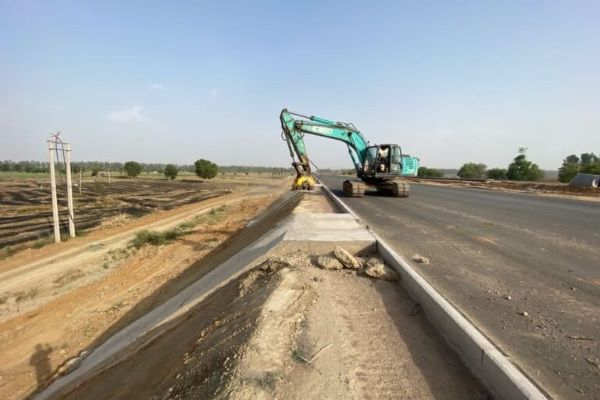
Converting agricultural land for other purposes such as infrastructure, industrial , housing projects amounts to counter productive policy approach, that would inevitably have severe short term and long term adverse implications. It is necessary to keep in view that once an agricultural land is converted to build roads or airports or factories , then the land would become unsuitable for agricultural operations any more . In other words, converting agricultural land for other purposes is irreversible, which would result in loss of land for agricultural operations permanently and in the process, throwing out large number of agricultural workers out of job that would uproot the economy of the millions of families.
Comparative GDP
Those arguing in favour of converting agricultural land for non agriculture purposes, to some extent and selectively , are of the view that the contribution of agricultural sector is less than that of a few other sectors for the growth of national economy.
The contribution of agriculture sector to GDP of Indian economy is 17.94% , as against 54.93% for services sector , 27.13% for industrial sector, 8.75% for construction sector and so on.
Those who advance such arguments for converting agricultural land appear to ignore the significance of the agricultural sector and do not seem to adequately appreciate its importance for the national welfare and social stability. They certainly lack holistic view.
Overwhelming importance of agricultural sector:
In any country food security and self sufficiency in food production is extremely vital and important to ensure social stability.
This is particularly so in a highly populous country like India which has highest population level and highest population density amongst all countries in the world. Though Indian economy is progressing at reasonable pace, still substantial percentage of Indian population remain at below poverty line or at marginal level of poverty line. There is necessity to keep the entire population reasonably well fed, even if section of the population cannot afford to pay for the day today food requirements. Therefore, governments in India are providing free rice , wheat and several other form of subsidy to sustain the families of the people in the marginal level of national economy . This arrangement has to continue for several years to come, until India would attain much higher level of economic standards.
Since agricultural production depends on seasonal factors and excessive rain or drought may affect agricultural production severely at anytime, the precise quantity of agricultural production for future period is difficult to estimate in clear terms, unlike factory outputs. Therefore , maintenance of buffer stock of food products is also vitally necessary to meet the requirement during any lean period in agricultural sector.
Historically, it has been seen repeatedly in different parts of the world that shortage of food products and consequent hardship for the people are the prime contributing factors for riots , unrest and violence in society.
In other words, this implies that agricultural production and agricultural land should not be sacrificed under any circumstances. Converting agricultural land for non agricultural purposes is a calculated risk that India cannot afford.
In recent years, the production of rice, wheat , sugar and a few other agricultural crops have reached high level , leading to sort of surplus production in the country, with the warehouses remaining full. However, it should be kept in view that in some years, in the recent past, agricultural products like sugar has to be imported due to lower production caused by seasonal factors.
The warehousing capacity in India for food products is still not adequate and on several occasions, the agricultural products like rice have been spoiled due to exposure to rain and sun without cover. What is urgently required is that more warehousing capacity should be built at good standards to keep the buffer stock in proper conditions.
Such condition has given a false sense of feeling that Indian agri products like rice wheat etc. are produced more than the national requirements, leading to export to some extent. This scenario has prompted those who advocate converting agricultural land for non agricultural purposes , to think as justification for their stand. Such view does not take into consideration that agricultural production can vary from year to year due to certain reasons beyond one’s control.
Public protest against acquisition of agricultural land :
Every time, government proposes to acquire agricultural land for non agricultural purposes, there have been large scale protest from the farming community. Such move to acquire agricultural land for other purposes remains as unpopular decision, causing huge uncertainty and anxiety for the thousands of agricultural workers all over India.
For example, the proposal to acquire around 3500 acres of agricultural land for constructing a new airport near Chennai city has evoked agitation and protest by the farmers. Similarly, the move to acquire 1000 acres of land near Hosur in Tamil Nadu for setting up industrial estate has also been opposed by the farmers.. There are so many other instances of forced acquisition of agricultural land all over India. The government tries to convince the farmers by offering them compensation amount or rehabilitation measures. The farmers are not impressed , as they have skill only for agricultural operations and such compensation would not provide them life long sustenance
What alternative to agricultural land acquisition ?
India has around 63.85 million hectare of waste land , which remain totally un utilised and which are spread all over the country.
Area of wasteland in India by classification
| Wasteland class | Area (In million hectares) |
| Gulllied/ravinous land | 2.06 |
| Land with/ without scrub | 19.4 |
| Waterlogged/ marshy land | 1.66 |
| Land affected by salinity and alkalinity | 2.04 |
| Shifting cultivation area | 3.51 |
| Degraded notified forest land | 14.07 |
| Degraded pastures/grazing land | 2.6 |
| Degraded land under plantation | 0.58 |
| Sandy area | 5.00 |
| Mining / Industrial wasteland | 0.12 |
| Barren rocky area | 6.46 |
| Steep sloping area | 0.77 |
| Snow covered/ glacial area | 5.58 |
| Total | 63.85 |