



Educational reforms Sri Lanka demands today for a brighter tomorrow
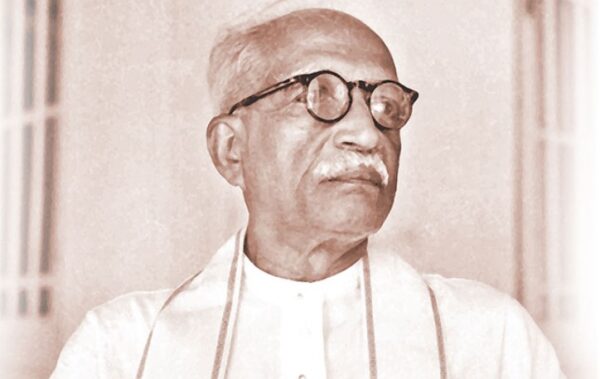
Dr. C.W.W. Kannangara
Source:Island
The 32nd Dr. C. W. W. Kannangara Memorial Lecture titled ‘For a country with a future’: Educational reforms Sri Lanka demands today’ delivered by Prof. Athula Sumathipala, Director, Institute for Research and Development, Sri Lanka and Chairman, National Institute of Fundemental Studies, Hanthana on Oct 13 at the National Institute of Education, Maharagama
Continued From Yesterday
Defining the Kannangara legacy of free education to the Sri Lankan nation
It is an unfair comparison to analyse the central approach of the Kannangara educational reforms apart from the context of socio-economic, political conditions, literacy levels and educational opportunities that existed at the time and to consider these reforms under the current context. The primary strategic approach of the reforms was to increase access to education. At that time, in the 1930’s, over half of school-aged children and around three-quarters of school-aged girls did not attend school.
A large proportion of school-aged children being deprived of access to education can be traced back to multiple factors linked to the socio-economic and political situation in that era. Professor Swarna Jayaweera in the second Kannangara Memorial Lecture delivered on 13 October 1989 entitled ‘Expansion of educational opportunity–an unfinished task’, stated that many of the policies presented by Dr. Kannangara were a reaction to colonial education policies that had upset the regional socio-economic, ethnic and religious balance during their rule that extended for over a century. The dual system of education consisting of elite English schools and vernacular schools providing a minimum level education for the masses in either Sinhala or Tamil, the dominance of Christianity within the educational system, favoured status for the South-Western and Northern regions, anomalous economic growth within the country and the focus of education to meet the needs of the colonial economy, were all issues that Lankan policy makers were obliged to deal with in 1931. The aim of establishing 54 Central Colleges (Madhya Maha Vidyalayas) in rural areas throughout the island during 1940-47 was to pave the way for a more equitable distribution of secondary education facilities, which had been limited to urban English schools until then. His aim was ‘to provide free education from childhood to university’.
The executive committee report Dr. Kannangara presented to the State Council of Ceylon gives a clear indication of the core concept of Kannangara reforms. He said “If this esteemed council is able to state that we were able to transform education from something that was considered a birth right of the elite and the wealthy, to a right available at low cost to every child born in this country in the future, if we are able to transform the view on education as a closed book within a sealed box to an open letter that everyone, without regard to their religion, race, caste, can read, then this council can be prouder than Emperor Augustus who claimed that he found Rome a city of bricks and left it a city of marble.”
 Dr. Kannangara’s biographer, Mr. K.H.M.Sumathipala, who was a former Secretary of the Department of Education, considers the Kannangara reforms as separable into two distinct eras: the first from 1931 to 1939 and the second from 1939 to 1946. The executive committee had limited powers during the first era and it can be termed a period of minor reforms. The conceptually most important of the reforms during this era is the rural education system, known as the Handessa Scheme, which incorporated practical training and work experience useful to rural societies and economies alongside formal education. This era marks the initial stages of the concept of ‘education for development’ mentioned in Professor Warnasuriya’s lecture. The long-term vision Dr. Kannangara had, clearly displays his concern for the welfare of the rural population of the country.
The years 1939 – 1946 mark the second era, during which the rural school development scheme extended to 250 schools. However, Dr. Kannangara was unable to further expand the scheme as initially planned due to the constraints brought about by drought, a malaria epidemic and the second world war.
The Kannangara reforms themselves are well-documented. In brief, as presented by Dr. Upali Sedere in the 27th Memorial lecture in 2016, they are as follows:
• Free education from kindergarten to university
• Establishing three types of schools – secondary, senior, and vocational schools
• Mother tongue as the medium of instruction at Primary level, bilingual or English medium schools for Junior Secondary level and English schools for Senior Secondary and higher education
• Establishing Central Schools with boarding facilities and scholarships to expand access to higher secondary education
• Introducing religious education
• Facilitating adult education for illiterate adults via Night Schools;
• Institutionalizing regular monthly salaries for teachers;
• Adapting curricula and examinations to suit Sri Lankan conditions
• Establishing an autonomous university
These reforms were approved by the State Council and introduced in October 1944. The increase in the number of schools and the number of teachers as well as the processes introduced to facilitate education led to a significant increase in the number of students completing primary and secondary education – four hundred new schools were constructed during 1944-1948 and 1.2 million students enrolled.
The limited time I have is not at all adequate for an in-depth analysis of the broad vision Dr. Kannangara held. I would like to quote and re-emphasise a few facts stated by Mr. R.S.Medagama in the 25th Memorial Lecture. He states that “The Report of the Special Committee on Education in Ceylon (Sessional Paper XX1V- 1943) contains many ideas on education which the subsequent educational reformers have attempted to accomplish.” Unfortunately, soon after the publication of the report, Dr. Kannangara lost the opportunity to spearhead the implementation of the proposed reforms. Dr. Kannangara also points out the important role education has in promoting unity among different races in the report. In the context of a country divided along multiple lines, it is useful to reiterate some facts he pointed out in the report:
“Our fundamental need is to weld the heterogeneous elements of the population into a nation. The existence of peoples of different racial origins, religions and languages is not peculiar to Ceylon, and history shows that it is by no means impossible to develop a national consciousness even among a population as diverse as ours. There is, indeed, a large common element in our cultures already, and under the stimulation of educational development, the notion of national unity has been growing among us. In planning the future of education in Ceylon we should strive to increase the common element and foster the idea of nationhood.”
“The nationalism that we hope to see established depends for its being on tolerance and understanding. Among a people so varied as ours, any other kind would produce not national unity but national disruption. And the tolerance that we ask our own people to apply to each other we would also wish to see applied to other nations. This tolerance is in fact a characteristic of our citizens. The communities of the island have for many years lived in peace and amity. We are anxious that the teaching in the new educational structure may be inspired by the same tolerance and the same desire for peace among men of all nations” (P10 S.P XX1V, 1943).
Mr. Medagama cited another valuable excerpt from this report: “The most useful citizen is he who can face a new problem and find his own solution. The spark of genius is nothing more than the spark of originality”(p.12 S.P XX1V, 1943).
It is almost unbelievable how a country that initiated a free education system with such a great vision ended up with a toxic culture that is the polar opposite of the original vision. We need to find the root causes of the entrenched problems that we currently face, and find sustainable solutions to these issues.
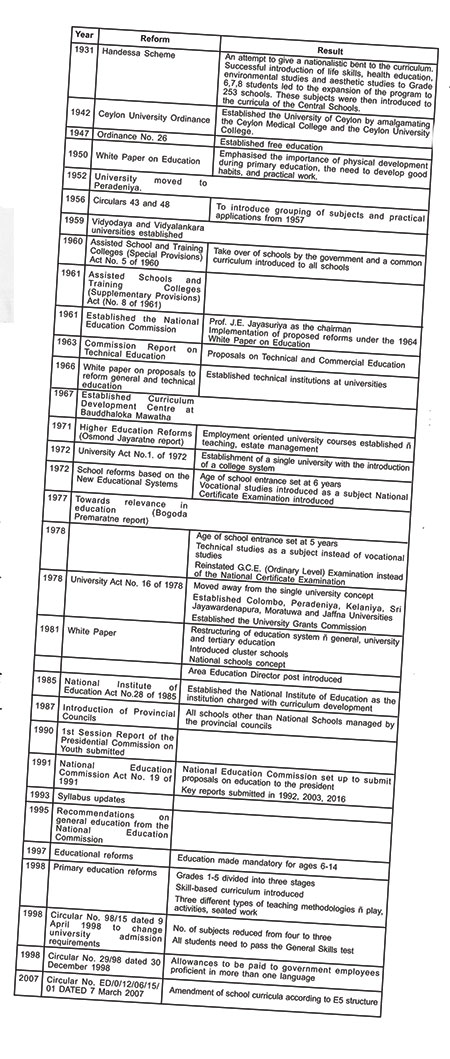
Before I enter into a discussion of these matters I would like to summarise the key reforms undertaken and the landmarks in education since the time of Dr. Kannangara. This summary section is only up to 2007 needs to be updated from 2007 to 2022, but the limited time did not permit the task.
( To be continued)