



Ehipassiko and Sati: Rethinking humanity through Laika and Aloka-by K.K.S Perera

Source:Dailymirror
To fully realise the spirit of Ehipassiko, “come and see” ; one must cultivate and practice sati, since only through mindful awareness can the truth be directly experienced and verified
There is a Pali phrase at the heart of the Buddhist tradition, ‘Ehi passiko,’ meaning simply, ‘come and see.’ It is an invitation, not a command. Rather than asking followers to accept doctrine on faith, the Buddha urged each person to examine the Dhamma through lived experience: To observe, reflect, and verify truth within their own life.
Rene Descartes, working from an entirely different tradition centuries later, arrived at a different starting point: Cogito, ergo sum, “I think, therefore I am.” Where the Buddhist tradition invites us to observe the mind without attachment, Descartes placed the thinking self at the centre of existence. This insight influenced the cognitive sciences and eventually gave rise to therapies like Cognitive Behavioural Therapy, which help people identify and reframe the thought patterns that distort their experience.
This ancient idea feels quietly revolutionary in an age when opinions are broadcast at machine speed, when noise is mistaken for meaning, and when a man’s worth is routinely measured by his salary. It is against this backdrop that the story of Venerable Bhikkhu Paññākāra, born Thích Tuệ Nhân in Vietnam, carries such unusual weight.
From Motorola to monasticism
Paññākāra’s early life was shaped by hardship. Born into a poor family in Vietnam, he eventually made his way to the United States in 1997, where he worked with discipline and ambition, rising to a senior engineering position at Motorola. By conventional measures, he had succeeded. He had financial stability, professional status, and the comfort that accompanies both. And yet, something essential was absent.
In 2007, after years of inner searching, he made a decision that confounded many who knew him: he walked away from his career and was ordained as a Buddhist monk. No severance package could compensate for what he had already found, that material achievement, however impressive, does not guarantee peace of mind. His message since has been straightforward: true happiness is not assembled from the outside. It must be cultivated within.
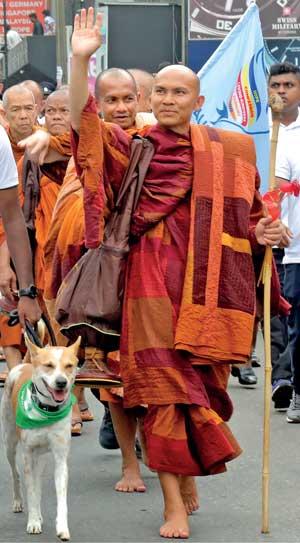
That conviction later found its most visible expression in a 2,300-mile peace walk across the United States, undertaken not as a protest, not as a performance, but as a form of moving meditation. Step by step, in silence, through ice-cold mornings and blazing afternoons, through rain and wind, sometimes sleeping under trees or open skies, Paññākāra walked. Each step was a prayer. Each breath, a practice. He did not carry a microphone. He issued no press releases. In a world where everyone is competing to be heard, this monk moved hearts with nothing but silence and steady forward motion.
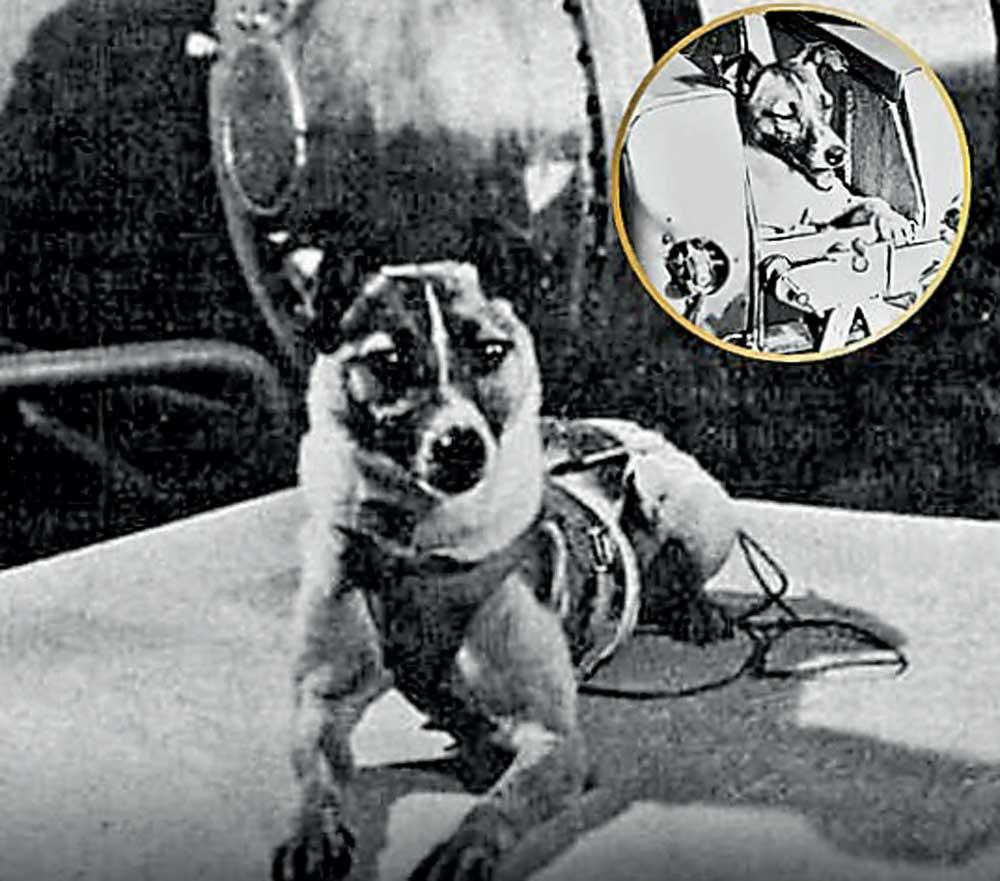
Laika, who travelled to the orbit on Sputnik 2 and never returned
What is remarkable is how consistently this teaching has been set aside, by individuals and by societies alike. Social disparity, unfair thinking, the accumulation of private misery, none of these are inventions of the modern age. They existed then as they exist now, rooted in the same failure to take these principles wholeheartedly to heart.
The mind, the Buddha observed, cannot be controlled from outside. Laws can constrain behaviour. Institutions can shape circumstance. But the transformation that actually matters, the one that ends suffering, is internal. It begins with mindfulness. Modern psychology has found a productive tension between these two approaches. Thinking shapes our interpretation of reality; mindfulness allows us to step back from that interpretation without being consumed by it.
Among the images to emerge from Paññākāra’s peace walk, one became unexpectedly public: a stray dog named Aloka, who took to walking alongside the monks for stretches of the journey. The dog was not recruited. No leash was involved. Aloka simply appeared and kept pace, a spontaneous companion on a journey defined by voluntary presence.
The symbolism was not lost on observers. Here was an animal, free and uncoerced, choosing to walk within the orbit of a practice built on compassion and non-attachment. Aloka came to represent something quietly profound: the possibility of harmony between human beings and other living creatures, grounded not in control but in coexistence.
Laika and Aloka
In this column two weeks ago we discussed the role of Laika, the stray dog plucked from the streets of Moscow in 1957 and placed aboard Sputnik 2, launched into orbit with no plan for her return. She did not come back. Her survival was never truly part of the mission; that truth was obscured by official statements at the time and only acknowledged decades later. Laika died alone in space, her life sacrificed to the urgency of the Cold War and the hunger for technological prestige. Compassion, it turns out, is most easily applied to dogs with names and stories.
Laika and Aloka: two stray dogs, two entirely different encounters with human intention. One was instrumentalised for the ambitions of a superpower, her life weighed against the value of a political milestone. The other walked freely alongside a monk in silence, becoming a symbol not of conquest but of compassionate coexistence.
The contrast is not merely sentimental. It raises a philosophical question that remains unresolved: when human beings pursue progress — scientific, political, economic — what ethical obligations do they carry toward the other living creatures caught in the wake of that pursuit?
The walk continues
Ven. Paññākāra’s peace walk is, at its core, a reminder addressed to practising Buddhists: examine yourself, return to the principles, live with humility and awareness in the middle of a complex, multicultural, often chaotic modern world. It is not a sermon. It is a demonstration.
His walk in silence achieved something that conferences and commentaries rarely manage. It made people stop and think, not about what he was saying, but about what they themselves were doing, and why.
Ehipassiko — Come and see.
Not in a lecture hall. Not in a newspaper column. Not in a Buddhist channel, In the quiet of your own experience, one step at a time.
In Buddhism, the term sati (mindfulness) has a deeper and more nuanced meaning than is commonly understood. Scholars such as Robert Sharf note that sati originally meant “to remember” or “to bear in mind,” reflecting its roots in earlier traditions of recollecting teachings. It was not merely passive awareness, but an active process of keeping the Dhamma in mind. Mindfulness was seen as a path to liberation by closely observing sensory experience, thereby preventing the arising of craving and emotional reactions that lead to continued cycles of rebirth. As discussed by Paul Williams, this constant observation interrupts the chain of desire and suffering.
Although Nyanaponika Thera described sati as “bare attention,” Buddhist practice extends further to include samprajanya (clear comprehension) and apramāda (vigilance), highlighting mindfulness as an active, disciplined awareness. However, to fully realise the spirit of Ehipassiko, “come and see” ; one must cultivate and practice sati, since only through mindful awareness can the truth be directly experienced and verified.