Exploring the Vibrant Afro-Sri Lankan Community By Vimukthi Karunaratne
Source:Pulse
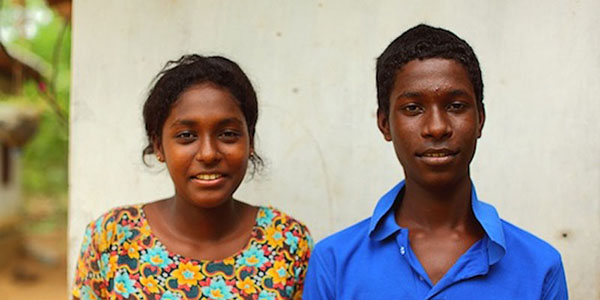
A marginalised community that has long been neglected, the ‘Kaffirs’, are part of a culture that is facing the imminent threat of assimilation. Despite their significant presence throughout the past 500 years of the island’s history, there has not yet been an adequate written history of these people.
A “forgotten minority”, are the words used by Dr Shihan de Silva Jayasuriya to describe the fading community of Kaffirs. Dr. Shihan de Silva Jayasuriya is a Senior Fellow at the Institute of Commonwealth Studies (University of London) and a member of the UNESCO International Scientific Committee (Paris) and has studied in depth this ethnic minority. According to her, they are at the highest risk of becoming extinct.
“There are almost no books that talk about Kaffirs more than a slight mention in one or two sentences in some histories about Sri Lanka. Since they are still an ‘unpopular’ and, to a certain extent, an ‘unimportant’ community, because they are not indigenous to Sri Lanka, no efforts have been taken to preserve them by the central authority,” has stated Anuththaradevi Widyalankara, a senior lecturer at the University of Colombo.
‘Kaffir’ is a term this minority has inherited from their colonial past, and is believed by some to have been derived from the Arabic word ‘kafir’, which means ‘non-believer’. In Sri Lanka however, the term carries no derogatory connotations and is merely an ethnic label.
Who really are these ‘Kaffirs’?
They are the descendants of the Bantu tribe belonging to the Great Lakes region of Africa. Initially captured and sold as slaves by Arab tradesmen, they were first brought to our island by the Portuguese for military and domestic purposes.
The Kaffirs spoke a distinctive Portuguese-based Creole and once possessed a vibrant culture replete with music and dance. Baila music and dance, to which we have grown so accustomed and perceive as uniquely Sri Lankan, in fact, finds its origins in the Kaffir culture.
Many a generation later, today, the Kaffir community has become seamlessly integrated with the Sri Lankan community; they have intermarried with the local ethnicities, they speak in the vernacular, and their culture has become absorbed by the dominant cultures. The question remains, what would this mean for the future of the Kaffirs? Would this colourful ethnic minority soon be confined to the annals of history?
History
In ‘Discovering Ceylon’, R L Brohier chronicles how African slaves were first brought to the island by the Portuguese from Mozambique via Goa in the 16th century. The literature published by Dr Jayasuriya on the subject substantiates that they were thus brought to fight for the Portuguese against the Sri Lankan kings.
As the Portuguese gained control over the coastal provinces of Ceylon, about 3,000 African slaves were employed for various duties in those regions. At the time the Dutch arrived on the island, history narrates that Kaffirs were working in cinnamon plantations along the Southern coast.
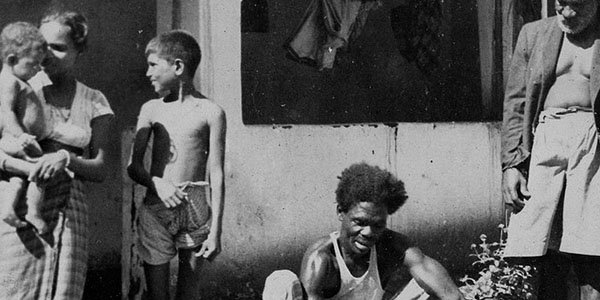
Defeated by the Dutch, the Portuguese era in Ceylon drew to a close in 1658, following which the Dutch are said to have brought about 5,000 Africans to the country, who were employed as soldiers, plantation workers, construction workers and domestic servants. As recorded by one Dutch governor, the Colombo Dutch fortress was built with the help of about 4,000 slave workers.
A majority of the Kaffirs who had served the Portuguese moved on to serve the Dutch, while some pursued employment opportunities in the plantation and trade sectors. Some are even believed to have found a safe haven in the Kandyan kingdom away from the Portuguese and the Dutch, who then joined the native armies of the island and fought alongside them against the foreign colonists.
The British colonists, who established their control over the island in 1796 defeating the Dutch, followed suit of their predecessors and continued to use Kaffirs in military service. During the 18th century, the British are said to have brought 6,000 African slaves to Sri Lanka to reinforce their ‘Kaffir Regiments’.
If such a vast number of Kaffirs resided in Sri Lanka in the years of the past, how has their population dwindled to a community of about maybe 1,000 members at present?
Historically, two integral aspects have contributed to this decline:
- Battles in Mulleriyawa (1562), Randeniwela (1630) and Gannoruwa (1638), among others, during the Portuguese era, are believed to have taken a heavy toll on the early Kaffir population that arrived on the island. Then the continual use of Kaffirs as cannon fodder by three waves of colonisers was a key factor that diminished the Kaffir population.
- With the enactment of the Slavery Abolishing Act in 1845, it is recorded that about 9,000 African slaves in the country were granted freedom. Following which, a considerable percentage of the Kaffir population may have left Sri Lanka.
Struggles and revolts
During the colonial period, a few Kaffirs may surely have reached high ranks owing to their sought-after military skills. But, for a great many of them, this period of servitude was one imbued with oppression and suffering.
The historian P E Pieris, in his book ‘Ceylon and the Portuguese’, writes of the cruel treatment of the Kaffirs by their masters. Anuththaradevi Widyalankara, of the University of Colombo, too elucidates that the Kaffirs were subjected to harsh treatment. In her words, “in some travel documents from the 17th century, it is reported how the Kaffirs often attempted to run away and hide themselves amidst the Sinhalese. I call the story of Ceylon Kaffirs a tragedy because they were severely suppressed by their colonial rulers.”
Strong-willed and proud, it is recorded that the Kaffirs often revolted against their oppressors. One account even chronicles the murder of a Dutch Officer, Barrant Vandor Steron, and his wife, by the Kaffirs. Though many consider Baila music to be happy, dance music, during that period, it is said that their music was incorporated as a tool to raise their voice against the colonial masters.
The reports of Isaac Rumph, a Dutch governor, illuminate that the Dutch were merciless in subduing the rioting slaves. Especially following the murder of the Dutch officer, the colonists adopted ruthless punishments to which the Kaffir community was subjected.
Furthermore, attributed to the rebellious nature of the Kaffirs, some believe that the Kaffir workers who were employed to build the Colombo Dutch fort were kept segregated from the populace during the non-working hours, in an area of Colombo known even today as the ‘Slave Island’. However, some argue that the historical facts reveal that ‘Slave Island’ was instead the area used to confine the sick and elderly Kaffirs.
Even after the departure of the colonists, the struggles of the Kaffirs saw no end, as they then had to face the evolving socio-political conditions of independent Sri Lanka.
Modern-day Kaffirs
According to a community organiser in Puttalam quoted in an article by Maura O’Connor, at present, there are about 200 Kaffir families in the district of Puttalam, and several more families in Trincomalee and Batticaloa. Though infinitesimal in comparison, people of Kaffir origin could also be found scattered around other parts of the island, especially those areas that were occupied by the Portuguese.
Subsequent to the abolition of slavery, Kaffirs who did not have the means or a home to return to, remained in the country and sought occupations under the British administration. In the years following the independence of Sri Lanka, their community adopted Chena cultivation, while a few managed to find employment in hospitals and government offices. Some also still work as domestic servants and labourers, for nominal wages.
During this period, they also intermarried with the Sinhalese, Tamils, Muslims and the Burghers, and became fused with the very fabric of the local society. This has had both a positive and negative impact on the Kaffir community. While cross-cultural marriages may certainly have helped them circumvent being treated as outsiders, it has been at the cost of diluting their African – Portuguese heritage and culture. Several generations forward since intermarrying, their culture has become faint and their original identity almost indistinguishable.
There is yet hope, as a few among them are spirited and perseverant to nurture and reignite the flame that is their culture, through their music and dance traditions, known as ‘Manja’.
“I love my community,” says Sherine Alexander, a 50-year-old Kaffir lady. “Our musical group is called the ‘Ceylon African Manja’. For the last 30 years, we have been going around the country performing at various shows. Although I would prefer to see my language stay alive, I’m starting to fear for it in the current socio-economic conditions.”
A culture of dance and music
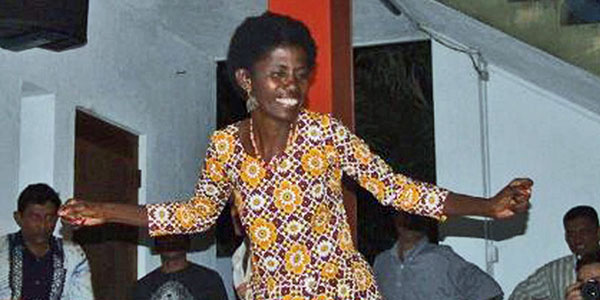
Akin to many an African culture, the Kaffir culture stands on the foundations of colourful dance and music. It comprises three distinct styles; Kaffrinha, Baila and Manja, all of which have helped shape the overarching contemporary national culture.
Upbeat and vivacious, ‘Kaffrinha’ is a portrayal of the influence of the Portuguese culture on the Kaffirs, and the shared identity between the Sri Lankan Burgher and Kaffir communities.
‘Baila’, which means ‘dance’ in Portuguese and Spanish, has its roots in African folk music and incorporates European instruments and rhythms. Though widely considered to be happy music, during the period in which they were oppressed as slaves, Baila served as rebel music.
The most intriguing of the three styles is ‘Manja’, a form of dance and music more exclusive to the Kaffirs. The term is derived from the Portuguese ‘manha’, which translates to ‘little marches’. Sung in a Sri Lankan Portuguese Creole that has now become almost extinct, these songs consist of simple and short lyrics that are repeated. Beginning with a slow beat, these songs progressively build up their pace reaching a crescendo of shouting, clapping and drumming.
One Manja song is:
Make me a Kite Mum
Ayo lumara – sthrailatha thiyanthe
Minja lumara – sthrailatha thiyanthe
Sarungalatha pidmenthu
Mama osa gasamenthu
(Dear Mother! Make me a kite,
To fly it into the wedding-like sky where the beautiful moon and stars shine,
And where the glittering rainbow appears
Dear Mother! Make me a kite)
Unbeknown to you, while listening to any one of these genres, you may find yourself tapping your foot or your fingers. Before you find time for conscious thought, you may even find yourself on your feet, dancing away, in a moment of complete joy. Such is the power of the music they have gifted our nation.
The recent surge in curiosity and enthusiasm about Kaffir dance and music has opened new avenues for the voices of their community to be heard, and for their culture, heritage and history to be more deeply understood and celebrated by the wider Sri Lankan community.
We hope the next time you sing and dance to a song of Baila, or commute through Slave Island, you would remember that you are visiting a past long forgotten.
Thumbnail image from https://english.mirrorarts.lk/chat/813-sri-lankan-african