HEART ATTACK AND CARDIAC ARREST – By Dr. Gnana Sankaralingam
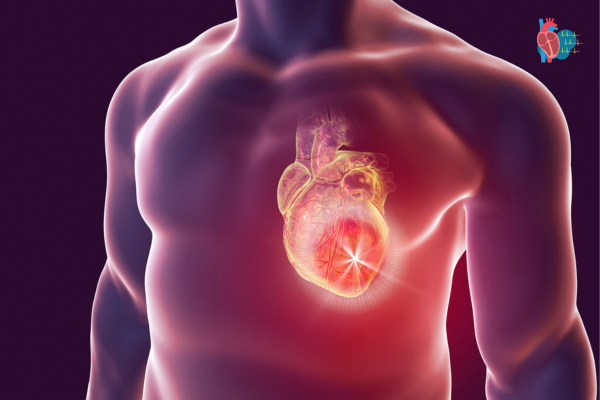
 Heart attack and Cardiac arrest are related but different as all heart attacks do not result in cardiac arrests and many cardiac arrests are not caused by heart attacks. Heart attack is said to have effected when a major artery supplying heart muscle is blocked ending in death of the muscles (Myocardial Infarction). Cardiac arrest is said to have occurred when the heart goes into a state losing its capacity to pump blood to rest of the body.
Victim of heart attack is often conscious, sweating, nauseous and anxious but victim of cardiac arrest will be unconscious and not breathing. In a person who had fallen to the ground clutching his chest who is conscious and responding to commands or fainted but responding to painful stimuli, he had not suffered cardiac arrest. If a person suffers a cardiac arrest and is treated quickly with cardio-pulmonary resuscitation (CPR) and/or defibrillation, he could survive. When a person dies within a few minutes of collapsing, it is almost certain that he had suffered cardiac arrest. While survival rate following a heart attack is high, only 10% of them who incur cardiac arrest outside a hospital have chance to survive.
To understand heart attack, brief knowledge of blood supply to heart muscles is helpful. Heart sends out blood to the body by pumping action of left ventricle through the aorta. There is a valve between the two to prevent blood sent out tracking back. Just above the valve are openings one on the right and the other on the left, which are respectively the origins of right and left coronary arteries. Left coronary artery divides into circumflex artery supplying lateral part of left ventricle and left anteriror descending artery supplying rest of the ventricle. Right coronary artery supplies right ventricle, inferiror surface of the heart and conducting tissues which transmit impulses to make the heart to contract. Thus function of both mechanical and electrical components deem necessary to avoid problems.
Coronary arteries supplying blood to heart muscles could be blocked at single or multiple sites which deprive oxygen to muscles called ischaemia, and if not relieved could lead to death of muscles called infarction. Coronary artery disease resulting in blockage may be brought about by unhealthy diet, lack of exercise, smoking, high blood pressure, diabetes or stress. High cholesterol level could lead to building up of plaques on the walls obstructing the lumen. Ageing process may also lead to calcium deposits on walls, making them narrow. There could be sudden spasm of one or more coronary arteries presenting similar to heart attack called Prinzmetal’s angina caused by electrolyte changes which could spontaneously resolve or subside with treatment using calcium channel blockers or last longer.
Common presentation is dull central chest pain felt like someone pressing on the chest which radiates to arm, jaw, neck or back and is accompanied by sweating, nausea or vomiting, feeling faint, difficulty in breathing or wheezing. Infarcts involving inferior part of the heart may present as indigestion, that are often missed. In diabetics and elderly, pain may be muted leading to silent heart attacks. Elderly could also present with breathlessness due to heart failure, palpitations due to faulty heart beat, confusion or collapse.
Heart attack is categorised according to seriousness as stable angina, unstable angina and myocardial infarction. Stable angina has a small window, where pain should last for less than 20 minutes, relieved by either resting or drugs and not recurring within next 24 hours. Any pain lasting for more than 20 minutes even if relieved by resting or drugs, or pain occuring in subsequent episode which is different from previous one in terms of duration or intensity is deemed as unstable angina, which is considered as impending heart attack. First episode of chest pain should be treated as unstable one until otherwise proved.
In the hospital, electrocardiograph (ECG) is done which will show changes as to whether the person had a heart attack or has ischemic changes. Unfortunately 30% of those presenting with heart attack will have normal ECG. From the ECG, heart attack is categorised into different types: those with ST segment elevation (STEMI) or those without (non STEMI). When heart muscles die, they release substances into blood such as Troponins, which level is measured in the blood of the patient. Those with unstable angina or myocardial infarction are subjected to coronay angioplasty, where a catheter is inserted through the artery in the wrist into coronary arteries and dye is injected to demonstrate blocks. Stents are placed into the blocked space to releive obstruction to let flow of blood to affected tissues.
Cardiac arrest following a heart attack could result either due to conduction of impulses causing heart to beat fast erratically (electrical) or due to massive death of muscles to make the heart stop completely (mechanical). In both cases, heart cannot conduct blood effectively to the brain and the persons lose consciousness immediately and stop breathing. Cardiac arrest in a healthy person can be caused by chest traumas, asphyxia, electric shock, electrolyte changes and drug overdose. Types of cardiac arrest are: Asystole where there is no electrical or mechanical activity with straight line in ECG, and Ventricular Fibrillation (VF) where the heart quivers resulting in irreugular beats of more than 300 per min. It is VF that is amenable to defibrillation and not Asystole. In the field where there is no ECG facility, one is permitted to give a shock to both categories, but in hospital Asystole has to be converted to VF using cardio-pulmonary resuscitation (CPR) and drugs and then defibrillated. Pulseless ventricular tachycardia (VT) mimics cardiac arrest, where there is normal electrical activity which is unable to connect up with mechanical function (electro-mechanical dissociaition), resulting in circulatory failure, as the heart is unable to pump blood effectively.
When a person is suspected to have suffered cardiac arrest on the field set up, unconscious and not breathing, check the pulse. If there was no pulse, defibrillate. If there is pulse, check the blood pressure. If there was no blood pressure, defibrillate. If both palpable pulse and recordable blood pressure are present, do not defibrillate. Do CPR by pressing the chest 100 to 120 times a minute and in between blowing into the lungs at 10 to 15 : 1 ratio. Keep it going till para-medics arrive. In developed countries, there are several public places having a defibrillator. Cardiac arrest can happen to people who did not know that they have heart problem, whilst heart attack commonly occurs in those with coronary arterial disease. Prompt and effective first aid will determine the outcome of these conditions.