News & Community eLanka

eLanka

Saturday, 11 Apr 2026
  • Home
  • Read History
  • Articles
    • eLanka Journalists
  • Events
  • Useful links
    • Obituaries
    • Seeking to Contact
    • eLanka Newsletters
    • Weekly Events and Advertisements
    • eLanka Testimonials
    • Sri Lanka Newspapers
    • Sri Lanka TV LIVE
    • Sri Lanka Radio
    • eLanka Recepies
  • Gallery
  • Contact
Newsletter
Sri lankan news
  • eLanka Weddings
  • Property
  • eLanka Shop
  • Business Directory
eLankaeLanka
Font ResizerAa
Search
  • Home
  • Read History
  • Articles
    • eLanka Journalists
  • Events
  • Useful links
    • Obituaries
    • Seeking to Contact
    • eLanka Newsletters
    • Weekly Events and Advertisements
    • eLanka Testimonials
    • Sri Lanka Newspapers
    • Sri Lanka TV LIVE
    • Sri Lanka Radio
    • eLanka Recepies
  • Gallery
  • Contact
Follow US
© 2005 – 2026 eLanka Pty Ltd. All Rights Reserved.
Home » Goodnews Stories Srilankan Expats » Articles » Maamakachak Kondamai – By Randika Jayakody & Jerome Perera
Articles

Maamakachak Kondamai – By Randika Jayakody & Jerome Perera

eLanka admin
Last updated: February 1, 2024 5:10 pm
By
eLanka admin
ByeLanka admin
Follow:
Share
4 Min Read
SHARE
Views: 0

Maamakachak Kondamai – By Randika Jayakody & Jerome Perera

Source : Qld Sri Lankan Newsletter – Dæhæna – February 2024

For this article were have decided to write in a little depth about the oldest language in Sri Lanka. This is the languages of the Wanniyala Aeththo, whose communities form the oldest continuing people in Sri Lanka and one of the oldest continuing cultures on earth.

The Wanniyala Aeththo language has no root language and isnot descended from Sanskrit, Dravidian or other established language groupings. I have been learning this beautiful oral language and wanted to share this knowledge with the readers in an applicable way. As this is an oral language, it does not exist in a written form as yet, although some scientific articles exist.

Animate objects suffixed “Aeththo”. Therefore a person is an Aeththa. Animals are also animate objects so a rabbit would be a Bokki-la Aeththa.

Parents are known as Ammila Aeththo and Appila Aeththo. Younger individuals are referred to as Kakula (male) or Kakuli (female).

Readers will notice that the following animal names bear little resemblance to Sinhala, which attests to the uniqueness of the indigenous languages of Sri Lanka. Leopards are Pol-lejja-la aeththo, dogs are Kukkila-aeththo, wild boars are Hotcha digala-aeththo, and deer Kankunala-aeththo. The various types of bees and wasps are known collectively as Macchila-aeththo and honey is known by the endearing term Kandaaraneege Diya Thana.

Inanimate objects are suffixed “Pojja”: Therefore a house is a Rukul-pojja. Trees are referred to as Rukam-pojja and axes are referred to as Gal-raccha. Cutting or severing is described as Pata-harinawa.

Mechanical and technological objects are suffixed of “Yamake”. For example a radio would be Katha damana yamake. Here, readers will notice the introduction of Sinhala words to describe concepts not existing in the Wanniyala Aeththo language. To make an object, obtain a resource or evoke a sentiment is to Mandu-keranna. So to obtain and eat food is kavilaanata mandu keranna. To be happy is sathutu thana mandu wenawa.

The transpiring of an event is known as mangachanawa. So to walk in the forest is kale mangachanna. Directions are denoted by the combination of the direction and the suffix “thana”. For instance something falling from the sky is described as uda thanin mangachanawa.

To denote possession or the passage of time and interactions, the Wanniyala Aeththo utilise words such as thibauwa and annomangachanawa although I am not yet fluent enough to translate these concept into English.

There exist no words for money or numbers, due to the irrelevance of these concepts to traditional life. So money is described in terms of the colour of the note using Sinhala loanwords like dam-kola-pojja for 20 rupees (purple leaf) or nilkola-pojja (blue leaf) for 50 rupee notes. Now let’s put all this knowledge together into a sentence. Me aththa kala-pojje mangachana kaala-machche, gal-raccen rukam-pojjak patahariya.

Rukam-pojje uda thana, me aththa kandaranige diyathana kavilaanata mandu kera.

This translates to: When I walked through a forest, I cut a tree using my axe. I obtained honey from a beehive at the crown of this tree.

As you can see, the Wanniyala Aeththo language is evocatively poetic in its description of natural phenomena as compared to English and Sinhala.

I hope more Sri Lankans learn this beautiful language and help preserve it for future generations.
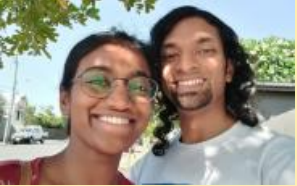
Randika Jayakody & Jerome Perera
Among Randika and Jerome’s many interests is a deep passion to understand Sri Lankan history and culture.
TAGGED:Sri LankaThe Wanniyala Aeththo language
Share This Article
Facebook Whatsapp Whatsapp LinkedIn Email Copy Link Print
Previous Article International Mother Language Day -eLanka International Mother Language Day: 21 February
Next Article The Chosen-eLanka Watch Episodes 1 and 2 of Season 4 on the Big Screen!
FacebookLike
YoutubeSubscribe
LinkedInFollow
Most Read
10 Pictures With Fascinating Stories Behind Them!

“A PICTURE SPEAKS A 1000 WORDS” – By Des Kelly

Look past your thoughts so you may drink the pure nectar of this moment

A Life Hack for when we’re Burnt Out & Broken Down – By Uma Panch

Narration of the History of our Proud Ancestral (Orang Jawa) Heritage. by Noor R. Rahim

eLanka Weddings

eLanka Marriage Proposals

Noel News

Noel News

Noel News

Noel News- By Noel Whittaker

Appreciation: Eileen Mary Sibelle De Silva

K.K.S. Cement Factory

Dr.Harold Gunatillake’s 90th Birthday party

Sri Lanka's women's cricket squad in Melbourne

Cricket: Sri Lanka’s women’s squad in Melbourne

- Advertisement -
Ad image
Related News
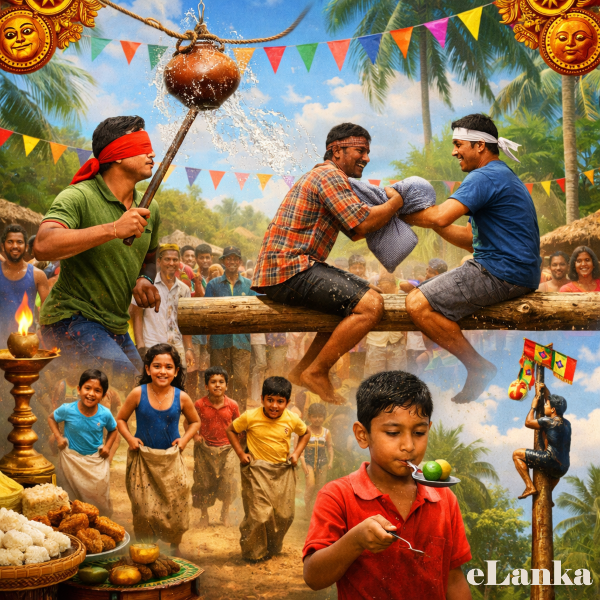
Aurudu Jana Krida – The Joy of Traditional New Year Games-by Kalani-eLanka
Articles Kalani Prabodha

Aurudu Jana Krida – The Joy of Traditional New Year Games-by Kalani-eLanka

AMARA RANATHUNGA
Articles Sunil Thenabadu

REMINISCING LEGENDARY MUSIC LEGEND , CHANCELLOR UNI OF VIUAL AND PERFORMING ARTS Dr AMARA RANATHUNGA By Sunil Thenabadu in Brisbane

Sri Lanka Association of NSW 03
Articles

Sri Lanka Association of NSW-Proudly Hosting Sri Lankan Paralympic Champions

Windies Cricketers-eLanka
Articles

Channa Gunasekera Featured by CRICKETIQUE in 2012

Ceasefire-Dr Harold Gunatillake
Articles Dr Harold Gunatillake

Ceasefire-Dr Harold Gunatillake

  • Quick Links:
  • Articles
  • DESMOND KELLY
  • Dr Harold Gunatillake
  • English Videos
  • Sri Lanka
  • Sinhala Videos
  • eLanka Newsletters
  • Obituaries
  • Sunil Thenabadu
  • Dr. Harold Gunatillake
  • Tamil Videos
  • Sinhala Movies
  • Trevine Rodrigo
  • Photos
  • eLanka Newsletter

eLanka

Your Trusted Source for News & Community Stories: Stay connected with reliable updates, inspiring features, and breaking news. From politics and technology to culture, lifestyle, and events, eLanka brings you stories that matter — keeping you informed, engaged, and connected 24/7.
Kerrie road, Oatlands , NSW 2117 , Australia.
Email : info@eLanka.com.au / rasangivjes@gmail.com.
WhatsApp : +61402905275 / +94775882546
  • About eLanka
  • Terms & Conditions

Disclaimer:
eLanka is committed to sharing positive and community-focused stories. We do not publish or endorse political, religious, or ethnic viewpoints. The content published on eLanka, including articles and newsletters, reflects the opinions and views of the respective authors and not those of eLanka. eLanka accepts no responsibility or liability for the accuracy, completeness, or consequences of any content provided by contributors.

(c) 2005 – 2025 eLanka Pty Ltd. All Rights Reserved.