



Remembering Bernard Swan-by Matthew Cawood
Source:Pulsenews
The founder of Peace Studies at UNE, Dr Bernard Swan, has passed away. His work and influence is remembered here by Dr DB Subedi with Dr Marty Branagan.
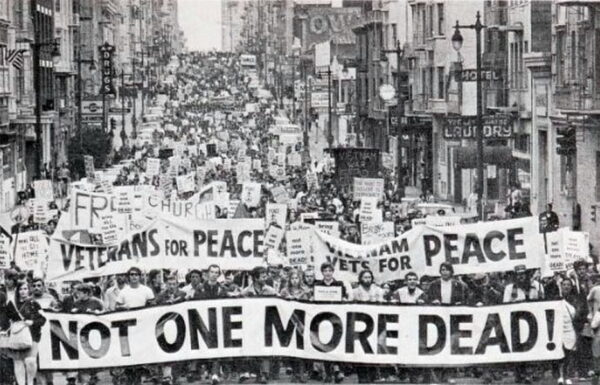
Credit for the initiation of Peace Studies at the UNE goes to Dr. Bernard Swan, a Geographer who had specialised in Geomorphology and issues of underdevelopment in South and Southeast Asia, but who later found himself drawn to the academic study and teaching of Peace. Bernard Swan whose prior specialisations were in Geography (Universities of Ceylon, London and Sussex) joined the Department of Geography at the UNE in 1971. It was the period when the world’s super powers were engaged in escalating the Cold War, the nuclear arms race and nuclear deterrence, and intensifying brinkmanship, which earlier had led to the Cuban Missile Crisis and the imminent threat of nuclear war. Looming nuclear holocaust and the Vietnam War had witnessed the growth of the Peace Movement and much intellectual debate about peace. However, the response of academe was limited. In the words of Bernard Swan, ” In the late 1970s it struck me as surprising that the subject of Peace was not examined as such in secular academic institutions”.
Bernard Swan realised that academics and universities had an important role to play, seeking answers to the question, “What is Peace? What are its paths?” So he wrote a letter to the National Times of Australia (25 May 1980) entitled “Needed: the Academic Study of Peace” where he warned:
…Academia, the world over, has this essential task ahead, a responsibility it must not shirk. If we continue, mesmerised by threat of doomsday, or ostrich-like assume that if problems are ignored long enough they will…disappear, we could expect to find ourselves one day hapless pawns in some hellish chess. Academia, please, no longer stand aloof.
His plea was well received by the media, the public and academics, who supported the idea of peace. Bernard Swan checked widely to ascertain which universities and academic communities within the British Commonwealth of Nations were conducting teaching and research on Peace. He found four: Bradford and Lancaster in the UK, Waterloo in Canada, and the Gandhian Institute of Peace and Conflict Studies in Allahabad, India, were all engaged in peace related research and teaching in the late 1970s. But South of the Tropic of Cancer, none of the academic institutions had undertaken the study of peace as such. Of course, there were many centres for Strategic Studies, War Studies, International Studies, and so on, but the study of Peace was deemed to be too nebulous, too wide in its scope, and indeed too threatening to the National Interest for secular universities to undertake it. According to Bernard Swan, “as for the peace spoken of in religion that was a pie in the sky.”
Nonetheless, he decided otherwise and decided to face the challenges ahead. The first was to ascertain whether any of his colleagues within the Department of Geography would be interested in getting involved in a programme of Peace Studies. The next was to decide on the content of such a programme. The third was to avoid asking for money in an environment where there was acute competition for limited financial resources. The fourth would be to get the go-ahead from the top decision-makers of the University who were committed to ensuring high standards of teaching and to preserving existing academic structures (Faculties, Departments and insistence on students satisfying prerequisites in order to follow particular courses): to obtain the approval of the Academic Advisory Committee which whetted applications to introduce new courses, and of the Academic Board on which sat the Vice-Chancellor and Pro-Vice-Chancellor.
While many applauded the idea of Peace Studies, few could make a commitment to it. There was also the question of who could and would make a commitment to a course with the word ‘peace’ in it, as a course about peace was assumed to be likely to have leftist sympathies.
Bernard Swan proceeded in the following way. He offered to put on a unit entitled “Geography of Peace and Conflict” in addition to his existing workload. After considerable debate, he received the green light from within the Department of Geography, but the Academic Advisory Committee and the Academic Board turned down his proposal.
Good news, however, was that within the Faculty of Arts, a Special Reading Course could be made available to fourth year students (postgraduates) reading for an Honours degree, without formal approval from the Academic Board. Bernard Swan quickly capitalised on this. As a result, in 1982 he offered the unit “Geography of Peace and Conflict” as a Special Reading Course in the Faculty of Arts. A condition imposed on him was that the course should be given no formal publicity: advertisement would only be by word of mouth. The condition did not preclude him starting the unit. This formally marked the beginnings of Peace Studies at the UNE in 1982.
The next undertaking was the introduction of a Bachelor of Peace Studies degree. Bernard Swan’s idea here was to have a set of compulsory core courses, and in addition optional subsidiary courses drawn from several departments and faculties, from whose prerequisites (courses as laid down in the University Calendar) those reading for a BA in Peace Studies would be exempt. Contributors to the core of Peace Studies in its formative stage were Dr. Geoff Harris from the Faculty of Economics (he is currently a professor and head of the Peacebuilding Programme at Durban University of Technology), Dr. Toh Swee Hin (currently professor of Peace Studies at the UN Mandated University of Peace in Costa Rica) and Dr. Max Lawson (both were from the Faculty of Education). Geoff Harris offered a unit titled “Economics of Developing Countries”. Toh Swee Hin taught a unit, “Peace Education” and Max Lawson offered a unit “Peacekeeping and Conflict Resolution”. Later other faculty members also contributed. For instance Howard Brasted from the department of History (currently professor in the School of Humanities at UNE) offered a unit on Gandhi while Raja Jayaraman offered a unit on the ‘sociology of non-violence’. Another unit, offered in History, was titled ‘The Swinging Sixties’.
Thus, with the combined offerings of different departments, Peace Studies at UNE became highly interdisciplinary, straddling diverse departments and faculties. Thus commenced the opportunity for those who wished to read towards a Bachelor of Arts (BA) majoring in Peace Studies. This was from around the mid-1980s within the Faculty of Arts. The structure of the university at that time was based on departments. Therefore, different departments had to waive prerequisites for students who wanted to join BA with a Peace Studies major. This they graciously did.
The next step was to have Peace Studies available for students reading for higher degrees (Master of Letters, and doctoral degrees). Bernard Swan put this proposal before the Faculty of Arts in 1991, which accepted it. He then retired, but retained his commitment to offer the unit “Geographies of Peace” to M. Litt. students. The M. Litt. was a two year programme, consisting of a core course, supplementary courses in the first year, and a written thesis on a topic approved by an appointed supervisor in the second year and attendance at a residential school.
Though progress was made in establishing Peace Studies at UNE, in mid 1980s it suffered a setback. For financial reasons the university asked the department of Geography to get rid of courses which were not part and parcel of essential teaching in geography. In response, the then Vice-Chancellor, in conjunction with the Head of Department of Geography, abolished the “Geography of Peace and Conflict” course. In the meantime, the Faculty of Arts was changing, in terms of its business model as well as its approach to the field of studies. While the Faculty was more interested in generating money and resources, it was also more interested to include subjects from the field of ‘Liberal Studies’. As a consequence, the BA degree with a single major in Peace Studies was also dropped.
In early 1991, Bernard Swan was preparing to retire (in stages). He went part-time, relinquishing his commitment to Geography but retaining his commitment to Peace Studies (“Geographies of Peace”). He approached Geoff Harris and asked him to coordinate Peace Studies units being offered as part of the Master of Letters (M.Litt.) degree.
Geoff Harris devised the plan of using beefed up versions of the BA in Peace Studies units, together with some new units, to make up an M.Litt. in Peace Studies. This did not require extra resources for the expertise and readings were almost ready from the units offered in BA in Peace Studies.
The new School of Arts approved the course so that the M.Litt. with a major in Peace Studies was launched in 1991. The degree consisted of four units of coursework each requiring essays totalling 7500 words, and another four units consisted of a dissertation of 20,000 words.
Many students commented that when they heard about the M. Litt. in Peace Studies, they realised that this was the degree for which they had been searching for a long time. The M. Litt. programme became highly popular among students for many reasons. First, students only spent time at UNE in Armidale twice during the course, first at the start of their coursework and finally for the dissertation. This provided working students flexibility in terms of their time management. Second, the programme was inter-disciplinary, focused on broader aspects of Peace Studies covering Peace Education, Non-violence, economic dimensions of peace and conflict, Peacekeeping, and CONFLICT resolution. The programme attracted students from a broader field including those from government, non-government organisation, medical and religious professions, humanitarian workers and those engaged with charities, the business sector and development. Geoff Harris recalled that a number of students chose dissertation topics that helped them ‘make sense’ of what they had done earlier in their lives, for instance, time spent as an aid worker in contexts where conflict and violence were rife.
I am deeply sorry to hear the very sad news about Bernard Swan’s passing. He was a person of deep moral conscience and inspired so many.
Bernard was one of the important pioneer figures in peace studies in Australia. He played a crucial role in establishing peace studies at UNE, along with others including Raja Jayaraman in sociology, and Toh Swee-hin and Max Lawson in educational and cultural studies.
The course that Bernard taught on the Geography of Peace was both critical of militarism and very creative in its invitations to explore landscapes of peace.
Professor Francis Hutchinson
So much depth of intellectual intensity has been devoted wholeheartedly to the foundation and perpetuation of Peace Studies in this country by those like Bernard and his esteemed colleagues – we must not lose this rich essential provenance, and we must continue to build on it – however fraught and fragile the road ahead may be, and obviously will be !!
Lindsay Mell
We talked whenever we met, as he too came from Ceylon, we are both from the small Burgher Eurasian community. May he rest in peace
Bernard came to a seminar at the school a few years ago and in answer to a question about Peace Studies added that Peace Studies is ‘subversive’ and should confront the issues concerning peace non-violently. Of course, most people raised their eyebrows but [some of us] continued to teach and practice a socially critical and political discipline that confronts inequity, environmental damage and militarism.
Dr Bert Jenkins