Review of the publication ‘Sinharaja’ A book that converts science into a story that nudges readers to visit Sinharaja
Source : dailymirror

Hundreds of scientific publications have been published on this important real estate, but much of the information is out of reach for general public. Hence, four authors have compiled a book on the story of Sinharaja in order to increase public interest of our most studied rainforest of the island. The title of the book is “Sinharaja’

Sinharaja is a treasury of biological wealth and the entire region was declared a National Heritage Wilderness Area in 1988
The legendary Sinharaja rainforest is one of the last remaining vestiges of widespread lowland rainforests that pay homage to an exceptionally concentrated biome consisting of endemic and threatened species. The Sinharaja covers unforgiving mountainous terrain of Rakwana hills in the South-Western region of the country and is under constant study in a quest to discover its mysteries. As it is a treasury of biological wealth, the entire region was declared a National Heritage Wilderness Area in 1988 which was subsequently recognized by the UNESCO as the first natural world heritage site in Sri Lanka.
The historical roots of Sinharaja stretches back to the colonial era when the occupying Dutch mapped the Sinharaja region and traced the rivers Gin and Kalu in 1789. The first comprehensive documentation of flora was recorded by George Henry Thwates in the year 1850. The renowned explorer and naturalist Vincent Legge incorporated his findings of Sinharaja into his book ‘The History of Birds of Ceylon’ which to date, is considered as one of the most comprehensive studies on Sri Lankan bird life. It has also been recorded that the renowned botanists Fredric Lewis and Henry Trimen had also conducted botanical expeditions in Sinharaja.
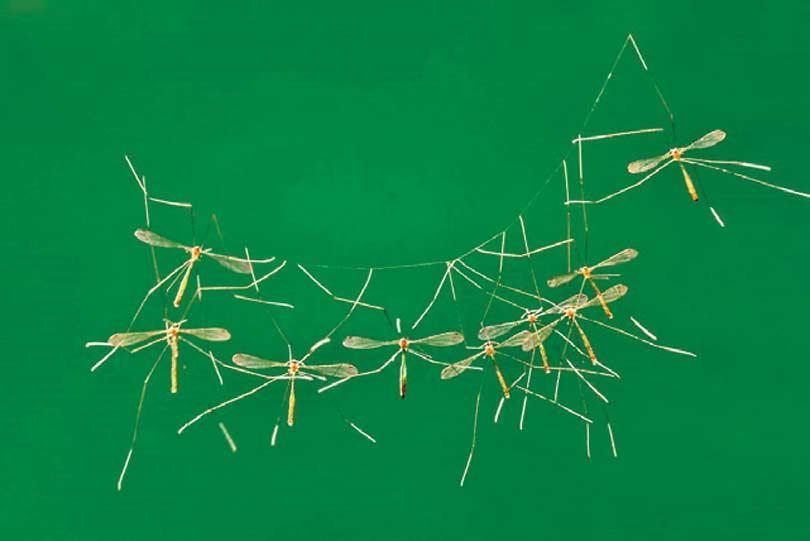
The Sinharaja is a treasure of endemic biodiversity and the hydrology of the country and plays a pivotal role in the enriching the hydrology of Kalu and Gin rivers. The vegetation is inclusive of trees, shrubs, herbs, lianas and seedlings. A magnificent array of the invertebrate phylum of Sinharaja is dominated by numerous species of insects that play a substantial role in maintaining the complexity of the forest. It is a stunning display of numerous species of dragonflies, butterflies, freshwater crabs, bugs and beetles that inhabit the forest from its green carpeted floor to the leafy canopy.
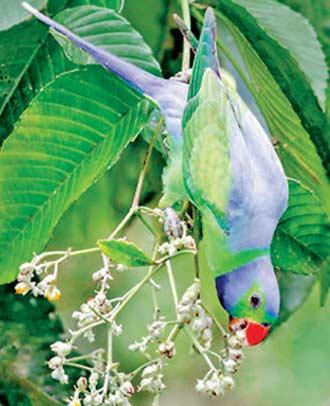
This crown jewel is the centre stage of the conservation history of Sri Lanka for many generations. Hundreds of scientific publications have been published on this important real estate, but much of the information is out of reach for general public. Hence, four authors have compiled a book on the story of Sinharaja in order to increase public interest of our most studied rainforest of the island. This book is not a very comprehensive scientific publication, but has converted science into a story to nudge reader to visit Sinharaja and experience it. Hundreds of references have been used to build the text and story of Sinharaja and it is presented with stunning photographs to attract the reader. The photographs used represent almost all the important elements of Sinharaja, such as diversity of flora, forest structure, micro habitat conditions, all animal groups, and human aspects in the peripheral villages around the property. The authors of the book have spent endless hours during past three decades under arduous conditions to capture these stunning images.
Research conducted included in publishing this book reveals that the Sri Lankan rainforests are some of the best in the region.
The four authors:
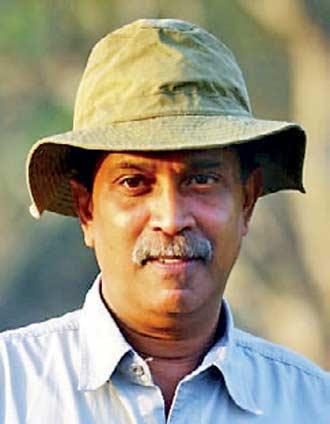
Thilak Jayaratne: He is a voracious reader, lifelong scuba diver and amateur naturalist. He is also a passionate explorer of the natural world and the written word. His love for nature and conservation has led him to co-author several acclaimed books, including Wild Cats of Sri Lanka, Mannar Unbound, and Sri Lankan Freshwater Fishes. Through his journeys and writings, Jayaratne shares not only knowledge, but the wonder and reverence he holds for Sri Lanka’s extraordinary biodiversity. He does more than record facts – he awakens a love and curiosity for Sri Lanka’s landscape and the enduring spirit of the wild. His hope is to leave a lasting legacy for future generations to cherish and protect.
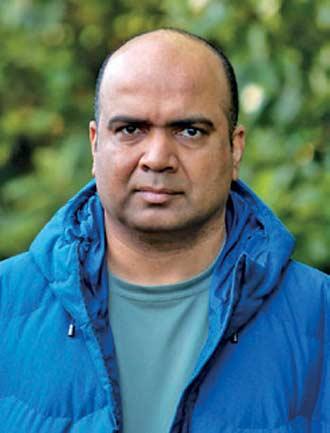
Nadika Hapuarachchi: After earning an MSc in Information Technology from Charles Sturt University, Australia, Hapuarachchi pursued his passion for nature and conservation by completing a Master of Wildlife Management at the University of Otago, New Zealand. A dedicated wildlife and underwater photographer, he has co-authored several acclaimed books, including Wild Cats of Sri Lanka, Mannar Unbound, Sri Lankan Freshwater Fishes, Sri Lankan Primates, and the evocative nature-themed book Life. His expertise and insights have earned him the honour of serving as a scientific adviser to National Geographic and the BBC, where he has contributed to several ground-breaking wildlife documentaries.
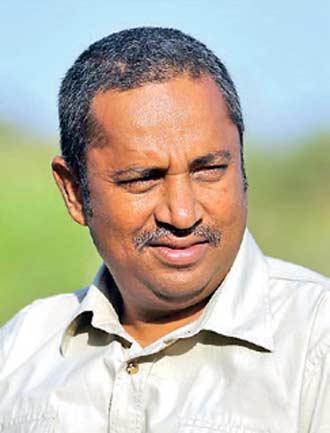
Vimukthi Weeratunga: He is a passionate wildlife biologist, deep-sea diver, and nature photographer. He holds a BSc in Wildlife and Fisheries Biology from Oregon State University, USA. He later studied environmental leadership at the University of California, Berkeley. Over the years, he has taken on key conservation roles. These include Head of Biodiversity at IUCN Sri Lanka and Operations Director at the Environmental Foundation Ltd. He is an accomplished writer and communicator. Vimukthi co-authored ‘Living Free’ and compiled a book on Wilpattu National Park. At present, he serves as the Manager of Cinnamon Nature Trails, where he leads innovative eco-tourism initiatives.
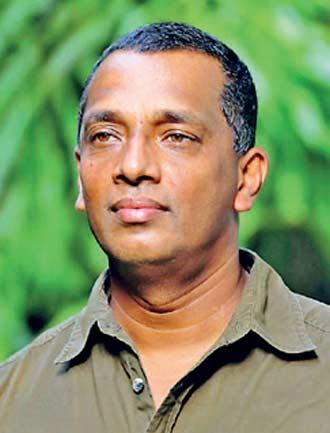
Janaka Gallangoda: He was a doctor of medicine with a postgraduate degree in Palliative Care from Flinders University, Australia. He seamlessly blended his professional expertise with a profound passion for the natural world. An accomplished wildlife and landscape photographer and an avid golfer, Gallangoda found immense joy in capturing the untamed beauty of nature through his lens. His photographs reflected an unyielding passion for the wilderness, blending artistry with a deep respect for the natural world. His legacy lives on through his co-authored works, including the celebrated titles ‘Wild Cats of Sri Lanka’, ‘Mannar Unbound’, and the inspiring nature-focused book Life.
The first comprehensive documentation of flora in Sinharaja was recorded in the year 1850
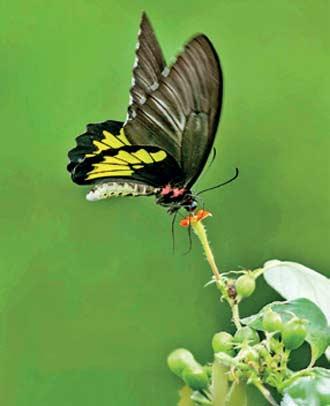 The forest has a display of numerous species of dragonflies, freshwater crabs, bugs, beetles and butterflies (as shown in the photograph reproduced here) that inhabit the forest from its green carpeted floor to the leafy canopy