News & Community eLanka

eLanka

Monday, 27 Apr 2026
  • Home
  • Read History
  • Articles
    • eLanka Journalists
  • Events
  • Useful links
    • Obituaries
    • Seeking to Contact
    • eLanka Newsletters
    • Weekly Events and Advertisements
    • eLanka Testimonials
    • Sri Lanka Newspapers
    • Sri Lanka TV LIVE
    • Sri Lanka Radio
    • eLanka Recepies
  • Gallery
  • Contact
Newsletter
Sri lankan news
  • eLanka Weddings
  • Property
  • eLanka Shop
  • Business Directory
eLankaeLanka
Font ResizerAa
Search
  • Home
  • Read History
  • Articles
    • eLanka Journalists
  • Events
  • Useful links
    • Obituaries
    • Seeking to Contact
    • eLanka Newsletters
    • Weekly Events and Advertisements
    • eLanka Testimonials
    • Sri Lanka Newspapers
    • Sri Lanka TV LIVE
    • Sri Lanka Radio
    • eLanka Recepies
  • Gallery
  • Contact
Follow US
© 2005 – 2026 eLanka Pty Ltd. All Rights Reserved.
Home » Goodnews Stories Srilankan Expats » Articles » South Asia’s nation-breaking agonies-By Lynn Ockersz
Articles

South Asia’s nation-breaking agonies-By Lynn Ockersz

eLanka admin
Last updated: October 3, 2021 3:46 pm
By
eLanka admin
ByeLanka admin
Follow:
Share
7 Min Read
SHARE
Views: 3

South Asia’s nation-breaking agonies-By Lynn Ockersz

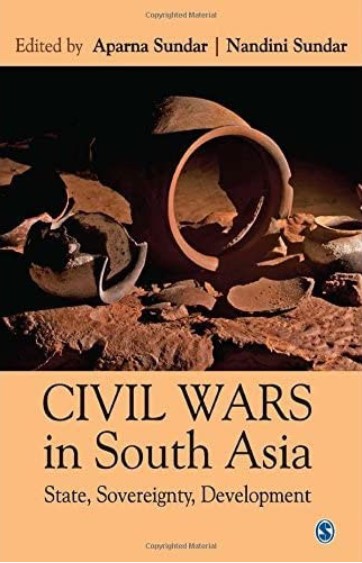
Civil Wars in South Asia

Source:Island

Title: ‘Civil Wars in South Asia – State, Sovereignty, Development ‘
Editors : Aparna Sundar and Nandini Sundar
Publisher: SAGE Publications India Pvt. Ltd. (www.sagepub.in)

Afghanistan’s ongoing agonies and the dramatic ripples caused by them in regional and global inter-state politics should render this collection of valuable research papers titled, ‘Civil Wars in South Asia – State, Sovereignty, Development ‘compulsory reading for both the specialist in international politics and the lay reader with an abiding interest in the subject. Written by erudite researchers in global politics, the papers concerned throw up ample insights of great value into the political, economic and military convulsions that are currently gripping the majority of South and South West Asian states.

The divisive issues in Afghanistan and those that are, and have been, erupting in its neighbouring states, besides calling for in-depth study and analysis, make it essential that the results of such research are made available to polities and publics all over the world. ‘Civil Wars in South Asia…. ‘meets this need in ample measure. What facilitates this process greatly is the fact that most of the papers in this timely book are country specific. Afghanistan, Sri Lanka, India, Myanmar, Pakistan and Nepal are just a few of the states that are brought under the analytical lens of our researchers; many of whom are from the regions concerned and reflect an empathetic and thoroughgoing understanding of the ground realities pertaining to the geographical areas of research.

“The Taliban have emerged among tribal Pashtuns, but they reflect at the same time the erosion of tribal structures. They express the fragmentation of traditional forms of authority and the rise of a new political class that has connections to Dubai or London and legitimizes its upward social mobility in the name of the supranational values of Islam “. Here is a vital spur to further thinking on the true identity of the Taliban which is today at the pinnacle of power in Afghanistan and is being uncritically proclaimed by sections of the world as authentic thinkers and practitioners of Islam.

Contained in the paper titled, “The Transnational Political Economy of Civil War in Afghanistan” by Alessandro Monsutti, such insights are central to understanding the socio-political convulsions assailing Afghanistan and South Asia at present. Policy and decision makers the world over would do well to take cognizance of these disclosures that dive below superficialities.

“Sri Lanka: Military Fiscalism and the Politics of Market Reform at a Time of Civil War” by Rajesh Venugopal offers a range of thought-provoking findings for those researching Sri Lanka’s civil war. The seeming paradox is that Sri Lanka did not falter much in its economic growth throughout its decades of war. This paper provides some keys to unravelling this befuddling puzzle. The market reform process initiated by Sri Lanka in the mid-seventies constitutes one valuable clue to resolving the posers that crowd the reader’s mind in this connection. Reflecting on the “paradox of growth/reform amidst war”, Venugopal says, among other things, “…this does not start off with the casual assumption that growth and reform took place despite war, but instead explores a variety of alternate mechanisms by which the two processes might have related to each other.” The chapter goes on to outline these mechanisms.

‘The Rise of Jihadi Militancy in Pakistan’s Tribal Areas ‘by Haris Gazdar, Yasser Kureshi and Asad Sayeed is yet another paper that provides absorbing reading for those intent on gaining an in-depth understanding of the nation-breaking processes of South Asia. There is a detailed study here of Jihadist militancy obtaining in Pakistan’s border regions with Afghanistan and of its implications for the region’s inter-state politics, including India-Pakistan relations.

There is ample research in this chapter on religion and ethnicity-based militancy which enables the reader to understand better what has gone wrong in the ties of our regional giants. We also begin to understand some of the deeper roots of South Asia’s ethnicity and religion-based separatist violence.

The paper ‘Civil War or Genocide? Britain and the Secession of East Pakistan in 1971 ‘by Dirk Moses, besides other things of substance, helps to draw attention to the pitfalls of viewing the former rebellion in East Pakistan in the lead up to the creation of Bangladesh, in simplistic polarities and categories. Besides the general perception of the separatist uprising in East Pakistan as one based on linguistic self-assertion, the researcher draws attention to the smaller conflicts within the larger conflict, such as the violence visited on religious and ethnic minorities within East Pakistan by the majority community. Our attention is also drawn to the issue of as to when the violence unleashed by a party to a civil war could come to be categorized as being of a genocidal nature.

Besides the above papers there are a number of other country specific research inputs too in ‘Civil Wars in South Asia ‘that help the reader to acquire clarity on state destabilizing political processes in our part of the world. Issues are constantly raised with regard to concepts, such as sovereignty and development, which in the normal course of things are allowed to pass without much critical scrutiny by polities. The introductory chapters to the book are highly instructive in this regard.

Senior Indian academics and editors Aparna Sundar and Nandini Sundar have done remarkably well to bring out a book that is a veritable treasury of knowledge on current South Asian politics.

TAGGED:Alessandro MonsuttiAparna SundarNandini Sundar
Share This Article
Facebook Whatsapp Whatsapp LinkedIn Email Copy Link Print
Previous Article Future Japanese aircraft Future Japanese aircraft carrier expected in Colombo as a warship
Next Article Rumesh Ratnayake Ratnayake now Sri Lanka A team coach-BY TB RAHAMAN
FacebookLike
YoutubeSubscribe
LinkedInFollow
Most Read
10 Pictures With Fascinating Stories Behind Them!

“A PICTURE SPEAKS A 1000 WORDS” – By Des Kelly

Look past your thoughts so you may drink the pure nectar of this moment

A Life Hack for when we’re Burnt Out & Broken Down – By Uma Panch

Narration of the History of our Proud Ancestral (Orang Jawa) Heritage. by Noor R. Rahim

eLanka Weddings

eLanka Marriage Proposals

Noel News

Noel News

Noel News

Noel News- By Noel Whittaker

Appreciation: Eileen Mary Sibelle De Silva

K.K.S. Cement Factory

Dr.Harold Gunatillake’s 90th Birthday party

Sri Lanka's women's cricket squad in Melbourne

Cricket: Sri Lanka’s women’s squad in Melbourne

- Advertisement -
Ad image
Related News
Articles Dr Harold Gunatillake

Enough magnesium in your body is really important and can truly help you prioritise your health. Magnesium plays a vital role in many bodily functions-by Harold Gunatillake

Lions Club Celebrates Avurudu with Music, Games, and Tradition-by Trevine Rodrigo
Articles Trevine Rodrigo

Lions Club Celebrates Avurudu with Music, Games, and Tradition-by Trevine Rodrigo

story of black dog
Articles

The Black Four-Legged Peace Walker: A Silent Guide on Day 4 in Sri Lanka

Ratnapura
Articles

“CITY OF GEMS” RATNAPURA Ratnapura, known as the “City of Gems” in Sri Lanka, derives its name from the Sanskrit words “ratna” (gemstone) and “pura” (town or city). As the hub of Sri Lanka’s gem mining industry. The name is derived from Sanskrit and Pali, languages that heavily influenced the region over 2000 years ago. The city earned this name because it has been the traditional center of Sri Lanka’s gem trade for over 2,000 years. It is the primary source of world-renowned precious stones, including blue sapphires, rubies, and cat’s eyes.Some historical accounts suggest a different origin linked to the Portuguese colonial era. There is a view that the name could be derived from the Portuguese word “Rapadura,” which refers to jaggery. Ratnapura is the heart of Sri Lanka’s gem industry, often called the “gem capital of the world” due to its incredible geological wealth and ancient trading history. The region is famous for producing over 40 of the 85 known gemstone varieties in the world. The most famous is the “Ceylon Sapphire,” prized for its vivid cornflower and royal blue hues. Other varieties include yellow, pink, and the rare orange-pink Padparadscha. Specialty Stones: Includes the rare Alexandrite (which changes color in different light), Cat’s Eye Chrysoberyl, Spinel, Tourmaline, Garnet, and Moonstone. The sapphire in Princess Diana’s Iconic engagement ring is a Ceylon sapphire from the Ratnapura area. Many world-renowned gems were unearthed in the Ratnapura district. One of the largest faceted blue sapphires ever found in Ratnapura, Blue Giant of the Orient is over 465 carats. The city features remains of a Portuguese-Dutch Fort, which now houses the National Gem and Jewellery Authority. Ratnapura is the starting point for the “classic” hard route (Gilimale route) to the sacred Sripada. Ratnapura district is home to a significant number of spectacular waterfalls, often described as having the highest concentration of waterfalls in Sri Lanka. – By Francis Paul Welangoda

Kirindi Ella Falls
Articles

Kirindi Ella Falls: Sri Lanka’s Majestic Multi-Tiered Wonder in Ratnapura – By Francis Paul Welangoda

  • Quick Links:
  • Articles
  • DESMOND KELLY
  • Dr Harold Gunatillake
  • English Videos
  • Sri Lanka
  • Sinhala Videos
  • eLanka Newsletters
  • Obituaries
  • Sunil Thenabadu
  • Dr. Harold Gunatillake
  • Tamil Videos
  • Sinhala Movies
  • Trevine Rodrigo
  • Photos
  • eLanka Newsletter

eLanka

Your Trusted Source for News & Community Stories: Stay connected with reliable updates, inspiring features, and breaking news. From politics and technology to culture, lifestyle, and events, eLanka brings you stories that matter — keeping you informed, engaged, and connected 24/7.
Kerrie road, Oatlands , NSW 2117 , Australia.
Email : info@eLanka.com.au / rasangivjes@gmail.com.
WhatsApp : +61402905275 / +94775882546
  • About eLanka
  • Terms & Conditions

Disclaimer:
eLanka is committed to sharing positive and community-focused stories. We do not publish or endorse political, religious, or ethnic viewpoints. The content published on eLanka, including articles and newsletters, reflects the opinions and views of the respective authors and not those of eLanka. eLanka accepts no responsibility or liability for the accuracy, completeness, or consequences of any content provided by contributors.

(c) 2005 – 2025 eLanka Pty Ltd. All Rights Reserved.