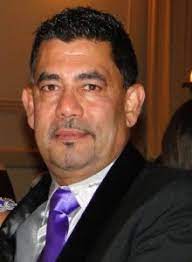
Sri Lanka today mourns not merely the passing of a journalist, but the silencing of a conscience that spoke truth to power with rare courage, discipline, and integrity. – By Trevine Rodrigo

And may he be remembered not only for what he reported—but for how, and why, he reported it.
Rest in peace, Iqbal Athas. “Sibla Markaam. Sub luk Sub luk.” The lucky few that got mentored by Iqbal would know that code.
Your words remain.I speak not only as an admirer of Iqbal Athas’s work, but as someone who had the profound good fortune to work under him for five years in the early part of the nineteen eighties decade, spanning a General Strike, a Presidential Referendum, Several Elections, Communal Riots of 83, Genesis of the Ealam conflict, Indian backed militant groups, attack on Supreme Court judges, and a variety of incidents including the search for Upali Wijewardena’s crashed learjet and many other stories now long forgotten.
Four decades ago, we were part of his investigative journalism team at Independent Newspapers in Colombo—during a time when no politician, public official, or institution was spared the scrutiny of the daring journalism he encouraged us to pursue. National intelligence relied on our leads and we were equal in our zeal to get to the bottom of the truth.
Under Iqbal Athas, journalism was never a trade; it was a calling, governed by ethics, justice, and an almost sacred respect for facts.
We were taught to report with no fear and no favour. Assertions were meaningless unless supported by evidence. Facts were never taken at face value—they were verified, then verified again, and often a third time, against credible and independent sources.
A story was never abandoned halfway. We were expected to pursue it relentlessly to its proper conclusion: gathering every relevant quote from all stakeholders, perusing and validating documents, and investing whatever time and effort was required to produce an iron-clad story that could neither be refuted nor casually challenged.
This was the discipline he lived by—and the standard he imposed.
Iqbal Athas belonged to a vanishing generation of journalists for whom accuracy was sacred, independence non-negotiable, and public interest the ultimate obligation.
Beginning his career as News Editor of The Sun and Weekend newspapers in the early to mid-1980s, he distinguished himself as both a meticulous editor and a fearless reporter during some of the most turbulent years in Sri Lanka’s modern history.
These were years marked by political upheaval, ethnic conflict, and the steady militarisation of the state. It was in this crucible that his defining vocation emerged: to report on war and national security not as propaganda, but as fact.
Our investigative unit—comprising Trevine Rodrigo, Tyronne Devotta, Lalith Alahakone, the late Kenneth Amarasekera, Milinda Rajasekera, late Melanie John, Minoli De Soyza, Aruna Kulatunga, Jennifer Henricus, Leary Beakmeyer, Winston De Valliere, Pia De Lima, Jack Herft, and many others who followed—was relentlessly pushed to be the very best version of ourselves as journalists.
He demanded excellence, but he also nurtured it.
Iqbal possessed a rare editorial gift: the ability to take the rudimentary drafts of cub reporters and, often overnight, transform them into powerful lead stories—published under their bylines.
Iqbal Athas
This was how he built confidence, loyalty, and courage. It was also how The Sun and Weekend consistently scooped every other daily newspaper in the country, day after day, setting a standard others struggled to match.
He cultivated an extraordinary newsroom culture. During working hours, he was the uncompromising editor—exactting, disciplined, and intolerant of shortcuts. After hours, he became a mentor, confidant, and companion, forging a deep camaraderie among his team.
He balanced the relentless, 24/7 vigilance demanded by developing news with an almost familial bond with those who worked beside him. Few editors have ever mastered the rare art of being both the buddy and the boss, while keeping discipline intact and standards unyielding.
He pushed us beyond chasing page-one exclusives. He urged us to spread our writing wings—to write columns, full-page Sunday features, and to shoulder responsibility for collective investigative series such as Insight, which demanded the highest standards of journalism ever practiced in this country.
Through this, he made us not just reporters, but thinkers, analysts, and custodians of public trust.
As a long-standing columnist for The Sunday Times of Sri Lanka, and later as a contributor to The London Sunday Times, Iqbal Athas became the nation’s most authoritative voice on defence and military affairs.
His work as a Sri Lanka stringer for Jane’s Defence Weekly placed him among an elite global circle of defence correspondents and analysts. Internationally respected, he brought credibility to Sri Lankan journalism at a time when few local voices penetrated global strategic discourse.
His analysis was trusted because it was earned—through painstaking verification, deep institutional knowledge, and an unshakeable refusal to speculate where facts were unavailable.
He demonstrated, by example, that patriotism and accountability are not opposites; that institutions can be respected without being shielded from scrutiny; and that journalism, even in times of war, must remain anchored to truth rather than allegiance.
He paid a price for this integrity—through pressure, intimidation, and attempts at silencing—but he never yielded.
Like the molten lead that once powered the printing presses of The Sun and Weekend, Iqbal Athas forged us in lead—hardening us, shaping us, and setting a benchmark for what journalists of our generation could and should be.
His mentoring was unparalleled, and its imprint remains indelible.
Today, as misinformation proliferates and journalism is too often reduced to noise or narrative, the absence of Iqbal Athas feels especially profound.
His passing leaves a void not easily filled—because credibility, once lost, is difficult to restore, and once earned, impossible to replace.
Sri Lanka has lost a chronicler of its modern conflicts, a guardian of factual truth, and a journalist who understood that history is written first in newspapers, and only later in books.
May his work endure as a benchmark.
May his courage continue to inspire.
Adios Iqbal ~~ Chris Dharmakirti