Sri Lanka Tourism in 2025: New Trends, Challenges & Opportunities – By Malsha – eLanka
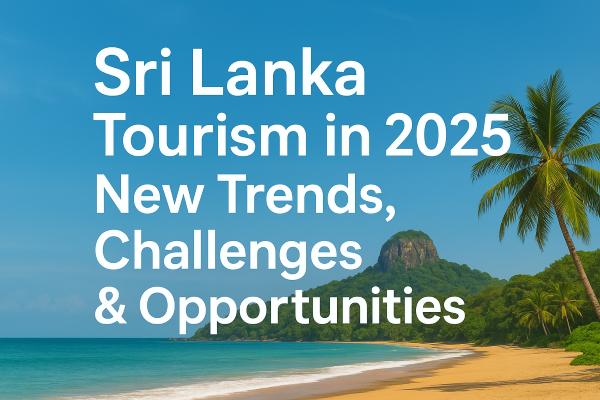
After a turbulent few years, Sri Lanka’s tourism sector entered 2025 not simply in recovery mode but in active reinvention. The island’s breathtaking beaches, ancient cultural sites and biodiversity remain core draws — but how travellers book, what they expect, and how the industry is organised are changing fast. Below is a concise look at the major trends, the hurdles the industry must clear, and the opportunities Sri Lanka can seize this year.
What’s happening now (snapshot)
Tourist arrivals have shown a strong upward trajectory in 2025, with government reports documenting notable year-on-year gains in the first half of the year as arrivals pushed past one million in the January–June window. The rebound follows a period of sharp decline during the pandemic and the 2022 economic crisis, and is being supported by policy actions and promotional campaigns.
At the macro level, Sri Lanka’s broader economic recovery — including growth reported in 2024 — is creating a more favourable environment for tourism investment and operations, though macro vulnerabilities remain.
Key trends shaping 2025
-
Sustainable & regenerative tourism goes mainstream
Sustainability is no longer a niche selling point — it’s central to national strategy and industry planning. Public policy and private operators are increasingly focused on low-impact experiences, community benefit-sharing, and conservation-linked offerings (wildlife, coastal protection, cultural heritage). This aligns with the government’s declared tourism policy direction and several sustainability programmes launched in recent years. -
Source-market diversification (India leads)
India has emerged as a principal source market, with visitors from South Asia rising rapidly. At the same time, long-haul markets (UK, Europe, Australia) are returning, driven by renewed flight links and marketing. Diversification reduces dependency on any single market and helps flatten seasonality. -
Visa facilitation and friction reduction
In late 2024 the government approved a pilot to waive tourist visas for citizens of selected countries — a move aimed at simplifying travel and boosting arrivals. Easier entry processes and improved digital services have a direct, measurable effect on short-term visitor numbers. -
Experience economy: beyond sightseeing
Travellers increasingly seek immersive experiences — homestays, village trails, agritourism, culinary trails and learning experiences (tea-plantation stays, conservation volunteering). These offerings lengthen stays, spread tourist spending to rural communities, and create new SME opportunities. -
Digitalisation & distribution changes
Direct booking sites, mobile itineraries, and social-media driven interest (short-form video) are shaping demand quickly. Smaller operators must adopt digital tools to capture bookings and reviews, while larger players focus on NPS and loyalty.
Main challenges in 2025
-
Infrastructure and capacity gaps
Transport links, domestic air connectivity, and last-mile roads in many attractive rural zones remain constraints. Investment is needed not just in hotels but in roads, waste management and reliable utilities. -
Seasonality and overcrowding risk
Popular hotspots face pressure during peak months; without destination management, overtourism could degrade the assets that attract visitors. -
Human capital and skills
Upskilling frontline workers (guides, guesthouse managers, service staff) for higher expectations around safety, sustainability and digital service delivery is an ongoing need. -
Climate risk and environmental pressures
Coastal erosion, changing rainfall patterns and wildlife habitat stress require proactive planning — both to protect tourism assets and to build resilience into local communities. -
Perception risk tied to political/economic events
Although recovery is underway, tourism remains sensitive to headlines about political stability or economic disruption. Clear, consistent communication and predictable policy are essential to sustain investor and traveler confidence.
Opportunities to accelerate growth
-
Position as a sustainable-luxury and learning destination
Sri Lanka can differentiate itself by packaging conservation, cultural learning and wellness into premium experiences — appealing to higher-value visitors who stay longer and spend more. -
Strengthen regional connectivity and short-break marketing
Leverage proximity to India and Southeast Asia with targeted short-break campaigns, low-cost carrier partnerships and seamless visa/digital entry to drive shoulder-season demand. -
Support SMEs and community tourism
Micro, small and medium enterprises (guesthouses, guides, food producers) are engines of employment and authentic experiences — targeted financing, training and digital inclusion programmes would create resilient local value chains. The focus on youth and SMEs in 2025 tourism events signals momentum here. -
Invest in resilient infrastructure and destination management
Prioritise wastewater and solid waste solutions in tourism corridors, and implement carrying-capacity frameworks for sensitive sites (cultural ruins, national parks, beaches). -
Data and digital adoption
Better visitor data (origin markets, length of stay, spending) will allow smarter marketing and product development. Encouraging wider adoption of booking platforms and digital payments will also convert interest into confirmed travel.
What success will look like by year-end
A successful 2025 would mean sustained arrivals growth toward the government’s targets, higher average spend per visitor, more tourism revenue retained by local communities, and clear evidence that sustainability measures are being operationalised — for example, reduced single-use plastics in tourism hotspots, regulated visitor flows at sensitive sites, and visible community benefit projects.
Final thought
Sri Lanka in 2025 sits at an inflection point: the fundamentals — nature, culture, hospitality — are intact, and policy momentum plus improving macro conditions provide a window to reimagine tourism. The prize is not just more visitors, but better managed, higher-value tourism that preserves the island’s treasures while delivering broad-based economic benefits. With strategic investment in sustainability, skills and infrastructure, Sri Lanka can turn recent recovery into durable and inclusive growth.